
Best nightstands for small bedrooms are the ones that hold your everyday essentials without making the room feel tighter, think slim profiles, smarter storage, and placement that respects walkways.
If your bedside area feels like a bottleneck, you’re not alone, small bedrooms punish bulky furniture fast, and a nightstand that’s even a few inches too deep can turn “cozy” into “claustrophobic.” The good news is you don’t need a full redesign, just better choices.
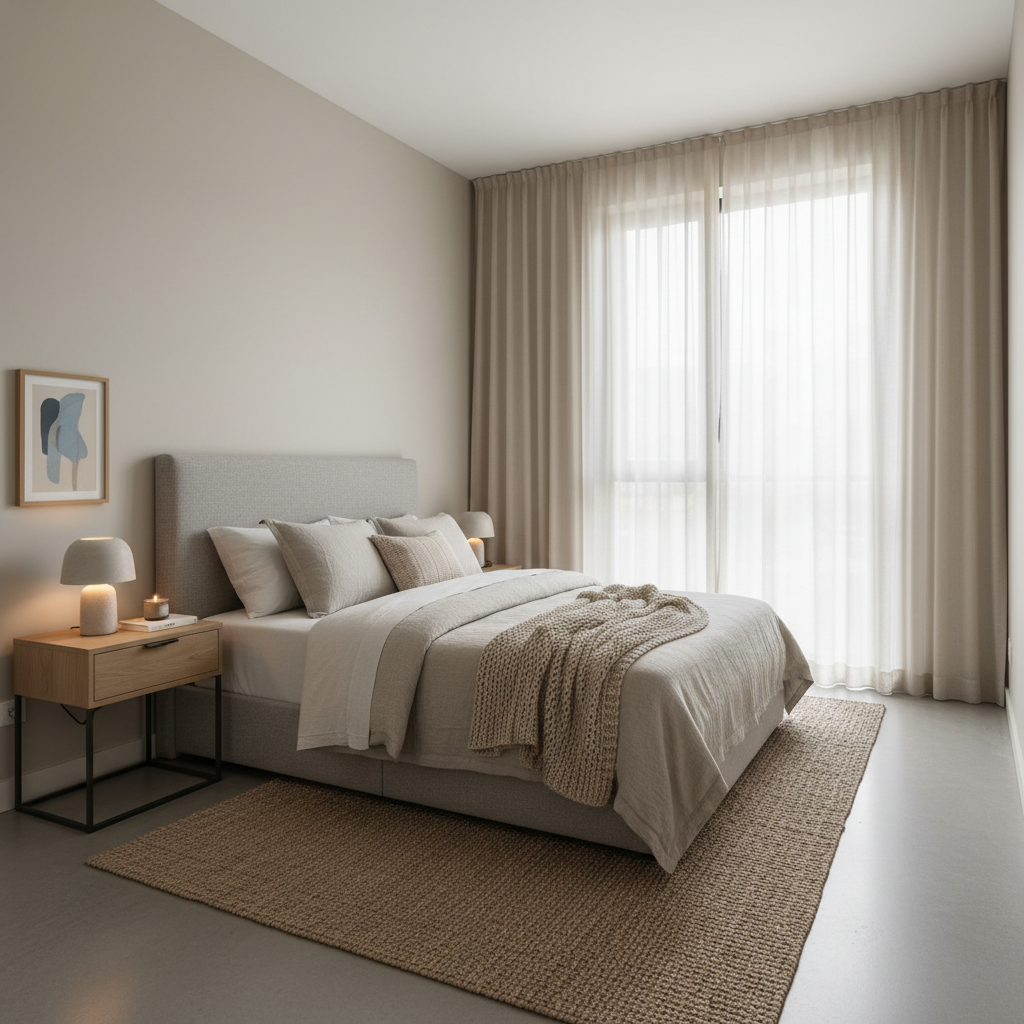
This guide focuses on what actually works in tight spaces, how to measure without guessing, what styles solve specific problems, and where people waste money. You’ll also get a quick comparison table, a buy checklist, and a few “small room” tricks that designers quietly use all the time.
What usually makes a nightstand “work” in a small bedroom
For compact rooms, the best nightstands aren’t defined by a brand name, they’re defined by fit + function. A small bedroom nightstand has one job: keep the bedside useful while preserving visual and physical space.
- Shallow depth: In many rooms, depth matters more than width, 12–16 inches deep often feels manageable, while 18–20 inches can start blocking movement.
- Right height: Aim for the top surface to sit close to your mattress height, typically within a couple inches, so reaching for a phone or water feels natural.
- Storage you’ll actually use: A drawer hides clutter, an open shelf handles books or a basket, and a cabinet can swallow chargers and medications.
- Light visual weight: Legs, open bases, and lighter finishes can make the footprint feel smaller than it is.
- Cord control: If you charge devices at night, look for a back opening or a plan for cable routing, messy cords make small spaces look messier.
According to the National Fire Protection Association (NFPA), using cords and outlets safely matters, especially near bedding, so it’s worth choosing setups that reduce strain on cables and avoid overloading power strips.
Quick comparison: common small-space nightstand types
Different “small” problems need different solutions, a narrow room with a tight walkway is not the same as a room with zero floor space. Here’s a practical snapshot.
| Type | Best for | Upside | Trade-off |
|---|---|---|---|
| Floating shelf/nightstand | Very tight floor space | Opens floor, easy to clean | Wall mounting, limited capacity |
| Narrow 1-drawer stand | Most small bedrooms | Clutter control + simple footprint | Drawer may be small |
| Open-shelf stand | Minimalists, baskets | Airier look, flexible storage | Items stay visible |
| Bedside caddy (fabric/metal) | Renters, zero space | No assembly, very compact | Less stable, smaller surface |
| Wall sconce + micro ledge | Ultra-narrow corners | Frees top space for essentials | Lighting install, needs planning |
Measure first: a small checklist that prevents big regrets
Most “this looked smaller online” stories come down to two missing measurements, depth and drawer clearance. Before you shop, take 3 minutes and write these down.
- Max depth you can live with: Stand where you walk, measure from bed edge to the point you don’t want to cross, many people prefer at least 20–24 inches of clear path, but room layouts vary.
- Ideal height: Measure from floor to top of mattress, then target a nightstand within about 0–2 inches of that height.
- Width limit: Include baseboards and outlet locations, if a plug sits right where the stand would land, you’ll fight it forever.
- Drawer swing: If you want drawers, measure how far they’ll pull out without hitting a door, hamper, or your knees.
- What lives bedside: Phone, glasses, water, book, CPAP, meds, lamp, list it, then pick storage based on reality, not aspiration.
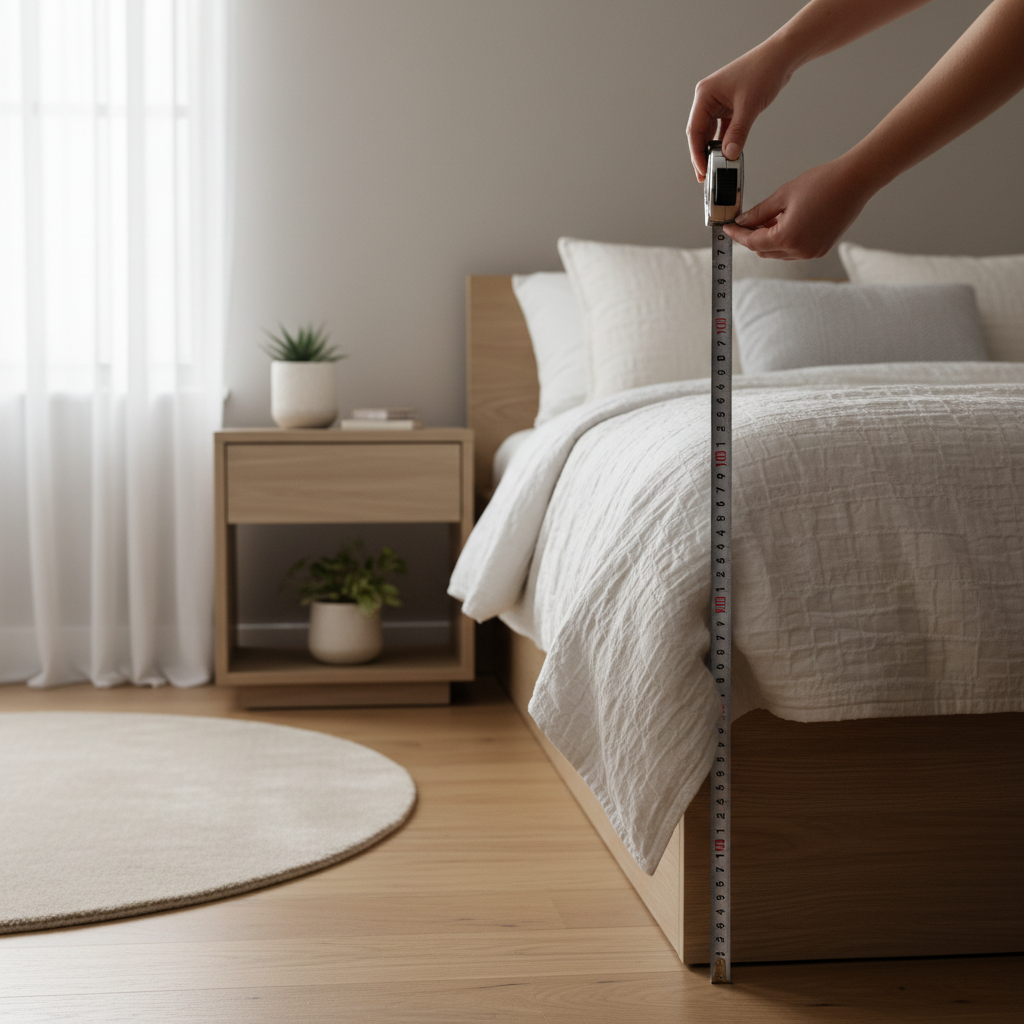
If you’re aiming for the best nightstands for small bedrooms, this measuring step is the difference between “finally functional” and “why does my room feel worse.”
Best nightstand styles for small bedrooms (and when to choose each)
Rather than tossing a long shopping list at you, here are the styles that most consistently solve small-bedroom problems, plus the situations where each one shines.
1) Slim nightstands with a single drawer
These are the “safe bet” for many people, you get a clean surface and a place to hide chargers, lip balm, receipts, whatever accumulates. Look for a shallow depth and sturdy drawer slides, especially if you’re hard on furniture.
- Choose this if: you want tidy without overthinking it.
- Skip this if: you need bulk storage for medical gear or lots of books.
2) Floating nightstands or wall shelves
When floor space is the issue, floating wins. It also makes a small room easier to vacuum, which sounds boring until you’ve tried to clean under chunky furniture in a tight corner. Just be honest about what you’ll place on it, heavy lamps and stacks of hardcovers may not be the best match.
- Choose this if: you’re trying to keep the walkway open, or you want a lighter look.
- Watch for: stud placement, wall anchors, and cable routing behind the shelf.
3) Open-shelf nightstands (good for baskets)
An open shelf can feel less bulky than a closed box, and it’s surprisingly practical if you use a basket to corral clutter. The trick is not overfilling, one basket, one stack of books, stop there.
- Choose this if: you want a visually airy piece with flexible storage.
- Skip this if: visual clutter stresses you out.
4) Bedside caddies and micro ledges
If you genuinely have no space, a bedside caddy can be a lifesaver, it holds the essentials and costs less than most furniture. A micro ledge works similarly if you only need a phone and a glass of water, and you rely on wall lighting.
- Choose this if: you rent, move often, or your bed is practically touching a wall.
- Trade-off: less stable surface area, so be careful with drinks.
How to set up your nightstand so the room feels bigger
Even the best nightstands for small bedrooms can feel wrong if styling adds visual noise. This is where a few small rules do a lot of work.
- Use wall lighting when possible: A sconce or swing-arm wall lamp frees surface space and reduces the “stuffed corner” look.
- Go vertical: A narrow stand plus a small wall shelf above can outperform one bulky piece.
- Limit the top to 3 items: For example, lamp or sconce switch, tray, and one personal item. If you need more, the nightstand is undersized for your habits.
- Contain the small things: A tray makes chargers and hand cream look intentional, not scattered.
- Hide the power strip: Mount it to the back of the nightstand or use cable clips, less cord spaghetti equals calmer room.
According to the U.S. Consumer Product Safety Commission (CPSC), tip-over and stability are important safety considerations for home furniture, if you have kids or pets, prioritize stable bases and consider anchoring taller, narrow pieces.
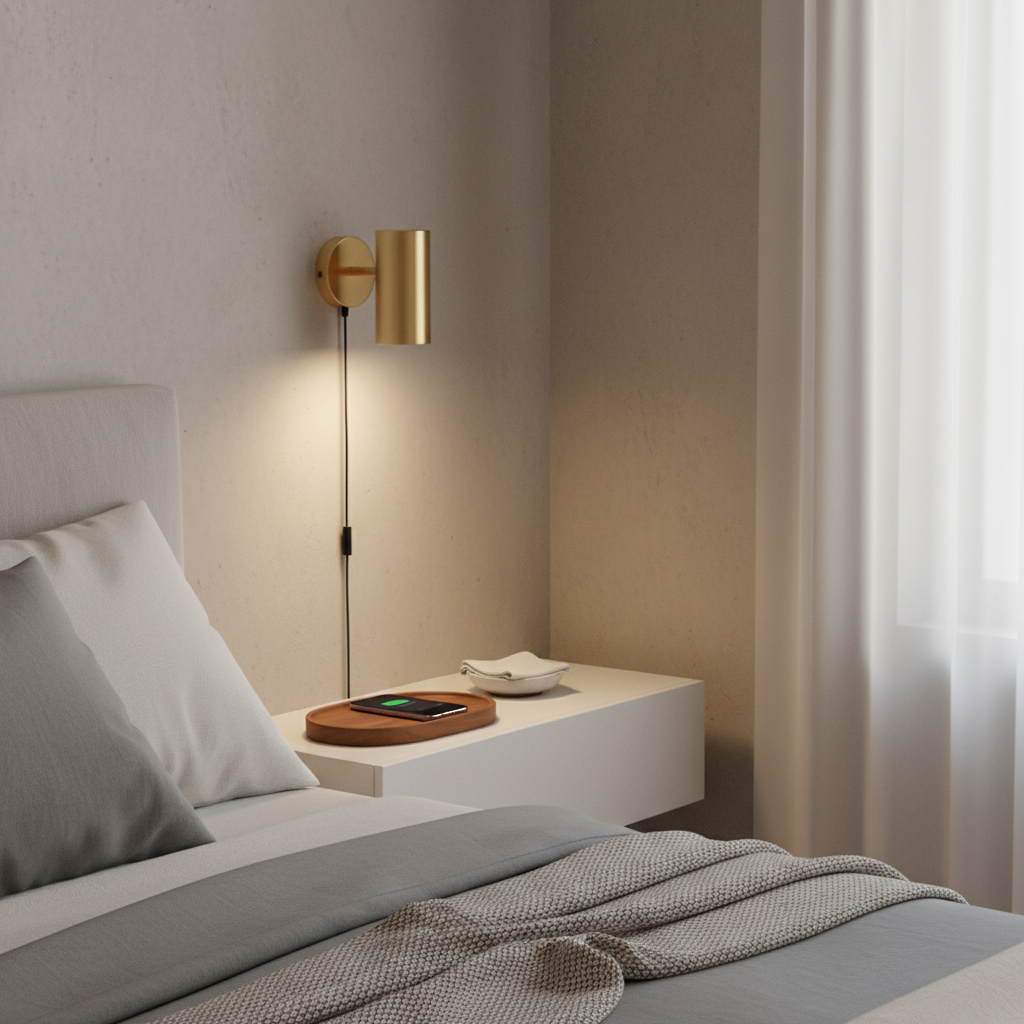
Small note that saves frustration, if you use blackout curtains and charge multiple devices overnight, plan for outlets early, otherwise you end up with extension cords crossing the exact walkway you worked so hard to protect.
Real-world buying tips: what to look for in listings and reviews
Product photos rarely show the detail that matters in a tight room. When you shop online, scan for these specifics, they’re the difference between “fits on paper” and “fits in life.”
- Depth in the spec sheet: Don’t assume “small” means shallow, confirm the number.
- Inside drawer dimensions: Exterior size can look perfect while the drawer holds almost nothing.
- Leg clearance: If you clean often, a bit of clearance can feel like a luxury.
- Finish durability: Gloss shows fingerprints, soft matte hides wear but can stain, pick based on your habits.
- Assembly reality: If reviews mention wobble, it’s often a hardware issue or thin panels, not always user error.
If you’re comparing options and trying to land on the best nightstands for small bedrooms, prioritize depth, height, and stability first, style second. You can always make a simple piece look better, but you can’t “style” a nightstand that blocks the closet door.
Common mistakes that make small bedrooms feel tighter
These are the traps that show up again and again, and they’re sneaky because each one sounds reasonable in isolation.
- Choosing matching sets by default: Two bulky nightstands can overwhelm a small room, mismatched sizes often look more intentional than you’d expect.
- Overbuying storage: A big cabinet nightstand encourages more clutter, not less, in many households.
- Ignoring door and drawer paths: The room may look fine until you open a drawer and it hits a hamper every night.
- Using a large table lamp: Lamps with wide shades eat surface area fast, consider slimmer bases or wall-mounted lighting.
- Skipping cord planning: Cords across bedding or pinched behind furniture can wear out over time, use clips and give plugs breathing room.
Action plan: pick the right nightstand in 20 minutes
If you want a fast, low-drama process, run through this and stop overthinking it.
- Step 1: Measure mattress height and max depth you can tolerate at the bedside.
- Step 2: Decide your “must store” items, then choose drawer vs open shelf vs floating.
- Step 3: Set a rule for the top surface, three items max, or plan a wall shelf.
- Step 4: If the walkway is tight, prefer shallow depth and lighter visual weight over extra width.
- Step 5: Confirm stability, especially if you have kids, pets, or a tall narrow stand.
Key takeaways: shallow depth beats “small-looking” photos, the best height tracks your mattress, and storage should match your nightly routine, not your ideal self.
Conclusion: a small nightstand choice can change the whole room
Most people don’t need more furniture in a small bedroom, they need better bedside decisions. When depth, height, and storage line up, the room feels easier to move through, easier to keep tidy, and honestly easier to relax in.
Pick one action today, measure your depth limit, then choose a style that fits your real habits. If you do that, finding the best nightstands for small bedrooms stops being a scrolling contest and starts being a quick, confident purchase.
If you’re trying to furnish a tight bedroom and want a more “done” look without trial-and-error, consider building a simple plan around one shallow nightstand style, wall lighting, and a cord setup that stays invisible, it’s often the most painless route.