
linen closet organization ideas for beginners usually come down to one thing: stop treating the closet like a “stuff it and shut it” zone, and start treating it like a mini supply room with simple rules.
If your shelves avalanche every time you grab a bath towel, you’re not alone. Linen closets are small, used daily, and easy to overload with random extras like travel toiletries, half-used candles, or mystery pillowcases that don’t match anything.
This guide keeps it beginner-friendly, no fancy systems required. You’ll learn what to keep, where to put it, how to fold so stacks don’t slide, and how to set up a layout that still works a month from now.
Start with a fast reset: empty, sort, and measure
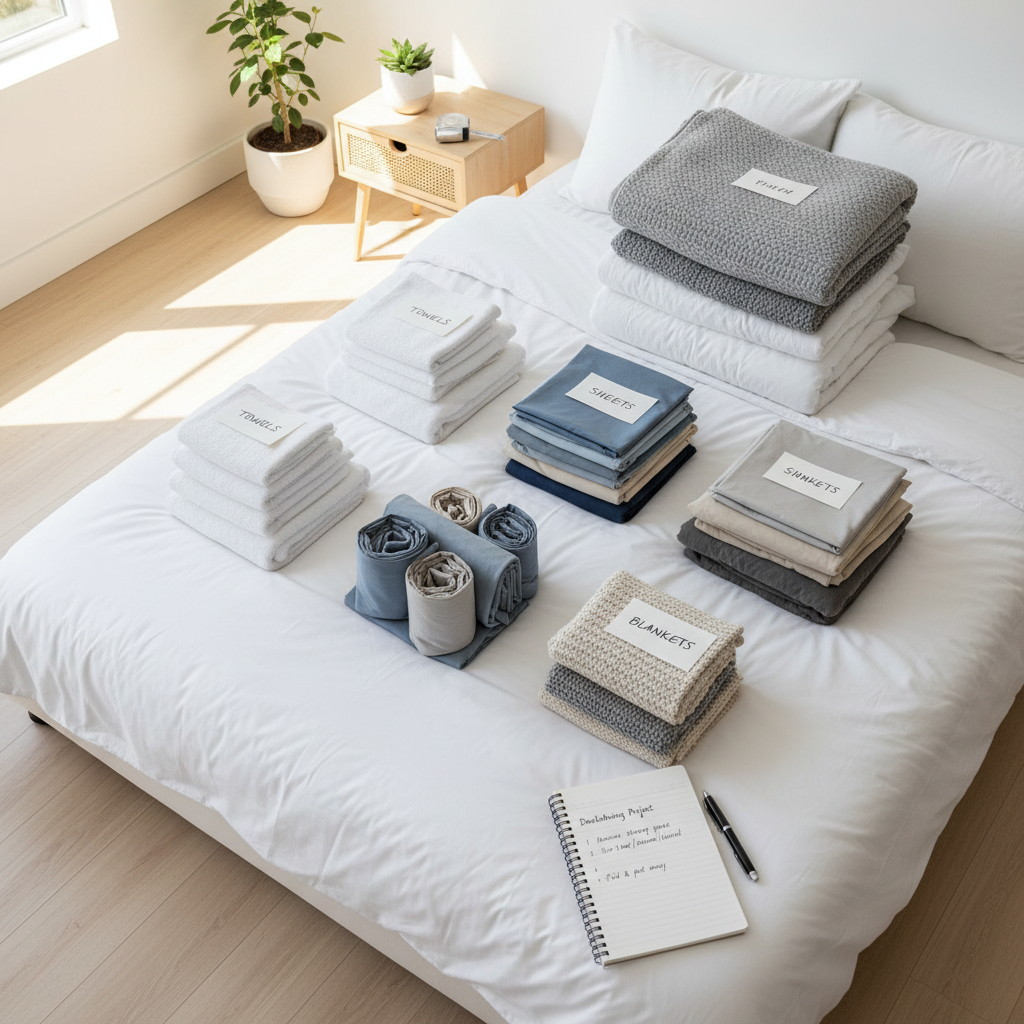
The quickest way to make progress is to pull everything out. Not to be dramatic, just because you can’t organize what you can’t see. Put items into rough piles on a bed or the floor, then do a quick measurement of shelf depth and vertical spacing so you buy the right containers.
Keep your sorting simple (4 piles)
- Daily use: towels, washcloths, sheets you actually use, guest basics.
- Occasional: extra blankets, seasonal bedding, backup pillows.
- Elsewhere: toiletries, cleaning products, first-aid items that belong in a bathroom or utility area.
- Exit: stained towels, mismatched sheet sets missing pieces, duplicates you don’t want.
According to U.S. Consumer Product Safety Commission, household chemicals should be stored securely and away from children. If your linen closet is within reach, it’s usually not the best long-term spot for bleach, detergent pods, or spray cleaners.
Decide what stays: the “real-life” linen closet inventory
Many closets get messy because they’re holding too much for the size. A beginner move that actually works is setting a reasonable “par level”, meaning the number of linens you keep per bed or per bathroom, and sticking to it.
A practical starting point (adjust for your household)
- Per bed: 2 sheet sets (one on the bed, one backup).
- Per person: 2 bath towels, 2 hand towels, 4–6 washcloths.
- Guest-ready: 1–2 extra towel sets total, not per guest you’ve ever hosted.
- Blankets: what you can store without compressing stacks into chaos.
If you love hosting or have kids in sports, you may need more. The point is choosing a number on purpose, because “just in case” expands forever.
Set up zones that match how you reach for things
The best linen closet setups follow a simple logic: store by category, then by frequency. You shouldn’t need to move three piles to reach the thing you use every day.
A beginner zoning map (works for most standard closets)
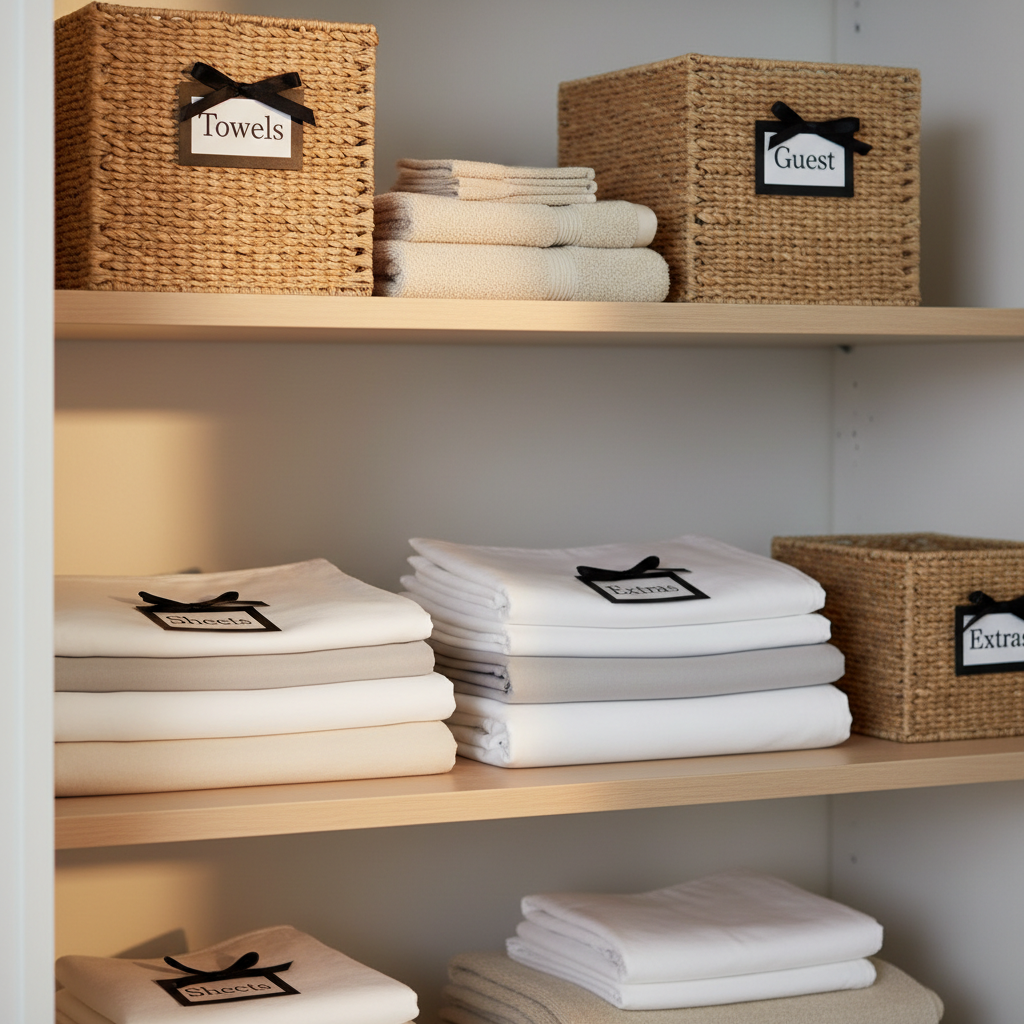
- Eye-level shelves: daily towels, washcloths, commonly used sheet sets.
- Top shelf: guest items, spare blankets, off-season bedding.
- Bottom shelf: bulk packs (toilet paper overflow), heavier items, step stool.
- Door/side walls (if allowed): over-the-door hooks for robes, small caddy for lint rollers.
One small mindset shift helps: if you frequently use something, it earns a low-effort location. If you rarely use it, it can live higher up or in a bin.
Fold and stack so piles stay put (no perfection required)
Most “my stacks collapse” problems are really “my stacks are too tall” problems. Shorter stacks win, even if you have more shelves.
Beginner folding rules that reduce mess
- Cap towel stacks at 6–8 items depending on thickness.
- Fold to the shelf depth so towels don’t hang over the edge and drag stacks down.
- Store sheet sets as a bundle: fold and place the set inside one pillowcase so pieces stay together.
- Use vertical storage for fitted sheets only if your shelves are tall and you enjoy the method, otherwise keep it simple.
If you try a new fold and it adds friction on laundry day, it won’t stick. Function beats Instagram.
Use containers strategically: fewer bins, clearer labels
You don’t need to bin everything. Containers should solve specific issues: loose items, odd shapes, or categories that migrate.
What to buy (and what to skip) for beginners
- Worth it: 2–4 medium bins for “extras” categories, one small bin for repair items (lint roller, fabric shaver), shelf dividers if stacks slide.
- Nice to have: clear bins for guest toiletries if you store them here, a pull-out basket for washcloths.
- Often unnecessary: matching bin sets for every shelf, specialty folding boards, tiny containers that waste shelf height.
Label like a tired future-you will read it. “TOWELS” beats “Spa.” “KING SHEETS” beats “Primary Bed.”
Quick layout ideas for common closet types
Not all linen closets are built the same. Below are beginner-friendly layouts that usually work without remodeling or custom shelving.
If you have deep shelves
- Use two rows: daily items in front, backstock in bins behind.
- Add a simple “backstock” label so you don’t forget what’s hiding.
If you have narrow shelves
- Use short stacks and consider shelf dividers.
- Place sheet sets inside pillowcases to stop the sideways creep.
If you have one shelf and lots of vertical space
- Add a freestanding shelf unit if allowed, or use stackable bins.
- Keep heavy items low so you’re not wrestling bulk packs overhead.
A simple maintenance plan (so it stays organized)
The closet falls apart when there’s no “reset moment.” Tie it to something you already do, like putting away laundry or swapping seasonal bedding.
10-minute weekly tidy
- Put stray items back into their zone.
- Fix one stack that started leaning.
- Check the “Exit” bag for donations or rags so it doesn’t become permanent storage.
Seasonal reset (15–30 minutes)
- Rotate seasonal blankets and heavier comforters.
- Recount par levels, especially if kids grew or household size changed.
- Replace worn labels so the system stays obvious.
Key takeaway: linen closet organization ideas for beginners work best when the system is easy to follow on your busiest week, not your calmest weekend.
Beginner mistakes that waste time (and how to avoid them)
A few common traps make people think they “failed” at organizing, when really the setup was fighting them.
- Overbuying containers first: sort and measure, then purchase.
- Keeping unmatched sets: if a sheet set is missing a fitted sheet, it usually becomes clutter fast.
- Mixing categories: towels and sheets together seems fine until you’re in a hurry.
- Storing risky items loosely: if you keep chemicals nearby, store them safely and consider relocating, especially with kids or pets.
When you feel stuck, go smaller: one shelf, one category, ten minutes. Momentum beats a “perfect” plan.
Action plan table: what to do this weekend
If you want linen closet organization ideas for beginners that translate into real results, follow this quick plan and stop once it feels functional.
| Time | Task | What “done” looks like |
|---|---|---|
| 10 min | Empty one shelf, wipe it | Clean shelf with clear space |
| 15 min | Sort into 4 piles | Daily, Occasional, Elsewhere, Exit |
| 15 min | Set par levels | You picked a number you can store comfortably |
| 20 min | Fold, bundle sheet sets, make short stacks | Stacks don’t wobble when you pull one item |
| 10 min | Label 3–5 zones | Anyone in the house can put things away |
Conclusion: keep it simple, then make it nicer
A linen closet doesn’t need a makeover to feel calm, it needs clear categories, realistic quantities, and shelves that don’t punish you for grabbing one towel. Pick a small set of rules, stick with them for two weeks, then tweak based on what keeps slipping.
If you do one thing today, make sheet sets stay together and keep daily towels at eye level. That single change often makes the whole closet feel “fixed” even before you buy a bin.