
how to remove dust from books without damage starts with one idea most people skip: control the book, not the dust. If you rush, you grind grit into paper fibers, scuff jacket film, or stress a brittle spine, and the “quick clean” turns into wear you can’t undo.
Dust looks harmless, but in real homes it’s a mix of skin flakes, fabric lint, soot, pet dander, and tiny abrasive particles. That matters because paper and cloth bindings behave like soft filters, they trap debris and hold it right where you touch most.
This guide walks you through a practical, low-risk routine for everyday shelves and for older or collectible books. You’ll also get a quick decision checklist, a simple tool table, and a few “don’t do this” mistakes that show up all the time.
Why books collect dust (and what actually causes damage)
Most page and cover damage during cleaning comes from friction plus pressure. Dust itself is usually not the enemy, the way it’s moved around is.
- Abrasive particles can act like fine sandpaper when you wipe hard, especially on coated dust jackets and glossy covers.
- Moisture from “wet wipes” or spray cleaners can warp pages, cloud glossy finishes, and create tide marks.
- Spine stress happens when you open a stiff or older book too far, then push debris out of the gutter.
- Adhesive weakness in older bindings means aggressive brushing can lift labels or loosen endpapers.
According to the Library of Congress, good preservation relies on gentle handling and keeping materials clean and dry, since moisture and friction accelerate deterioration. That’s the mindset here: light touch, dry methods, and stability.
Quick self-check: what kind of book are you cleaning?
Before you start, decide which lane you’re in. The right method depends more on condition than on how dusty it looks.
- Everyday modern books: sturdy paperbacks, recent hardcovers, typical bookstore editions.
- Fragile or older books: yellowing pages, crackly hinges, flaking cloth, loose signatures, musty odor.
- Collectible or archival: valuable first editions, signed copies, illustrated plates, rare bindings.
Use this 30-second checklist:
- Do pages feel brittle or make a “crack” sound when flexed? If yes, treat as fragile.
- Is the dust jacket torn, curled, or stuck to the cover? If yes, avoid rubbing and skip liquids.
- Do you see fuzzy spots, spotting, or active powdery growth? That could be mold, pause and read the “get help” section.
- Is grit visible along the top edge? You’ll want a brush-first approach, not wiping first.
Tools that work (and what to avoid)
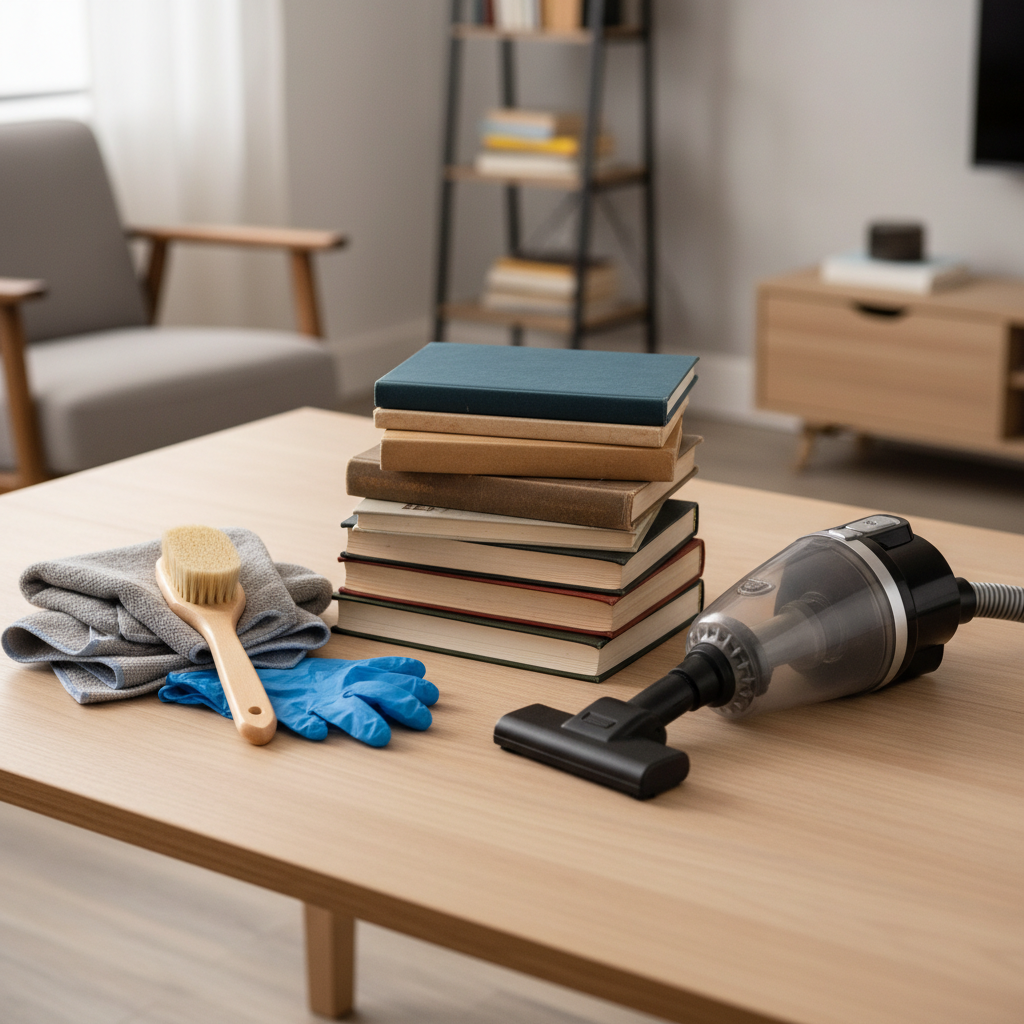
You don’t need a restoration kit. You do need tools that don’t shed, don’t scratch, and don’t introduce moisture.
| Tool | Best for | Notes |
|---|---|---|
| Microfiber cloth (clean, dry) | Covers, dust jackets (light dust) | Fold into quarters, use very light pressure, switch to a clean face often |
| Soft brush (makeup brush or book brush) | Page edges, headcap, crevices | Brush dust off, not into the book; keep strokes consistent |
| Handheld vacuum + brush attachment | Shelf cleaning and heavy loose dust | Use low suction and keep the brush between nozzle and book surface |
| Nitrile gloves (optional) | Glossy jackets, dark cloth covers | Helps reduce fingerprints, but can reduce grip; bare clean hands often fine |
| Acid-free storage box (for fragile) | Long-term dust control | Prevents re-dusting and reduces handling frequency |
Avoid these in most cases:
- Household sprays, disinfectants, and furniture polish, residue can stain and attract more dust.
- Paper towels, they can be surprisingly abrasive on coated jackets.
- Canned air, it can drive grit deeper and may blast cold propellant if tilted.
- Erasers on printed areas, they can lift ink or leave crumbs that lodge in fibers.
Step-by-step: removing dust without stressing pages
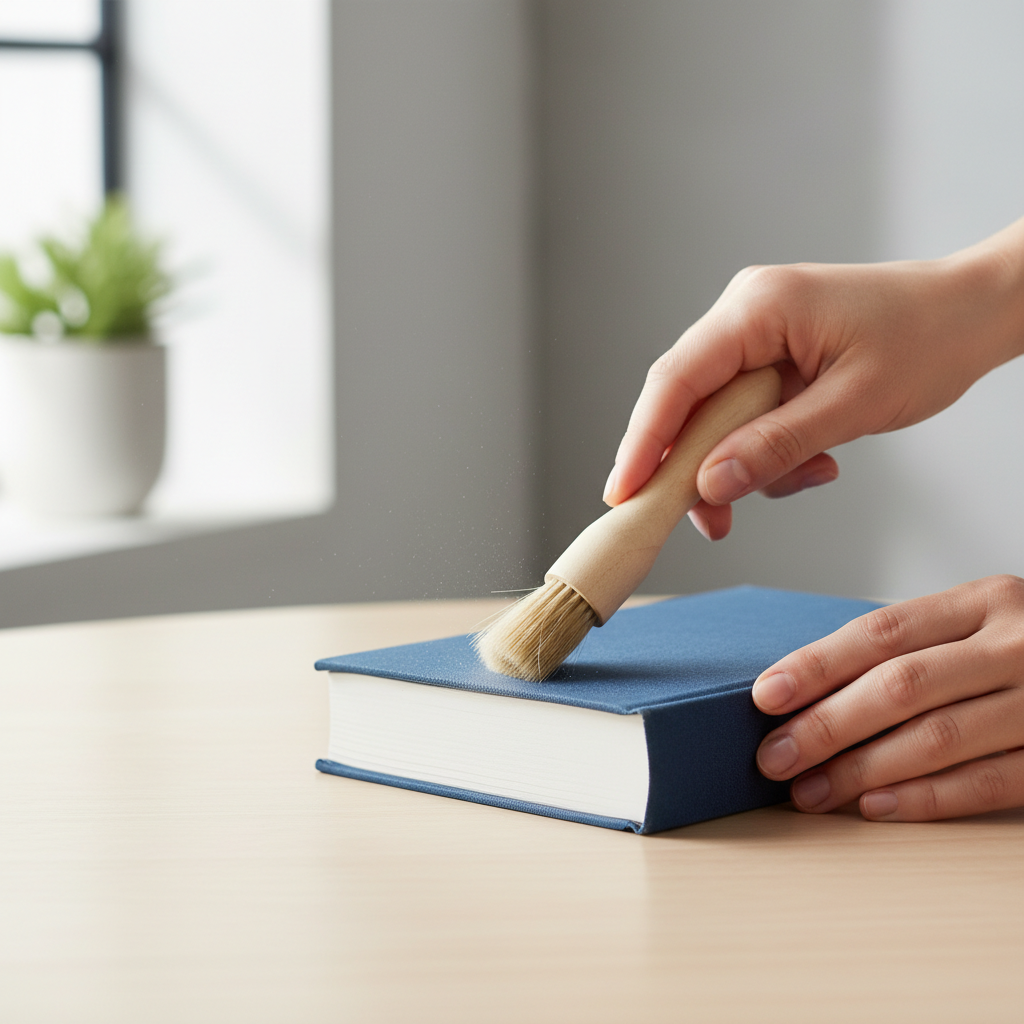
This is the core routine for how to remove dust from books without damage when you’re dealing with typical home shelving. It’s fast, but not sloppy.
1) Prep the area (you’ll thank yourself later)
- Wash and dry hands, or use clean nitrile gloves if fingerprints show easily.
- Clear a table and lay down a clean microfiber cloth.
- If you vacuum shelves, do that first so dust does not fall back onto clean books.
2) Keep the book closed, then clean from top to bottom
- Hold the book closed with the spine supported.
- Start at the top edge (where dust piles), brush outward and away from the pages.
- Move to the fore-edge and bottom edge, same motion: off the book, not into it.
3) Wipe covers and jackets with minimal pressure
- Use a dry microfiber cloth, very light passes.
- On glossy dust jackets, wipe in one direction to reduce micro-scratching.
- If the jacket is loose, remove it and clean it separately while supported flat.
4) Only then, address the page block (if needed)
If you still see dust along the page edges, keep the book closed and lightly brush again. Opening pages is where many people accidentally crease corners or stress hinges, so do it only when there’s a clear reason.
If you must open the book, open it only as far as it naturally wants to go, support both covers on the table, and use a soft brush to lift dust from the gutter area with small, controlled strokes.
Different scenarios: what changes for fragile, valuable, or “mystery residue” books
Older or brittle books
For fragile copies, your goal is “clean enough” rather than spotless. A little dust is safer than snapped paper.
- Skip wiping pressure, use brush-only methods.
- Support the spine and avoid opening wide; clean edges while closed.
- Consider an acid-free box so you handle the book less often.
Collectible books and dust jackets
Collectors often care more about jacket condition than the text block. Light abrasion and corner rubbing are the usual “cleaning scars.”
- Remove the jacket carefully, place it flat, and wipe with a clean microfiber cloth.
- Do not tape tears or “spot clean” with liquid without conservation guidance.
- If you use a protective jacket cover, put it on after everything is fully dry and dust-free.
Sticky grime (not just dust)
Kitchen shelves, smoking environments, and some basements create a film that behaves differently than loose dust. In many cases, the safest approach is dry cleaning first, then stop and reassess. Introducing moisture can spread stains.
According to the Northeast Document Conservation Center (NEDCC), conservation cleaning often starts with the least invasive dry methods and escalates only when necessary. If the residue feels tacky or dark, especially on older materials, it may be worth asking a conservator rather than experimenting.
Prevent dust from coming back so fast (simple storage and shelf habits)
Most people clean once, then wonder why shelves look dusty again in a week. The fix is usually in the room, not the brush.
- Airflow matters: HVAC returns near shelves can “feed” dust onto top edges. If possible, adjust placement.
- Leave a little breathing room: books packed too tightly grind covers when you pull them out, which creates more debris.
- Dust shelves, then books: otherwise you redo the job.
- Consider glass-front doors or boxes for the items you rarely touch.

Common mistakes that quietly damage pages
- Wiping page edges with a damp cloth, it can swell fibers and leave uneven ripples.
- Cleaning while the book stands upright on the shelf, you bend covers and scrape edges against neighbors.
- “Fanning” pages aggressively, it stresses hinges and can tear brittle corners.
- Using high-suction vacuums, page edges can lift and catch.
- Trying to deodorize by spraying, moisture plus paper rarely ends well.
Key takeaway: if you feel yourself pressing harder to make it “perfect,” that’s usually the moment to stop.
When to pause and get professional help
Cleaning is routine until it isn’t. Consider professional advice if you run into any of these:
- Suspected mold: fuzzy patches, strong musty odor, or spreading spots. Mold can affect health, in many cases you should avoid dry-brushing that sends spores into the air, and consult a qualified conservator or indoor air professional.
- Active insect damage: fresh frass, holes, or live insects.
- High-value items: rare editions, family records, signed books where surface changes impact value.
- Water damage or stuck pages: pulling them apart can tear paper and remove inks.
According to the American Institute for Conservation (AIC), conservators tailor treatments to materials and condition, which is why “one-size cleaning hacks” are risky for special items.
Conclusion: a safer routine you can repeat
If you remember one process, make it this: clean the shelf, keep the book closed, brush dust off the edges, then lightly wipe covers. That sequence handles most home situations and keeps you out of the page-damage zone.
Pick one shelf this week and do a small test run with two or three books, then decide whether your collection needs a simple quarterly dusting or a more protective storage approach.
FAQ
How do I remove dust from books without damage if I only have household supplies?
Start with a clean, dry microfiber cloth or a very soft brush (even a clean makeup brush can work). Keep the book closed, brush dust off the top edge first, then wipe covers lightly. Skip sprays and wet wipes.
Can I use a vacuum to clean books safely?
Often yes, but keep suction low and use a brush attachment so the nozzle never grabs a page edge. Vacuum shelves and the area around books more than the books themselves, that’s usually where it helps most.
Is it okay to fan pages to shake dust out?
For sturdy modern books it might seem fine, but it increases hinge stress and can crease corners. If you’re trying how to remove dust from books without damage, brushing edges while the book stays closed is the safer default.
What if dust is stuck to the page edges and won’t brush off?
That’s often grime or residue, not loose dust. Stop before adding moisture. Try a few more gentle brush passes, then consider whether the book needs conservation-style dry cleaning, especially if it’s older or valuable.
How often should I dust my bookshelves?
It depends on airflow, pets, and how open the shelves are. Many homes do fine with a light shelf dusting every few weeks and book edge cleaning every couple of months, but high-traffic rooms can need more frequent touch-ups.
Should I wear gloves when cleaning books?
Clean, dry hands are usually safe for modern books. Gloves can help with glossy jackets or dark cloth covers where fingerprints show, but they can also make you more likely to drop a book, so choose what feels controlled.
How do I know if it’s mold or just dust?
Mold often looks fuzzy or spotty and comes with a persistent musty smell, while dust is more uniform and wipes away. If you suspect mold, avoid vigorous brushing that can spread particles, and consider professional guidance.
If you’re trying to keep a larger home library clean without turning it into a weekend project, a simple kit with a soft brush, microfiber cloths, and a low-suction handheld vacuum can make the routine quicker and more consistent, especially when you set a small recurring schedule.