
Best memory foam bath pillows for tub comfort are usually the quickest way to turn a hard tub edge into something your neck and shoulders can actually relax on, without constantly readjusting. If your “bath time” often ends with a stiff neck, a wet pillow that slides down the wall, or suction cups that pop off mid-soak, you’re not alone.
What makes this worth getting right is simple, a bath pillow is one of those small items that either quietly improves your routine every week, or becomes clutter because it never stays put, never dries, and starts smelling off. Memory foam adds comfort, but it also adds a few buying and care variables that shoppers miss.
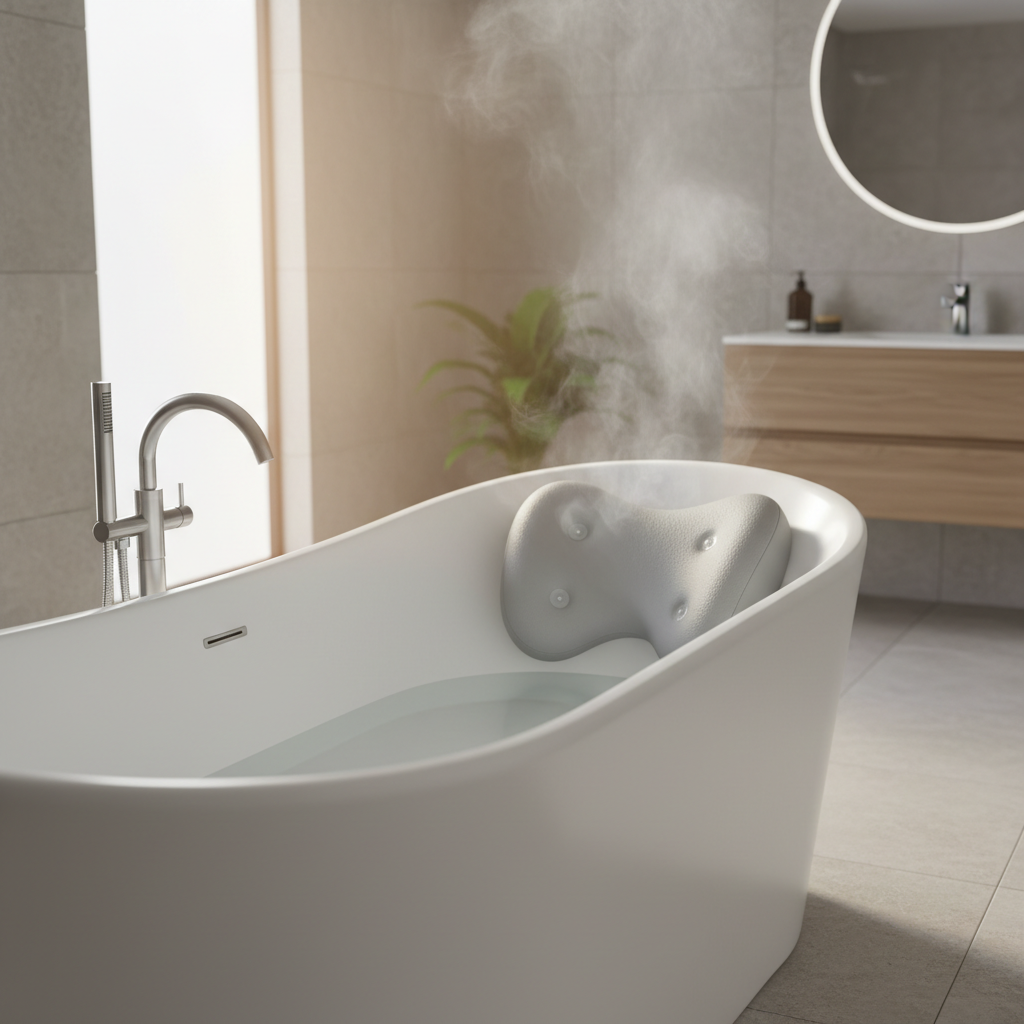
This guide focuses on real-world selection, fit, and upkeep, plus a short comparison table so you can narrow choices fast. I’ll also flag safety and hygiene points that matter if you share a bathroom, have sensitive skin, or just want something that lasts longer than a month.
What “memory foam” changes in a bath pillow (comfort vs. maintenance)
Memory foam feels different from thin mesh or inflatable pillows because it compresses slowly and spreads pressure, which often reduces that sharp “tub edge” feeling at the base of the skull. That part is great.
But memory foam also means moisture management matters more. Many bath pillows use memory foam as the inner core, then rely on a cover to keep water from soaking in and to help the pillow dry.
- Comfort upgrade: better pressure relief for neck and upper back, especially if you lean back for longer soaks.
- Support tradeoff: too-thick foam can push your head forward, which some people find worse than no pillow.
- Care requirement: if the cover traps water, odors and mildew become a common failure point.
According to CDC, keeping bathroom surfaces clean and dry helps reduce mold growth in indoor environments. A bath pillow sits in the “always damp” zone, so choosing one that dries faster is not a minor detail.
Quick comparison table: what to look for before you buy
Most shopping pages mix features without context. This table gives you the practical “why it matters” version, so you can match the pillow to your tub and habits.
| Feature | Good sign | Watch out for | Best for |
|---|---|---|---|
| Foam density/feel | Medium-firm, rebounds slowly | Very thick/soft can crane your neck | Long soaks, neck tension |
| Cover material | Breathable mesh + water-resistant inner layer | Non-breathable “rubberized” feel that stays wet | Humidity-prone bathrooms |
| Suction cups | Many cups, flexible base, replaceable feel | Few cups, hard plastic that warps | Textured tubs, frequent repositioning |
| Shape | Contoured neck curve, wider shoulder wings | Flat rectangle that folds at edges | Sloped backs, narrow tubs |
| Cleaning | Machine-washable cover, foam stays protected | No removable cover, unclear care instructions | Shared bathrooms, sensitive skin |
Why bath pillows slip, sag, or smell (the real causes)
If you’ve tried a couple and gave up, the problem is usually not “bad luck,” it’s mismatch between tub surface, pillow backing, and drying setup.
- Your tub wall is textured or curved. Suction cups need smooth contact, heavy texture creates tiny air gaps, and the pillow slowly peels off.
- Soap film defeats suction. Even a thin residue makes cups release, especially in warmer water where films spread.
- The pillow is too thick for your anatomy. When the foam pushes your head forward, you compensate by sliding down, then the pillow slides too.
- It never fully dries. Many “memory foam” models feel plush but trap water, then odors show up fast in humid bathrooms.
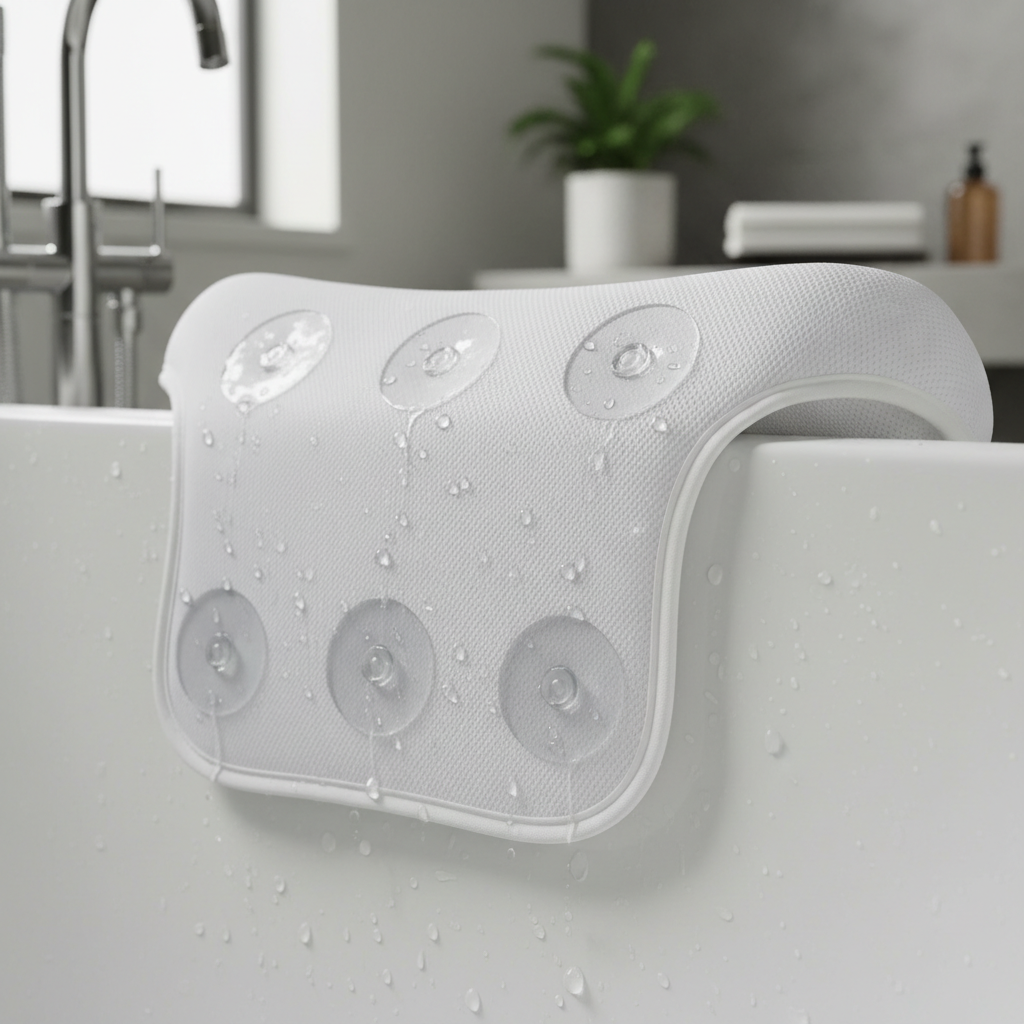
One more detail people miss, a lot of “bath pillow mildew” complaints are really “bath pillow + poor ventilation.” If your bathroom stays damp for hours, your pillow becomes the first thing to complain about.
Self-check: which type of memory foam bath pillow fits your tub and routine?
Use this list like a quick filter. You don’t need perfect answers, just enough to avoid obvious mismatches.
Tub and surface
- Is the backrest area smooth acrylic/porcelain or heavily textured?
- Do you sit on a sloped back (common in newer alcove tubs) or a more vertical back?
- Do you regularly take baths in a jetted tub where water movement may tug at edges?
Your comfort preference
- Do you want neck-only support or neck plus shoulders?
- Do you tend to read or scroll, meaning your head angle changes a lot?
- Do you prefer a firmer feel, or do you sink into soft foam?
Your cleaning tolerance
- Will you actually rinse and hang-dry it after most uses?
- Do you need a removable, washable cover because of makeup, hair products, or shared use?
If you answered “textured tub” and “I won’t hang-dry,” lean toward models marketed as fast-drying mesh with extra suction coverage, and be picky about cover design. That combo tends to reduce the annoying failure modes.
How to choose the best memory foam bath pillows for tub comfort (buying criteria that matter)
Product listings love buzzwords, but these are the criteria that usually decide whether you keep it or return it.
1) Neck contour that matches how you sit
Look for a defined neck cradle rather than a flat block. If you sit upright, too much “lounge” curve can feel wrong. If you recline, a flat pillow often forces tension.
2) Suction system you can trust
More suction cups can help, but cup quality and placement matter more than an inflated number. A wider base spreads load, which reduces peel-off when you shift.
3) Cover construction (not just “waterproof”)
Fully waterproof covers can trap moisture inside. Many good options use a water-resistant inner layer plus breathable outer mesh so surface water drains and the pillow dries faster.
4) Size that fits your tub width
If the pillow is wider than the tub’s back curve, edges lift and cups lose contact. If it’s too narrow, it can feel like balancing on a pad.
- Narrow tubs: prioritize contoured neck support over oversized shoulder wings.
- Wider soaking tubs: shoulder support can feel noticeably more relaxed.
5) Skin sensitivity and materials
If your skin reacts easily, favor softer mesh fabrics and avoid harsh seams near the neck. When in doubt, choose a removable cover you can wash more often.
Setup and care: make it stay put and stay fresh
Even the best memory foam bath pillows for tub comfort can underperform if setup is sloppy. The good news, most fixes take two minutes.
Getting suction to hold
- Clean the tub contact area with a non-oily cleaner, then rinse well so no film remains.
- Wet the suction cups lightly, press firmly, and hold pressure for a few seconds.
- Place the pillow where your neck naturally lands, not where it “looks centered.”
Drying routine that prevents funk
- Rinse off bath oils, conditioner, and soap, they feed odors and reduce suction over time.
- Hang it so air reaches both sides, not flat on the tub ledge.
- If your bathroom runs humid, crack a door or run the fan longer than you think you need.

Cleaning without ruining the foam
Follow the brand instructions if available, because “memory foam” can mean different constructions. Many times, the safe route is washing the cover and spot-cleaning the foam core.
- Machine-washable cover is ideal, use mild detergent and let it dry fully.
- Avoid harsh bleach mixes unless the manufacturer explicitly allows it, material damage can follow.
- If odor persists, replacing the pillow might be more realistic than fighting it forever.
Safety notes and common mistakes (especially if you soak often)
A bath pillow seems harmless, but a few mistakes pop up a lot, especially in shared households.
- Using it on a dirty surface: suction fails, then you jerk your neck trying to catch yourself.
- Assuming “waterproof” means “mold-proof”: trapped moisture still causes issues, ventilation matters.
- Over-reclining: if your head angle makes you sleepy, consider whether baths are the right place for long, hot soaks, safety comes first.
- Ignoring skin irritation: if you notice redness or itching where the pillow touches, stop using it and consider a different material, and if symptoms persist, checking with a clinician is reasonable.
According to CPSC, preventing slips and falls in and around tubs is a key household safety issue. A pillow won’t replace a bath mat or grab bar, but keeping your support stable can reduce awkward repositioning.
Key takeaways (what actually matters)
- Fit beats hype: shape and size should match your tub back and how you sit.
- Drying is the difference-maker: breathable cover plus hang-dry habits usually prevent most odor complaints.
- Suction depends on cleanliness: soap film is a bigger enemy than most people expect.
- Comfort should feel neutral: if it pushes your chin forward, it’s not “support,” it’s strain.
Conclusion: picking a pillow you’ll still like next month
The best memory foam bath pillows for tub comfort tend to be the ones that match your tub surface, cradle your neck without forcing posture, and dry fast enough that you don’t start avoiding it. If you want a simple next step, measure the usable backrest width, then prioritize a contoured shape with a washable cover and a suction layout that makes sense for your tub wall.
If your current pillow slips, try the cleaning-and-placement reset once before replacing it, and if the cover never fully dries in your bathroom, switching to a more breathable design often solves the problem faster than buying “thicker” foam.
FAQ
Are memory foam bath pillows safe to use in hot baths?
In many cases yes, but the bigger question is how the cover handles heat and moisture. If a pillow traps water, it may develop odor or mildew faster in hotter, longer soaks, so drying habits matter.
How do I keep a bath pillow from sliding down the tub?
Clean off soap film, wet the suction cups lightly, and press them onto a smooth section of tub wall. If your tub is textured, choose a pillow with more cups and a wider backing, and expect a bit more trial-and-error with placement.
Do suction cups work on textured tubs?
Sometimes, but results vary with the texture depth and cup softness. If the tub has heavy texture, a pillow may hold for short soaks but peel off during movement, in that case, you may need to test a few designs.
What’s better, full waterproof or breathable mesh cover?
For most households, breathable mesh with a water-resistant inner layer is easier to live with because it dries faster. Fully waterproof covers can be fine, but they often feel clammy and may trap moisture if water gets inside.
How often should I wash a memory foam bath pillow?
If it has a removable cover, washing every couple of weeks is common, more often if you use bath oils or hair products. For the foam core, spot-cleaning is usually safer than soaking, unless the brand explicitly says otherwise.
Why does my bath pillow smell even after rinsing?
Smell usually comes from moisture staying inside plus residue from soaps or oils. A longer dry time, better airflow, and occasional cover washing help, but if odor stays embedded, replacement may be the practical call.
Can a bath pillow help neck pain?
It can reduce pressure points for some people, especially when the tub edge causes tension. If you have persistent or sharp neck pain, it’s smart to treat the pillow as comfort support, not medical treatment, and consider talking with a professional.
If you’re trying to upgrade your bath setup without guessing, start by matching pillow shape to your tub and then commit to a simple hang-dry routine, it’s the easiest “effort-to-comfort” trade that actually sticks.