
how to arrange potted plants in living room usually comes down to three things: matching plants to your light, choosing the right scale for your furniture, and grouping with intention so it looks styled, not random.
If your living room plants feel messy, it’s rarely because you “picked the wrong plant.” More often, the placement breaks a basic visual rule (everything the same height, pots fighting the decor) or a care rule (a low-light plant baking in a sunny window).
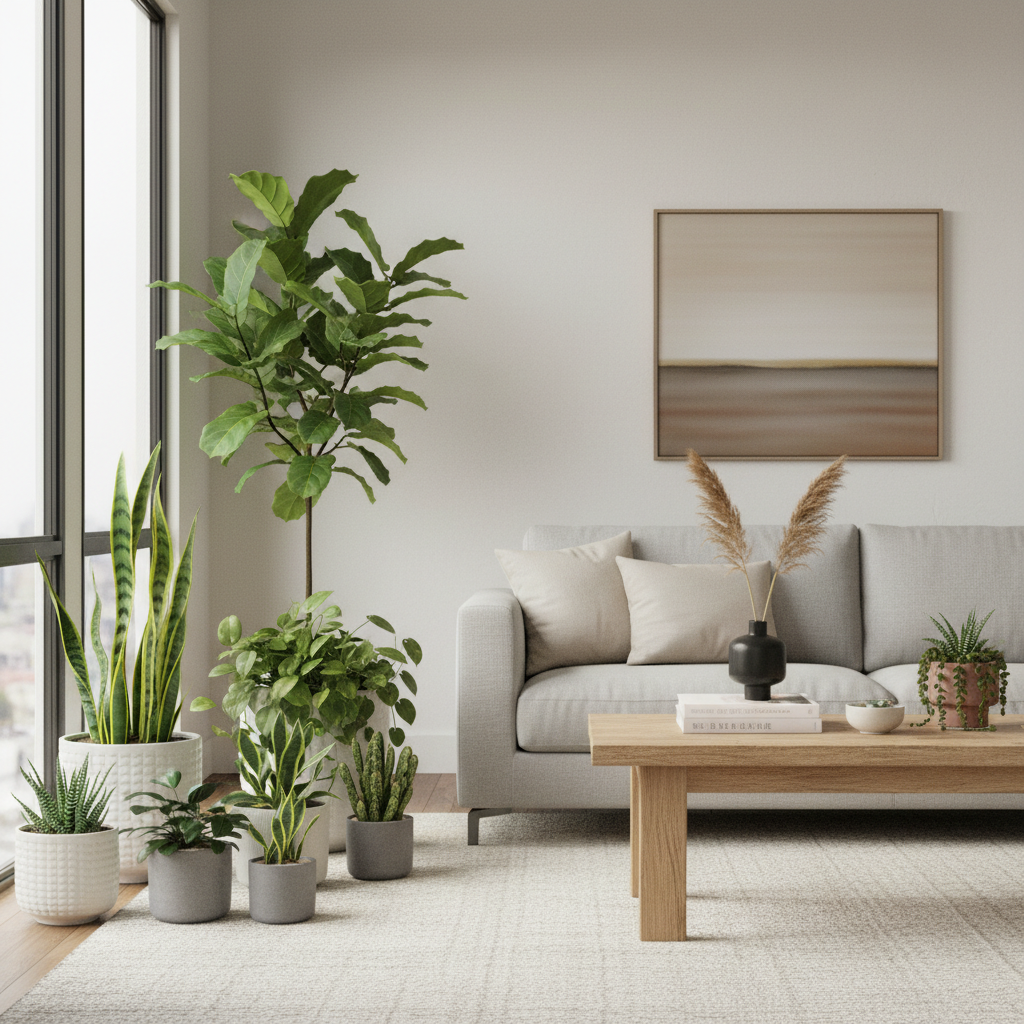
This guide gives you a practical layout method, a quick self-check, and a few “designer cheats” that work in most U.S. apartments and homes, even when space is tight.
Start with light and traffic flow (before you move a single pot)
Plant styling looks like decor, but it behaves like care. If the light is wrong or people constantly bump the leaves, the setup won’t last.
Map your room in two minutes: identify your brightest window, your darkest corner, and your main walking paths (doorway to couch, couch to kitchen, etc.).
- Bright window zone: best for sun-tolerant plants and “statement” plants you want noticed.
- Medium light zone: the majority of living rooms, great for many common houseplants.
- Low light zone: use truly low-light-tolerant plants or add a grow light if you want greenery there.
According to the U.S. Forest Service, indoor plants vary widely in their light needs, and “bright” indoors is still much dimmer than outdoors, so treating every corner as equal light often causes slow decline rather than immediate failure.
Use a simple “scale rule” so plants fit the room
Most living room plant arrangements fail because everything sits at the same height, or the plant size doesn’t relate to the furniture. A small plant floating beside a large sectional feels accidental, while an oversized floor plant can block sightlines and feel cramped.
A quick scale guideline that usually works
- Floor plants (3–6 ft): anchor corners, flank consoles, or sit beside a sofa arm.
- Mid-height plants (1–3 ft): style on benches, plant stands, low shelves.
- Tabletop plants (6–18 in): coffee table (sparingly), side tables, mantels.
If you’re unsure, pick one “hero” plant (the tallest/most sculptural), then build a supporting cast around it with smaller sizes.
Group plants like decor: odd numbers, varied heights, one shared element
If you want the arrangement to look intentional, treat plants like a vignette. The goal is a mini composition: height variation, some negative space, and one thing that ties it together.
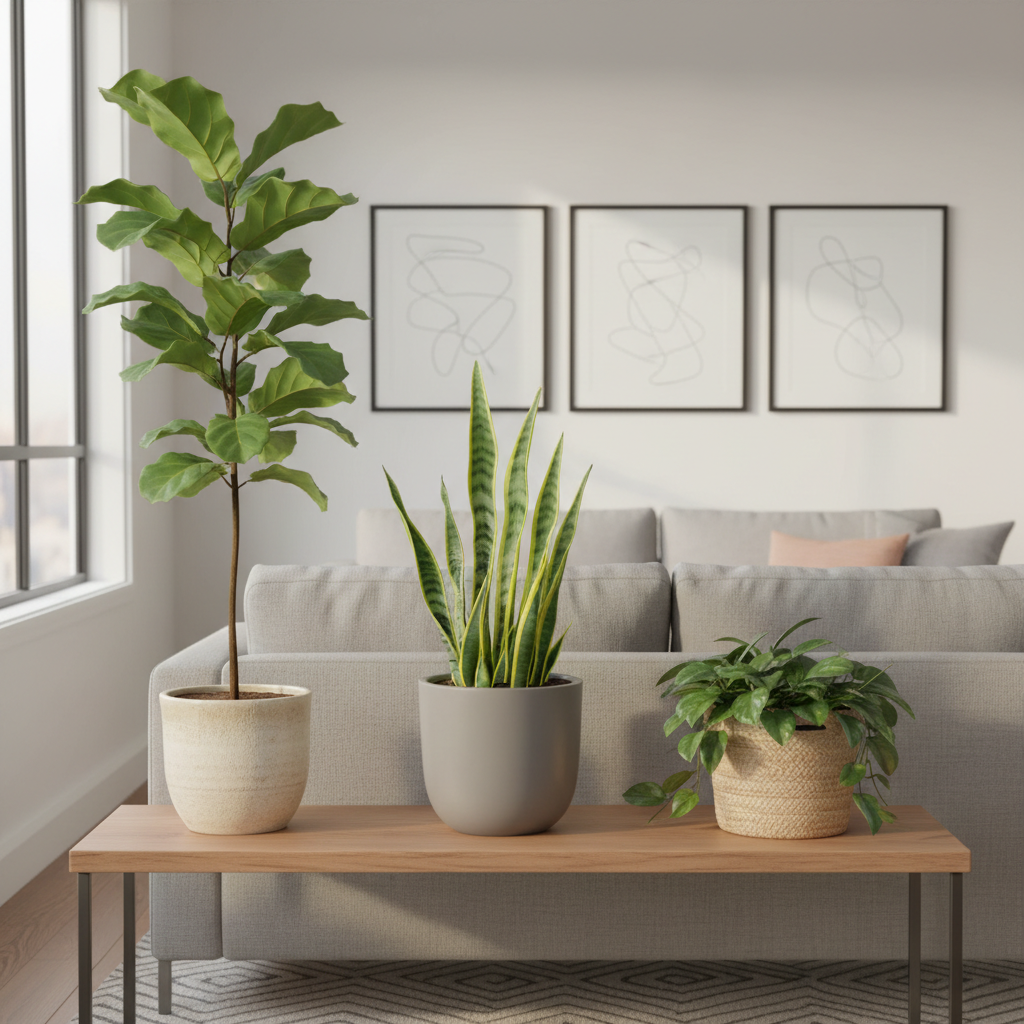
Try the “3-2-1 grouping”: three plants with different heights, two similar pot finishes, one accent texture (a basket, ceramic glaze, or wood stand).
- Odd numbers (3 or 5) tend to read more natural than pairs.
- Stagger heights using stands, stools, or stacked books (only if stable).
- Repeat one element so it doesn’t look like you bought random pots on different days.
Good to know: when people search how to arrange potted plants in living room, they often want “designer” results, but the fastest path is consistency in pot color/material, not buying rare plants.
Choose placements that feel natural: five spots that almost always work
You don’t need plants everywhere. A few strong placements beat a dozen scattered pots.
- Near the brightest window (but not jammed against the glass): build a cluster that can share light.
- Empty corner: add a tall floor plant, then one smaller plant beside it for depth.
- Beside the sofa: a medium-to-tall plant softens the edge and fills dead space.
- On a console or credenza: use two plants with different heights, plus one non-plant object for balance.
- On a shelf (selectively): one trailing plant per section reads calm, too many reads cluttered.
If you have pets or small kids, prioritize stable floor placements and heavier planters, and consider placing toxic plants out of reach. If you’re unsure what’s safe, it’s worth asking a veterinarian or checking a reputable pet-safety resource.
Quick self-check: why your current setup looks “off”
Use this as a fast diagnosis before you rearrange everything.
- All pots are the same height: you need at least two height tiers.
- Every plant is isolated: create 1–2 clusters, then keep 1–2 single “punctuation” plants.
- Pots don’t match anything: choose one neutral family (black, white, terracotta, warm stone) and repeat.
- Leaves block walkways: move big foliage away from traffic or raise it behind furniture lines.
- Plants look sad after a few weeks: likely a light mismatch or watering inconsistency, not “bad luck.”
According to the Royal Horticultural Society (RHS), matching plants to the available light is a core factor in long-term indoor plant success, and low-light areas are a common reason plants decline slowly.
A practical layout plan you can do in 30–45 minutes
This is the easiest way to get a cohesive look without overthinking.
Step-by-step
- Step 1: pick one anchor zone (window area or a main corner).
- Step 2: place the tallest plant first, slightly off-center from the spot’s midpoint.
- Step 3: add 1–2 medium plants, one closer, one farther back, so the cluster has depth.
- Step 4: add a small plant or trailing plant to soften edges.
- Step 5: walk to your doorway and sofa, check sightlines, then rotate plants so the best side faces the room.
Key point: leave breathing room. Negative space is what makes plants look curated rather than crowded.
Table: common living-room scenarios and what to do
Different rooms need different tactics. Here’s a quick cheat sheet.
| Living room situation | What usually goes wrong | What to try |
|---|---|---|
| Small apartment, limited floor space | Too many small pots scattered | Create one tight window cluster + one tall corner plant, use one shelf trailing plant |
| Open-concept living room | Plants feel like they “float” | Use plants to visually anchor zones: sofa edge, console, corners |
| Low-light room | Plants decline slowly, leggy growth | Move light-hungry plants closer to windows, consider a grow light for darker corners |
| Lots of decor already | Visual clutter | Reduce plant count, unify pot finishes, choose one statement plant instead of many |
| Pets/kids at home | Chewed leaves, tipped pots | Heavier planters, stable stands, place sensitive plants higher, double-check toxicity |
Common mistakes (and the fix that feels almost too simple)
Some problems look like you need new plants, but you usually just need a cleaner structure.
- Mistake: lining plants up like soldiers on a windowsill. Fix: stagger heights and leave gaps.
- Mistake: mixing five different pot styles. Fix: pick two finishes and repeat them.
- Mistake: putting thirsty plants far from where you notice them. Fix: keep higher-care plants where you naturally look every day.
- Mistake: crowding plants for a “jungle” look without airflow. Fix: separate leaves slightly; if humidity is a concern, a humidifier is safer than overwatering.
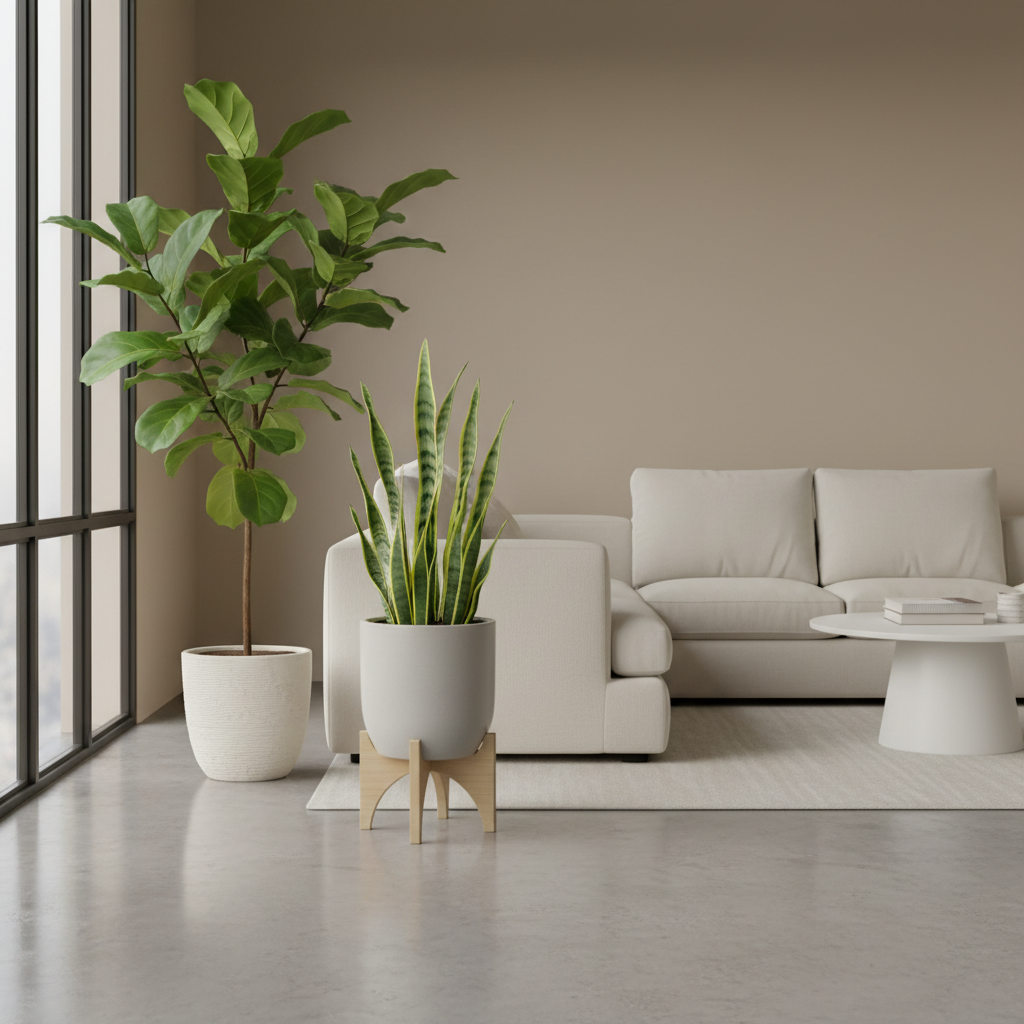
One more reality check: if your living room has only one decent light source, you might not be able to “green up” every corner without supplemental lighting, and that’s normal.
When it’s worth getting extra help (or at least a second opinion)
If plants keep declining after you adjust placement, the issue may be less about styling and more about environment.
- Repeated pest issues (sticky leaves, webbing, scale bumps): a local nursery can help identify pests and treatment options.
- Suspected mold or persistent damp smell near plant corners: consider checking humidity, drainage, and room ventilation; if you suspect a home issue, a qualified professional is the safest route.
- Pet health concerns after chewing plants: contact a veterinarian rather than waiting it out.
Key takeaways to keep it looking good
- Light first: placement that keeps a plant healthy is almost always the placement that looks good longer.
- One hero, a few helpers: anchor with a tall plant, then build a small cluster.
- Consistency beats variety: repeat pot finishes and height tiers for a calm, styled look.
Conclusion: a simple plan you can use today
If you’ve been stuck on how to arrange potted plants in living room, start by choosing one anchor spot near your best light, create a three-plant cluster with varied heights, then stop and remove one item if the area feels busy. That small “edit” is usually what makes the room click.
Pick one change you’ll make in the next 15 minutes: move your tallest plant to a corner you actually see, or unify your pots into one color family. Either one gives fast results without buying anything new.
FAQ
- How do I arrange potted plants in a living room with only one window?
Keep most plants within the brightest zone, then use one or two low-light-tolerant options farther away, or add a grow light for darker corners if you want plants there long-term. - Should I put plants on the coffee table?
One small, low arrangement can work, but if you use the table a lot, it gets annoying fast. Side tables and consoles often look better and live more comfortably. - How many plants are too many for a living room?
It depends on room size and decor density, but clutter usually shows up when plants are scattered as singles. Fewer plants in clusters often looks more intentional. - What’s the easiest way to make mismatched pots look cohesive?
Group them by color family (all warm neutrals, all matte black, all terracotta) and repeat one texture like a basket or wood stand so the eye has a pattern to follow. - How do I keep tall plants from looking awkward next to a sofa?
Use the sofa arm as a height reference, then place a medium plant or a stand nearby to create a “step down” in height, instead of one sudden jump from floor to ceiling. - Is it okay to put plants near an air vent or radiator?
Many plants struggle with hot or cold drafts and very dry airflow. If leaves crisp or soil dries unusually fast, move the plant a few feet away and reassess. - What if my plant looks healthy but the corner still feels empty?
Add a second layer: a smaller plant at the base, a plant stand, or a floor basket planter. Empty corners usually need height variation more than more greenery.
If you’re trying to get a clean, styled look without spending a weekend rearranging, it can help to take one wide photo of your living room, then plan two plant “zones” and a consistent pot palette before you move anything, it’s a simple way to make the next round of changes feel more certain.