
how to organize linen closet by category and size comes down to one thing: making it easy to put items back where they belong, even when you’re in a rush with a load of laundry.
If your shelves keep collapsing into messy piles, it’s usually not because you “need more bins” or “need to fold better,” it’s because categories are mixed, sizes fight each other, and your closet has no clear rules. That’s fixable.
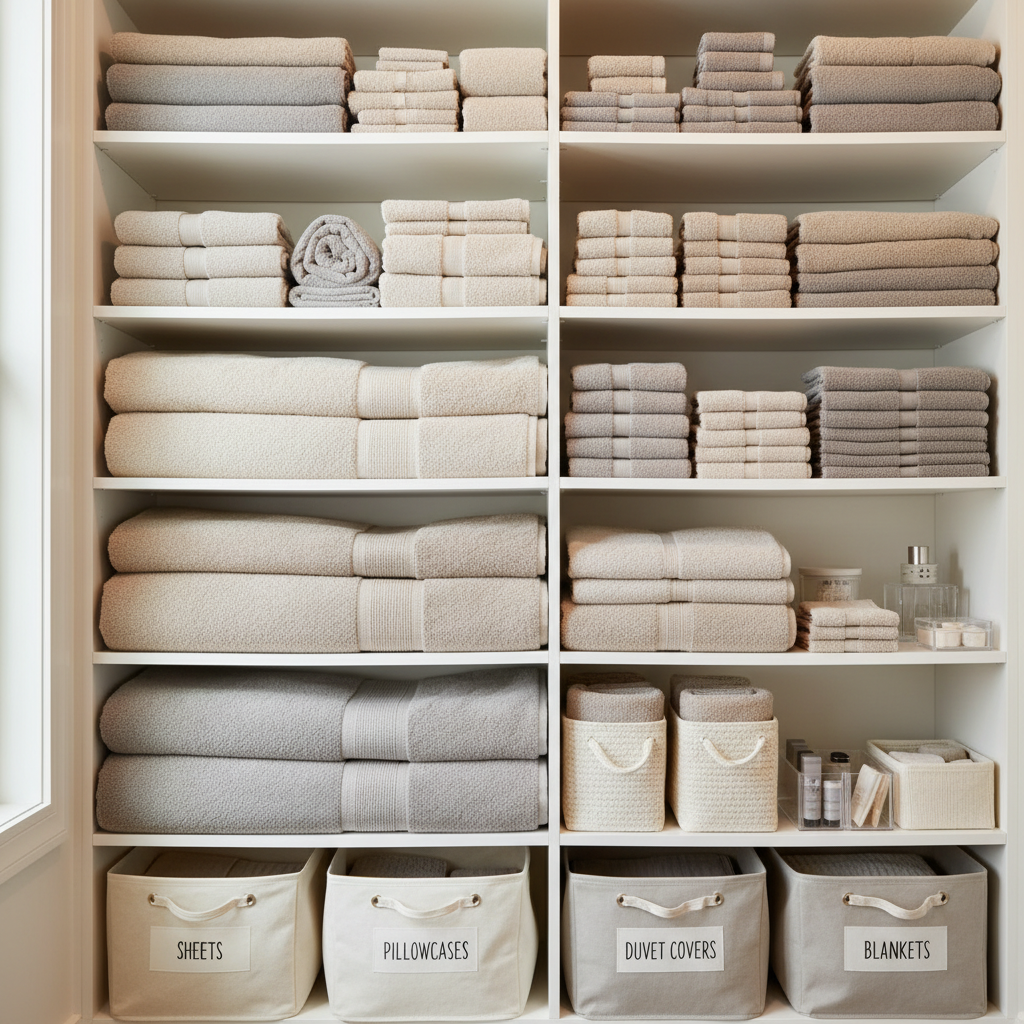
This guide walks you through a practical, category-and-size system, plus a quick self-check so you don’t over-organize. You’ll also get a simple table you can copy for your shelf plan.
Start with a 15-minute reset (so you organize once, not forever)
Before you sort anything, do a fast reset. You’re not aiming for perfection, you’re creating clean inputs so your system actually holds.
- Empty one shelf at a time, not the whole closet, so the project stays contained.
- Make three quick piles: Keep, Relocate (belongs elsewhere), Review (stained, torn, mismatched).
- Wipe shelves and check for moisture or musty smells. If you see recurring dampness, it may be worth addressing ventilation or asking a qualified professional for home moisture guidance.
According to CDC, mold can trigger allergy-like symptoms and irritation in some people, so if you suspect mold, cleaning and moisture control matter more than “organizing around it.”
Choose your categories first, then let size decide the stacking rules
Most linen closets fail because people start with folding, not with categories. Categories decide where things live; size decides how they sit.
Recommended category map (simple, flexible)
- Bath towels (by size)
- Hand towels & washcloths (by size)
- Sheets (by bed size)
- Pillowcases (standard/queen/king)
- Blankets/throws (bulk zone)
- Guest extras (backup set, travel-size toiletries, etc.)
If your closet is small, combine categories that get used together, like “hand towels + washcloths,” and keep “extras” tighter, since backups tend to expand.
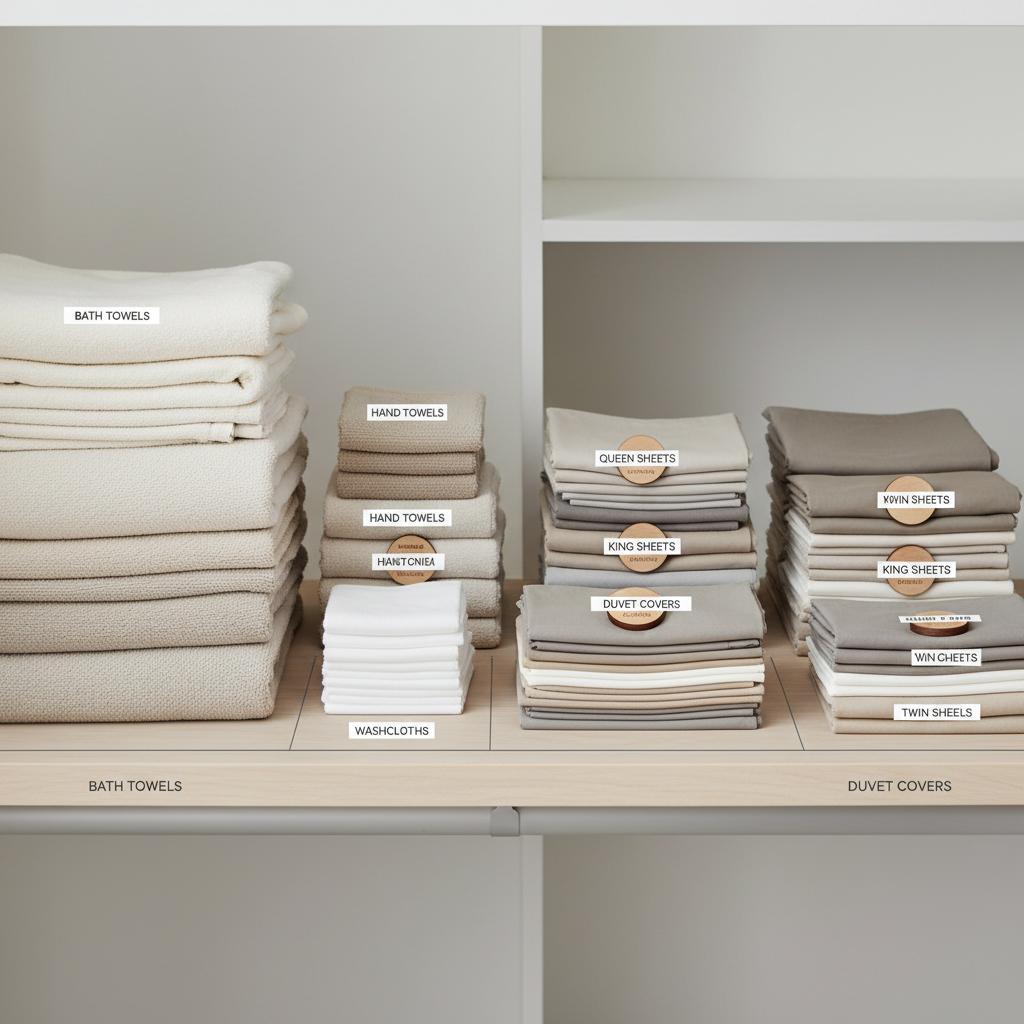
Once categories exist, size gives you “rules” that prevent toppling stacks: large items on lower shelves, small items higher or contained in bins, and mixed sizes separated so stacks don’t wedge and slide.
A shelf-by-shelf plan that usually works in real homes
Here’s a practical way to organize linen closet by category and size without buying a new closet system. Adjust based on your household, but keep the logic consistent.
| Shelf zone | What goes here | Why it works |
|---|---|---|
| Top shelf | Guest extras, seasonal blankets, backstock | Low-rotation items stay out of your daily flow |
| Eye-level shelves | Everyday towels by size, primary sheet sets | Fast grab-and-put-back reduces clutter |
| Lower shelves | Bulky bath towels, heavier blankets | Heavier stacks feel stable and safer lower down |
| Floor/lowest area | Large bin for overflow or “to be reviewed” textiles | Stops the closet from becoming a dumping ground |
Key point: your most-used category gets the best shelf, not your prettiest items. This sounds obvious, but it’s the difference between a closet that stays tidy and one that resets every weekend.
How to sort and fold by size (so stacks stop collapsing)
The goal is consistent footprints. When each stack has a predictable width and height, it behaves, even if someone else in the house puts laundry away.
Towels: stack from large to small, but don’t mix sizes in one stack
- Make separate stacks: bath sheets/bath towels, hand towels, washcloths.
- Cap stacks at a height you can lift without squeezing, many closets do well around 8–12 items, but it depends on thickness.
- If shelves are deep, store stacks front-to-back by size (large in back, smaller in front) only if you can still pull items without disturbing everything.
Sheets: bundle by bed size and keep sets together
- Sort into: Twin/Twin XL, Full, Queen, King.
- To keep sets together, place the folded fitted + flat inside one pillowcase from that set, then label the outside edge if needed.
- If you hate “pillowcase bundling,” use a slim bin per bed size and file-fold sets upright.
When people ask how to organize linen closet by category and size, the sheet sets are usually the turning point, because they’re the first thing that turns into a mixed, sliding pile.
Quick self-check: what type of linen closet mess do you have?
Pick the closest match, then follow the matching fix. This saves you from doing a full overhaul when you only need one change.
- “Everything falls over” mess: your stacks are too tall or mixed sizes share one pile.
- “I can’t find the right set” mess: categories exist, but bed sizes or sets aren’t grouped.
- “We have too much” mess: backups outnumber your rotation, so shelves never breathe.
- “It looks tidy but never stays tidy” mess: the put-back step is harder than the grab step.
If you’re in the last category, your solution is almost always labels + fewer decision points, not more containers.
Step-by-step: set up a system you can maintain in 5 minutes a week
This is the practical setup flow that tends to stick, even in busy households.
1) Decide your “par levels” (how many you actually need)
- For towels: many households do fine with 2 per person in active rotation plus a small guest buffer, but laundry frequency changes the math.
- For sheets: often 2 sets per bed is comfortable if you wash weekly, more if laundry cadence is less predictable.
Be honest about your laundry rhythm. If it’s inconsistent, a little buffer is reasonable, but unlimited backups become clutter fast.
2) Assign “prime shelves” to daily categories
- Eye-level: everyday towels and the main sheet sets.
- Higher: guest and seasonal items.
- Lower: bulk.
3) Add light containment where it prevents mixing
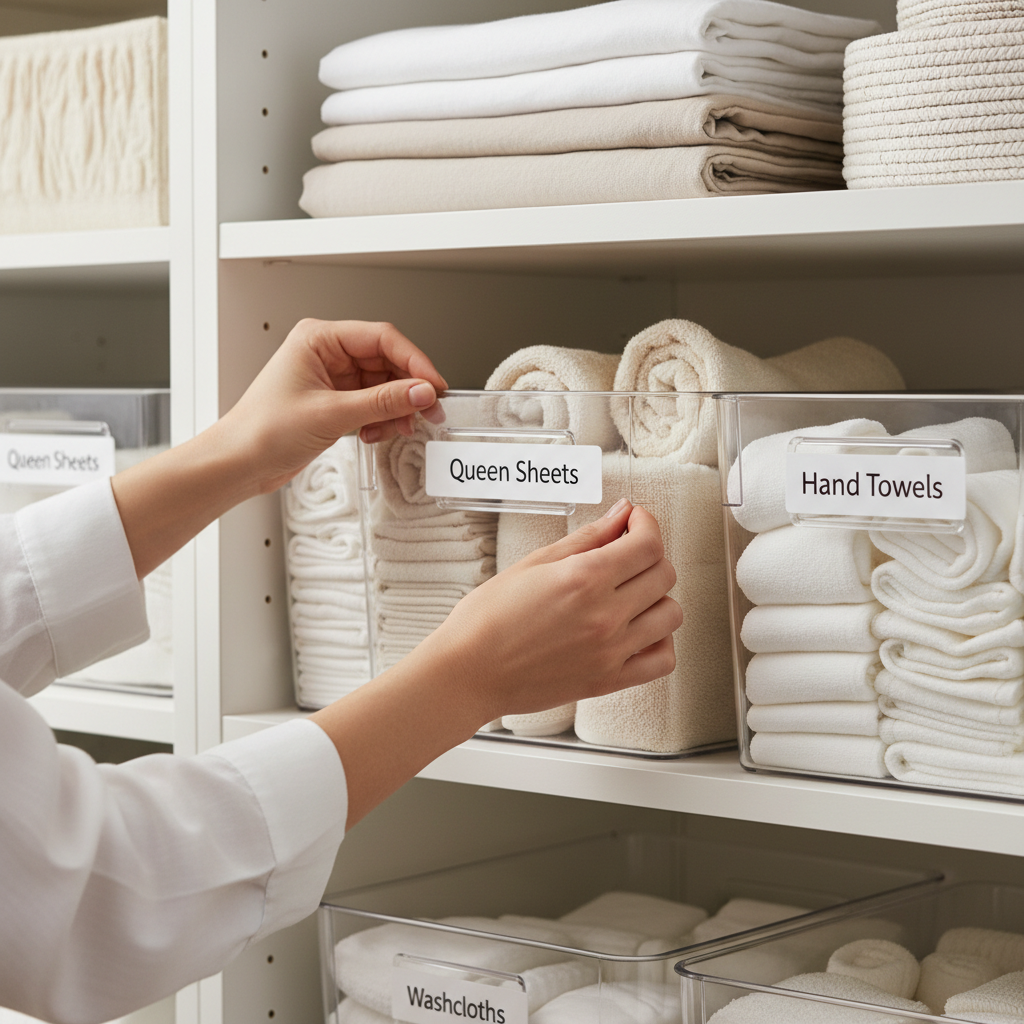
- Use a bin for washcloths and extra pillowcases so small items stop migrating.
- Add one overflow bin for “not sure yet” textiles, so you don’t shove them onto neat stacks.
4) Label only what causes friction
You don’t need a label for everything. Label the zones that get mixed: bed sizes, guest sets, and the small towel category that always disappears.
Common mistakes that make organizing fail (even when it looks great day one)
- Organizing by color instead of use: pretty, but you’ll break it the first time you need the “right towel” fast.
- Overstuffing shelves: tight stacks snag and pull everything out with one item.
- No home for awkward items: beach towels, extra blankets, and air mattresses need a defined spot or they take over.
- Buying containers before measuring: many bins waste vertical space or block visibility in deep closets.
If you want the closet to stay calm, keep a little empty space. It’s not “wasted,” it’s what makes the system resilient.
When it’s worth getting extra help (or changing the space)
Sometimes the issue isn’t effort, it’s constraints.
- Persistent musty odor or visible spotting: consider moisture control, and if you suspect mold, it may be safer to consult a qualified remediation professional.
- Very high shelves or hard-to-reach storage: adding a step stool and keeping heavy items low can reduce fall risk.
- Chronic overflow even after decluttering: you may need to relocate bulk items to another closet or under-bed storage, not force everything into one space.
According to OSHA, falls remain a common cause of injury in many settings, so for home closets, it’s smart to avoid storing heavy stacks overhead and to use stable step stools.
Conclusion: a linen closet that stays organized is mostly about rules
If you take one idea from this, let it be this: organize by category so everyone knows what goes where, and by size so stacks behave and the closet doesn’t collapse into a mixed pile again.
Tonight, do the smallest version: pick one shelf, separate towels by size, and label one bin for the items that keep drifting. If that shelf feels easier for a week, you’ll know your system is working.
FAQ
How do I organize a linen closet when I have deep shelves?
Deep shelves hide clutter in the back, so give the back a job: store backstock, seasonal blankets, or the “next set” behind your everyday stack. For small items, bins prevent them from sliding backward and disappearing.
What’s the easiest way to keep sheet sets together?
Putting the folded set inside one pillowcase is simple and fast for most people. If you prefer a cleaner look, file-fold sets upright in a labeled bin by bed size so you can grab one bundle without unstacking.
How many towels should I keep per person?
It depends on laundry frequency and whether you host guests, but many homes feel comfortable with two in rotation per person plus a small buffer. If your closet is always packed, reducing backups usually makes the biggest difference.
Should I store linens in plastic bins?
For small items and categories that mix easily, bins help. For everyday towels and sheets, open shelving is often easier to maintain. If you use sealed bins long-term, make sure items are fully dry to reduce musty smells.
How do I organize linens in a small apartment with no linen closet?
Create “micro zones” wherever you have space: one bin per bed size under the bed, a basket for towels in a bathroom cabinet, and a small guest-extra bin on a top shelf. The same category-and-size rules still apply.
What if different people fold differently and stacks look messy?
Standardize the footprint, not the technique. Pick a shelf width and agree on a rough fold size, or use bins so folded variation matters less. Consistent categories will carry the system even if folds vary.
How often should I refresh or declutter the linen closet?
A quick check every few months is usually enough: remove worn items, confirm bed-size categories still match your household, and make sure overflow hasn’t quietly become permanent storage.
If you’re organizing more than one closet or you want a more hands-off setup, a simple plan with labeled bins and a measured shelf layout can save time and reduce “re-do” cycles, especially when multiple people share laundry duties.