
Modern minimalist kitchen decor with open shelves works when you treat your shelves like a curated display, not extra cabinet space, meaning fewer items, consistent materials, and easy-to-clean styling.
If you love the airy look of open shelving but worry it will feel messy fast, you’re not overthinking it. Open shelves show everything, so a small mismatch, too many labels, or one awkward appliance can make the whole kitchen read as clutter.
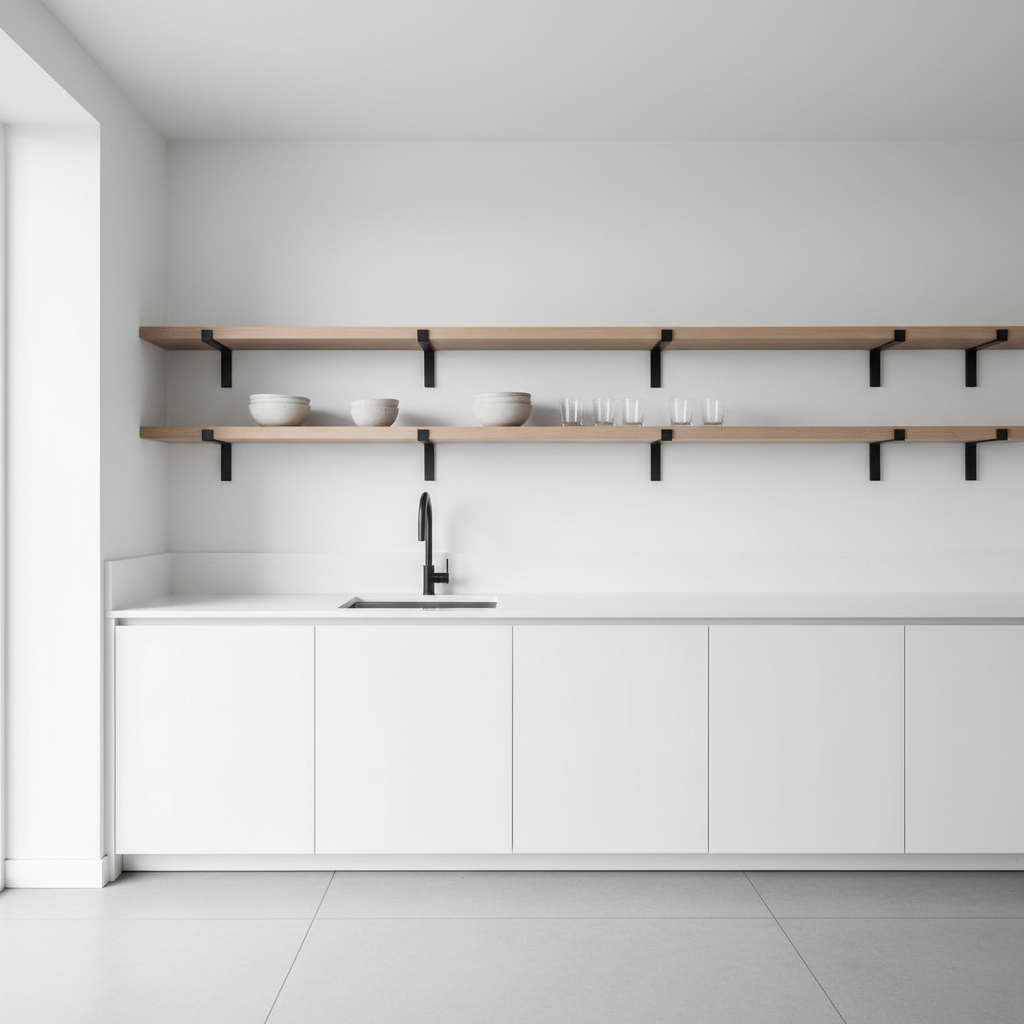
The payoff is real though: done well, open shelves make a kitchen feel larger, lighter, and more personal without adding visual noise. This guide breaks down why shelves go wrong, how to decide if they fit your lifestyle, and how to style them so they stay calm even on busy weeks.
Why open shelves look “minimal” in photos and chaotic in real life
Most shelf problems come from using them like storage. Minimalist styling needs breathing room, but real kitchens also need function, and the tension shows up on the wall.
- Too much variety: mixed mug shapes, bright packaging, random souvenir glasses, it all creates visual static.
- Wrong height and depth: shallow shelves force stacks and awkward angles, deep shelves invite clutter piles.
- Everyday grime: grease and dust are normal in kitchens, open shelves just make it more visible.
- No “closed” relief: when everything is exposed, the eye has nowhere to rest, so even nice items feel busy.
According to the NKBA (National Kitchen & Bath Association), good kitchen design balances beauty with daily workflow, and storage choices should match how the space is actually used. In other words, open shelves are a design tool, not a default upgrade.
A quick “fit check”: should you choose open shelves at all?
Before you buy brackets, figure out what you expect your shelves to do. If you need them to hold everything, you’ll end up fighting the look forever.
Open shelves tend to work well if…
- You can commit to a smaller “display set” of dishes and glasses.
- You run the dishwasher often and rotate the same items.
- You like a tidy counter and have enough closed storage elsewhere.
- You’re comfortable editing, donating, and consolidating.
You may want fewer shelves, or a hybrid setup, if…
- You cook with oil and spices most days and hate frequent wiping.
- Your household uses a lot of mismatched dishware.
- You need pantry overflow space and rely on bulk packaging.
- All your storage is already tight, so shelves would become “misc storage.”
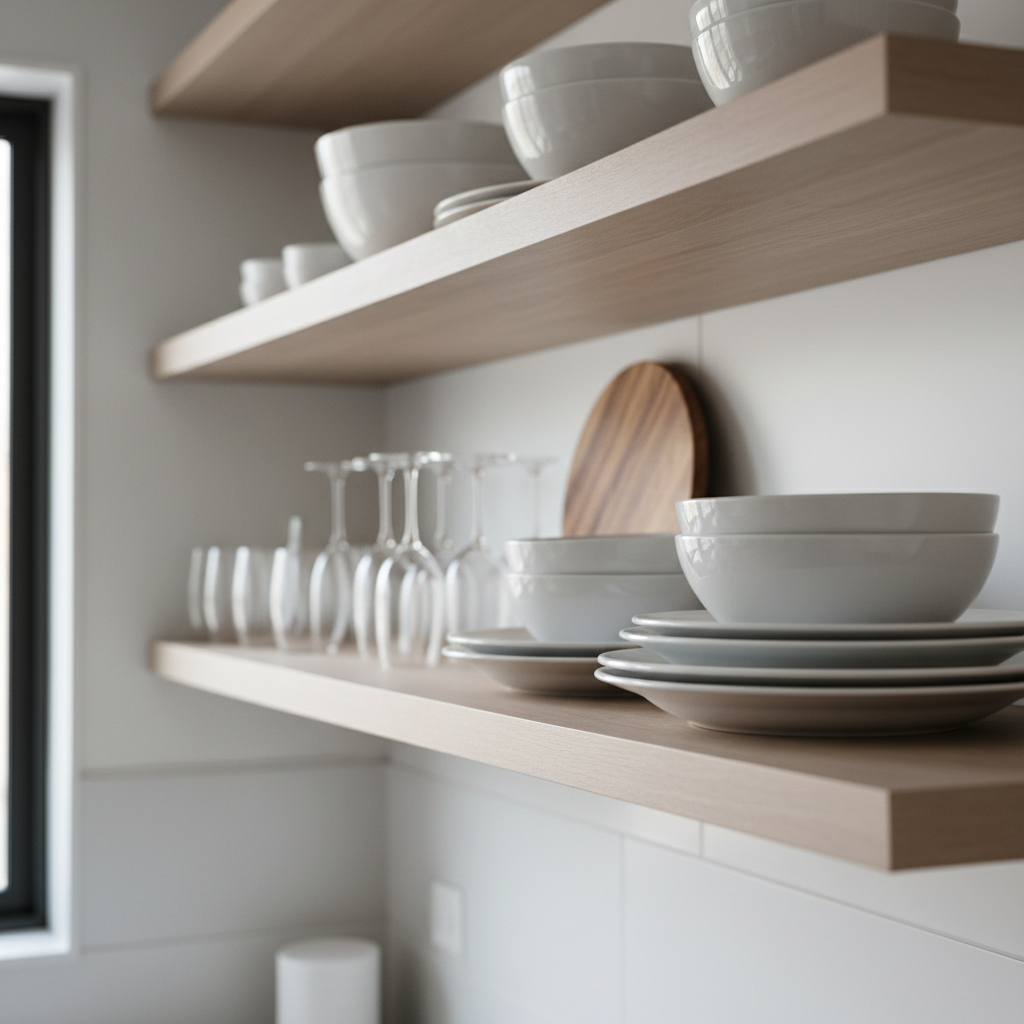
If you’re on the fence, consider doing one section of open shelving first, like near the sink for everyday glasses, and keep the rest closed. That single decision often prevents regret.
The minimalist styling rules that actually hold up week to week
There’s no magic trick, but there are a few rules that keep modern minimalist kitchen decor with open shelves looking intentional even when you’re busy.
- Pick one palette: whites, warm neutrals, or soft gray, then keep 80–90% of items inside it.
- Repeat materials: for example, ceramic + clear glass + light wood, then stop there.
- Leave negative space: aim for at least 20–30% empty shelf space so items can “breathe.”
- Group by function: cups near the coffee setup, bowls near prep space, not scattered “for balance.”
- Use odd groupings sparingly: one small trio looks curated, five trios looks staged.
A helpful mindset: shelves should look a little “underfilled” on day one, because real life adds visual weight over time.
What to put on open shelves (and what to keep behind doors)
This is where most people get stuck. The easy win is to display things that are both useful and visually calm, then hide everything that introduces noise.
| Great for open shelves | Better in closed storage |
|---|---|
| White/neutral plates and bowls | Plastic containers with mismatched lids |
| Clear glasses, simple mugs | Bright packaging, snack bins, supplements |
| Wood cutting boards (1–2) | Small appliances you rarely use |
| Neutral canisters with minimal labels | Bulky cookware and lids |
| One plant or one sculptural vase | Collections, novelty items, duplicates |
If you want a modern look, keep finishes consistent: matte black or brushed brass hardware, one wood tone, and avoid mixing glossy chrome with warm metals unless you’re very intentional.
Step-by-step: style open shelves like a minimalist (without making them precious)
When people say minimalist shelves feel “effortless,” what they usually mean is the decisions were made up front. Here’s a process that gets you there.
1) Pull everything off and clean the wall
Wipe shelves, the wall behind them, and your most-used items. If you cook often, choose finishes that clean easily. Paint in a washable finish can help, and if you’re unsure what’s safe for your wall type, it’s smart to ask a contractor or paint specialist.
2) Build a “core set” for daily life
- 2–3 stacks: plates, bowls, small plates
- 1 cup zone: mugs or glasses, not both unless you have space
- 1 prep zone: a couple cutting boards, one bowl
Everything else goes behind doors. If it doesn’t fit, that’s a storage planning problem, not a styling problem.
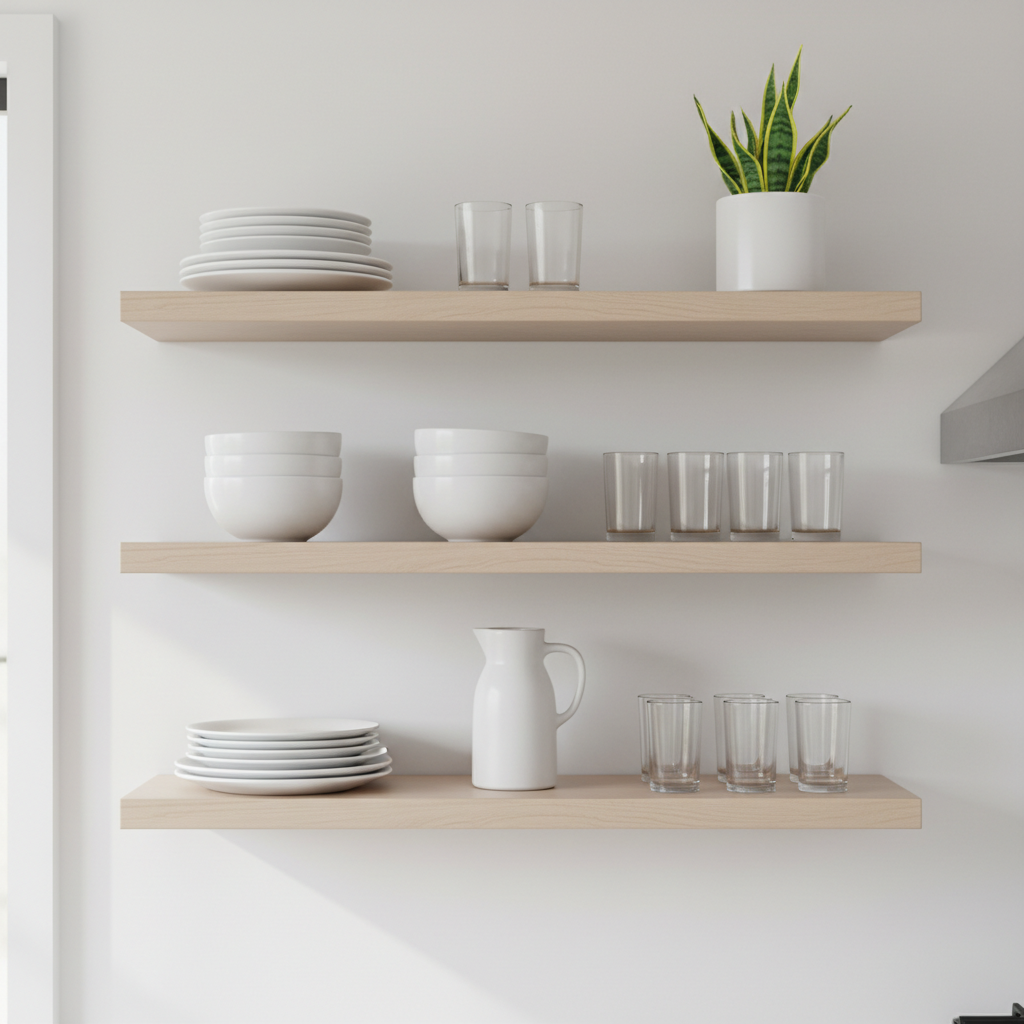
3) Add one “anchor” item per shelf, then stop
An anchor is something that gives structure, like a stack of bowls or a tall pitcher. Once the anchor is in place, add only what supports it. If you keep adding “just one more thing,” the shelf turns into a catchall.
4) Do a 10-second squint test
Stand back and squint. If you see lots of little dark spots, label clutter, or random colors, simplify until the shelf reads as 2–4 calm shapes per section.
Keeping it looking good: maintenance that doesn’t take over your life
The most sustainable version of modern minimalist kitchen decor with open shelves is the one you can maintain on a normal Tuesday.
- Weekly reset (5 minutes): put stray items away, re-stack, wipe the front edges.
- Monthly wipe-down: remove items, clean the shelf surface, quick check for grease build-up.
- Seasonal edit: donate duplicates, retire chipped items, refresh textiles if you keep any.
One practical tip: keep anything that “drips” or “dusts” off-limits for shelves, like oily bottles or open bags. If you love olive oil on display, use a wipeable tray and a consistent bottle style.
Common mistakes (and the small fixes that matter more than a full redo)
Most shelf makeovers fail because the fix is applied in the wrong place. You can swap decor forever, but if the structure is off, it won’t feel minimalist.
- Too many shelves: fewer shelves with more vertical space usually reads calmer.
- Everything centered: perfect symmetry can look stiff; use slight offset with clear grouping.
- Decor competing with dishes: pick one statement, like a vase, not three different “cute” objects.
- Ignoring lighting: harsh overhead light makes clutter feel louder; under-shelf lighting can soften shadows.
According to the U.S. Fire Administration, cooking remains a leading cause of home fires, so if you add lighting, outlets, or anything electrical around shelving, use properly rated fixtures and consider hiring a licensed electrician for tricky installs.
Key takeaways before you start shopping
- Open shelves are a display system, not bulk storage.
- Consistency beats creativity: repeat shapes, materials, and tones.
- Empty space is part of the design, so plan for it.
- Hybrid kitchens are normal: a little open shelving plus closed cabinets often feels easiest.
If you want a calmer kitchen fast, start by choosing one shelf to “keep minimalist,” then protect it by moving everything else behind doors. That one win tends to change how the whole room feels, and it makes the next decisions much simpler.
FAQ
How do I make open shelves look minimalist with kids in the house?
Keep the lowest shelf ultra-functional: daily plates and cups only, in one color family. Put breakables higher, and use closed storage for snack clutter so the shelves don’t become a landing zone.
What’s the best color for open shelves in a modern minimalist kitchen?
White walls with light wood shelves is popular because it stays bright, but matte black shelving can look sharp if the rest of the kitchen has enough light. The “best” option depends on your cabinet color and how much daylight you get.
How many items should be on each shelf?
A good starting point is 2–4 groupings per shelf, with visible empty space between them. If you can’t wipe the shelf without moving ten things, it’s probably too full.
Do open shelves make a kitchen look bigger?
Often, yes, because they reduce visual mass compared with upper cabinets. But if the shelves get crowded, the effect reverses and the kitchen can feel smaller.
How do I hide pantry food if I want open shelves?
Use closed pantry storage for most packaging, and if you like the look of shelf canisters, limit it to a few staples with consistent containers. Otherwise it becomes a label wall quickly.
Are open shelves hard to keep clean?
They can be, especially near the stove. If you cook with a lot of oil, place shelves farther from the cooktop, use a strong vent hood, and plan on regular wiping.
What decor items actually work on minimalist kitchen shelves?
One small plant, one vase, or one framed print can work, but dishes should stay the main character. If decor starts competing with function, the shelf stops feeling modern and starts feeling busy.
If you’re trying to get the open-shelf look but want it to stay low-maintenance, it often helps to map your “display set” first, then choose shelf length, spacing, and containers around what you truly use every day.