
How to clean window blinds fast without sending dust into the air usually comes down to two things: using a dry method first (so dust lifts instead of smears), and controlling where the dust goes (so it doesn’t land back on your floor, couch, or face).
If you’ve ever “cleaned” blinds and somehow the room looked worse, you’re not imagining it. Blinds hold fine, lightweight dust that becomes airborne the moment you swipe too hard or use the wrong cloth. The good news is you can get a noticeably cleaner result in 10–20 minutes, depending on window count, without turning it into a deep-clean marathon.
This guide focuses on speed and low-dust mess, not perfection. You’ll see a quick decision checklist, a simple tool setup, and a few shortcuts that make a big difference, especially if you deal with allergies, pets, or kitchen grease.
Pick the fastest method based on blind type (a 30-second decision)
The “best” approach depends on material and location. Wood blinds hate soaking, kitchen blinds collect oily film, and fabric shades may need a gentler touch. When you match method to surface, you stop wasting time.
- Faux wood / vinyl horizontals: Dry dust first, then spot-wipe with a barely damp cloth.
- Real wood: Dry only or wood-safe cleaner, avoid water that can warp slats.
- Aluminum: Dry dust, then light damp wipe works, watch for bending slats.
- Kitchen blinds: Degrease (lightly) after dusting, otherwise you smear grime.
- Honeycomb/cellular shades: Vacuum with brush on low suction, avoid aggressive wiping.
According to the American Lung Association, reducing household dust can help improve indoor air quality, which is one reason it’s worth preventing dust from going airborne while you clean.
Tools that actually save time (and avoid the dust cloud)
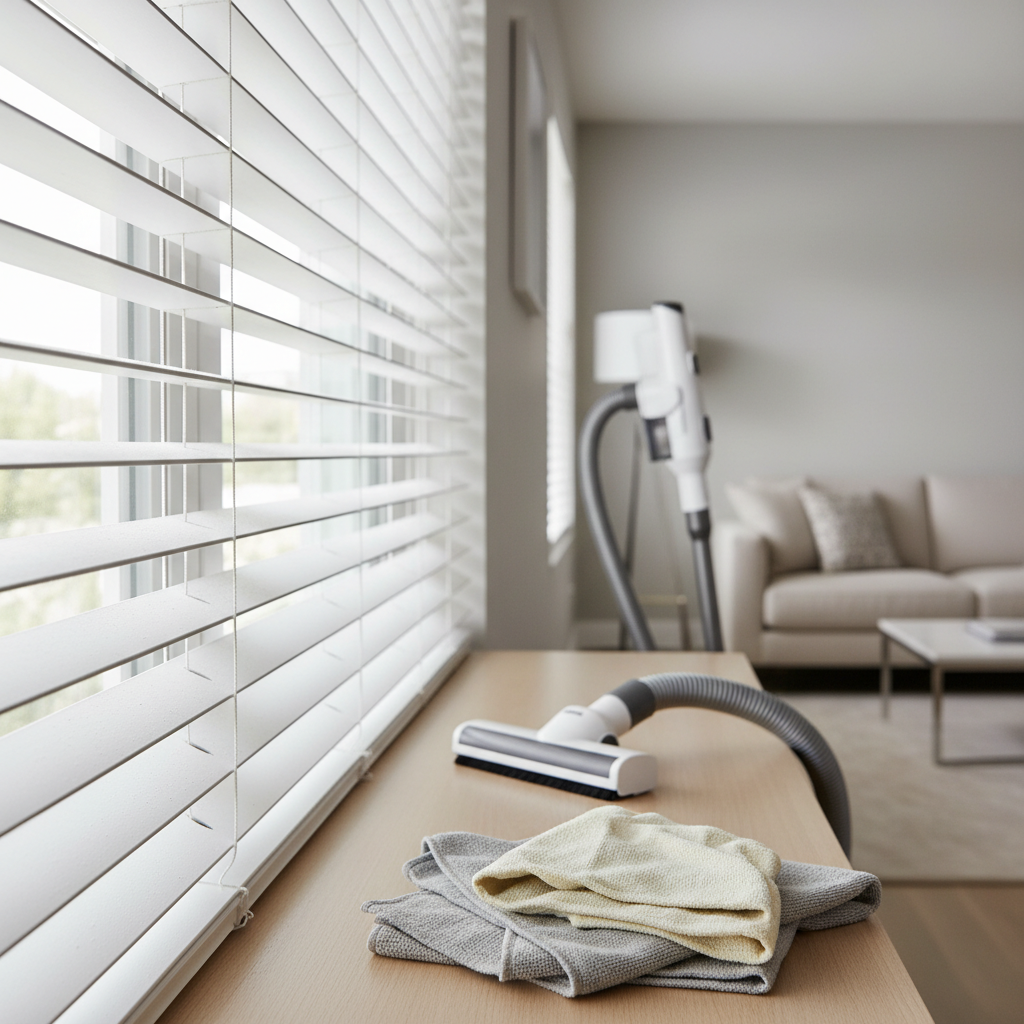
You don’t need a fancy gadget, but you do need the right “dust capture” tools. The fastest kit is simple and repeatable.
- Microfiber cloths (2–3): Microfiber grabs dust instead of pushing it around.
- Vacuum with a soft brush attachment: Helps capture dust at the source, especially on thick buildup.
- Spray bottle with water (optional): For a light mist onto the cloth, not directly onto blinds.
- Dish soap (kitchen only): A drop in warm water for greasy blinds.
- Step stool: You’ll move faster when you’re not stretching.
Skip feather dusters if your goal is “no dust.” They often lift particles into the air, then drop them elsewhere.
The no-dust fast routine (10–15 minutes per room)
This is the routine most people are looking for when they search how to clean window blinds fast. It’s meant to be quick, controlled, and repeatable.
1) Prep the area in 60 seconds
- Close the blinds fully (slats angled down) so you can clean one “face” at a time.
- If dust is heavy, place a towel under the window to catch what falls.
- If you’re sensitive to dust, wearing a mask may help; if you have asthma or allergies, consider checking with a clinician for personalized advice.
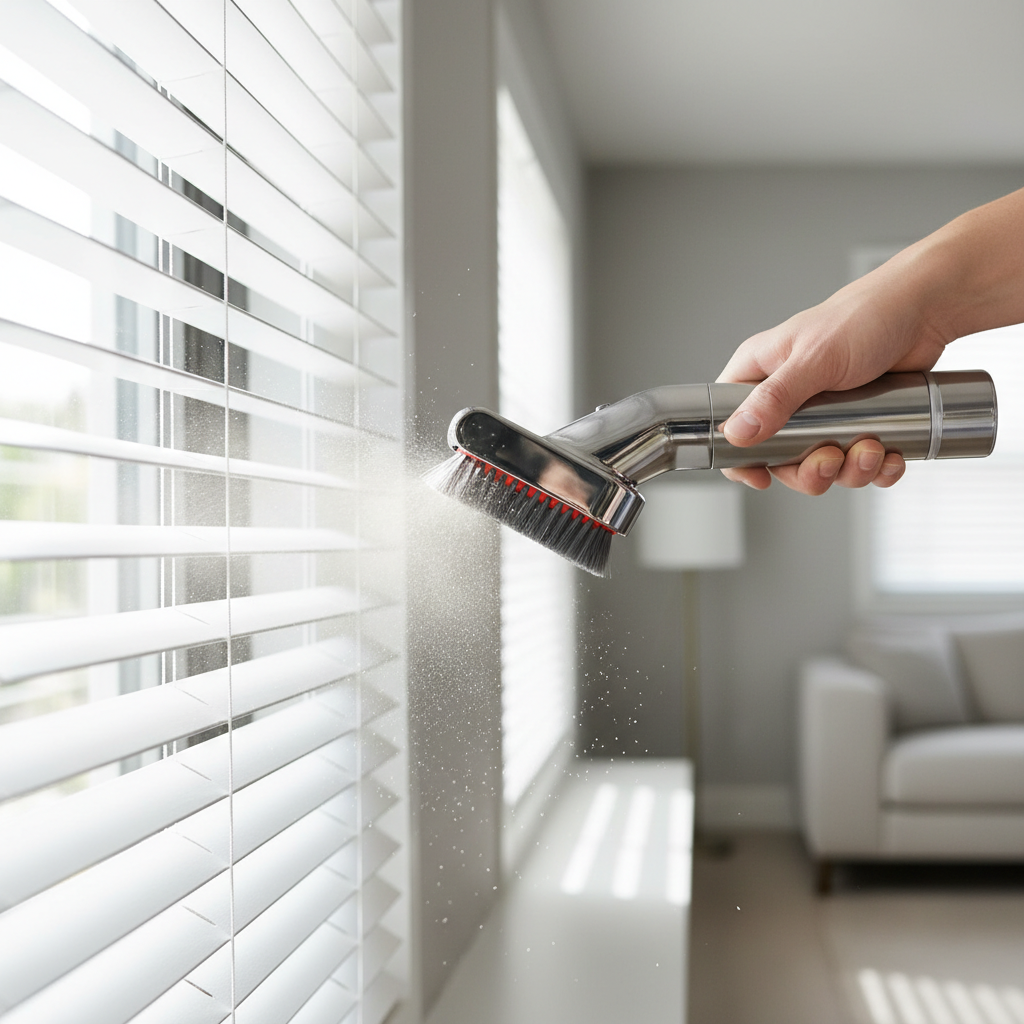
2) Vacuum first, gently
Run the soft brush attachment along the slats with light pressure. You’re not scrubbing, you’re collecting. This step prevents the “wipe and explode” dust problem.
3) Microfiber pinch-wipe for speed
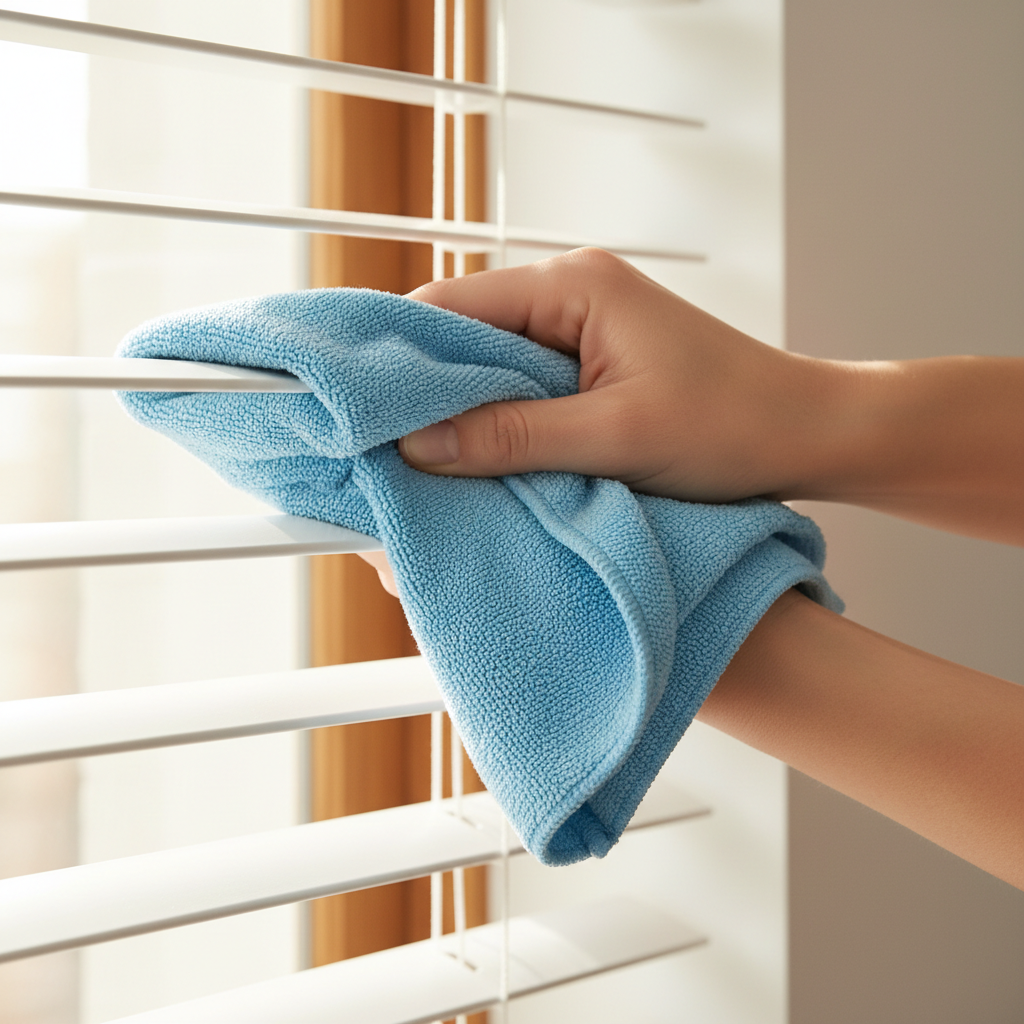
Wrap a microfiber cloth around a couple of slats and gently “pinch” them, sliding left to right. Work top to bottom. Don’t race; fast comes from fewer passes, not harder pressure.
4) Flip and repeat
Reverse the slat angle (tilt up) and repeat vacuum + pinch-wipe. Many people skip this, then wonder why the blinds still look dusty from outside.
5) Spot clean only where needed
For fingerprints or stuck-on marks, mist water onto a clean cloth and dab, then dry with another cloth. For real wood, use a wood-safe product and keep moisture minimal.
Grease, smoke, and pet film: when dusting isn’t enough
If your blinds sit near a stove, an open window facing traffic, or a home with pets, you may see a dull film that “holds” dust. In these cases, dry dusting alone looks good for a day, then the grime shows again.
- Kitchen blinds: After vacuuming, wipe with warm water plus a small drop of dish soap on the cloth, then follow with a plain damp wipe and a dry cloth.
- Smoke residue: Use mild soap solution on vinyl/faux wood, test a small area first.
- Pet dander: Vacuuming with a brush on low suction often works better than repeated wiping.
Don’t spray cleaner directly onto blinds in most cases. Overspray runs into cords, headrails, or wood grain, and that’s when streaks and swelling show up.
Quick self-check: what’s slowing you down?
If blinds always feel like a time sink, it’s usually one of these issues. This list helps you pick the fix instead of just trying harder.
- Dust keeps floating: You’re wiping before vacuuming, or using a dry cotton rag that pushes dust off the slats.
- Streaks after cleaning: Too much water or spraying directly on the blinds.
- Dust returns fast: There’s greasy film, or you’re missing the reverse side of the slats.
- Slats bend or warp: Too much pressure, or soaking wood/aluminum.
- It takes forever: You’re cleaning slat-by-slat with tiny motions instead of a pinch-wipe.
A simple cheat sheet: fastest method by situation
Use this table when you want a quick answer without overthinking.
| Situation | Fastest approach | Avoid |
|---|---|---|
| Light dust, faux wood/vinyl | Vacuum brush + microfiber pinch-wipe | Feather duster, wet spray |
| Heavy dust buildup | Vacuum slowly first, then dry wipe | Hard scrubbing (dust goes airborne) |
| Kitchen grease | Dust first, then mild soapy cloth, then dry | Skipping degrease (smears) |
| Real wood blinds | Dry microfiber + wood-safe cleaner on cloth | Soaking, steam |
| Cellular shades | Low-suction vacuum with brush | Rough wiping, saturating fabric |
Common mistakes that create more dust (and how to fix them)
A few small habits are responsible for most “I cleaned but it still looks dusty” complaints.
- Cleaning with the blinds open: Slats flex and dust drops everywhere. Close them so the surface stays stable.
- Using too much product: Cleaners leave residue that attracts dust. Apply to the cloth, not the blinds.
- Skipping the headrail: Dust collects up top, then falls back onto clean slats later. Quick vacuum pass helps.
- Rushing the first pass: If you blast through the initial dust removal, you’ll redo work after the dust resettles.
When to consider a deeper clean or professional help
Most blinds only need routine dust control. Still, some situations call for more than a quick wipe.
- Mold-like spotting, water damage, or strong odors: This may need deeper investigation. If you suspect mold, it’s often safer to consult a qualified remediation or indoor air professional.
- Fragile, older blinds that bend easily: Aggressive cleaning can break slats or cords; a pro cleaning service may be worth it for hard-to-replace styles.
- High windows or stairwell installs: Safety matters more than speed. If ladder work feels risky, hiring help is reasonable.
Conclusion: the fastest clean is the one you can repeat
If your goal is how to clean window blinds fast with minimal dust, keep it simple: vacuum first to capture particles, wipe with microfiber using the pinch method, then spot-clean only where you see grime. That workflow usually beats any “miracle” spray.
Try it on one room today, then schedule a lighter pass every couple of weeks. Once buildup stays low, each window takes minutes, not an afternoon.
FAQ
What is the fastest way to clean blinds without dust going everywhere?
Vacuum with a soft brush attachment first, then use a microfiber pinch-wipe. Capturing dust before wiping is what prevents the cloud.
Can I use a dryer sheet to clean blinds?
Some people like dryer sheets for reducing static, but results vary and they can leave residue on certain finishes. If you try it, test a small area and avoid using it on real wood.
How often should I clean window blinds?
Many homes do well with a quick dust pass every 2–4 weeks. If you have pets, allergies, or kitchen buildup, you may prefer more frequent light cleaning to avoid heavy dust layers.
How do I clean blinds in the kitchen that feel sticky?
Dust first, then wipe with a cloth dampened in warm water plus a small drop of dish soap, followed by a plain water wipe and drying. Going straight to soap without dust removal often smears.
Is it safe to wash blinds in the bathtub?
It can work for some aluminum or vinyl blinds, but it’s not always “fast,” and it risks bending slats or damaging cords. Avoid soaking real wood, and check the manufacturer’s care guidance if you have it.
What if my blinds are discolored and wiping doesn’t help?
Sun fading, smoke residue, or aging plastic may not fully reverse with cleaning. A gentle degrease may improve appearance, but some discoloration is permanent, so replacement might be the practical call.
Do I need to clean both sides of the slats?
In most rooms, yes, especially if you want them to look clean from outdoors. Tilting the slats and doing a second quick pass usually adds only a few minutes.
What’s a good quick routine if I only have five minutes?
Close the blinds, vacuum the face quickly with a brush, and do one microfiber pinch-wipe pass across the most visible windows. It won’t be perfect, but it prevents buildup.