
Best decorative throw pillows set shopping usually sounds easy until you realize every set looks great online, then shows up too flat, too shiny, or just “off” on your sofa.
The good news is you don’t need a designer eye, you need a simple way to match size, fill, fabric, and color to your sofa style and how you actually live. Pets, kids, movie nights, bright windows, all of that changes what “best” means.
This guide breaks the decision down into quick rules, a practical checklist, and a few ready-to-copy combos. You’ll also get a small comparison table, common mistakes to avoid, and when it’s worth paying more.
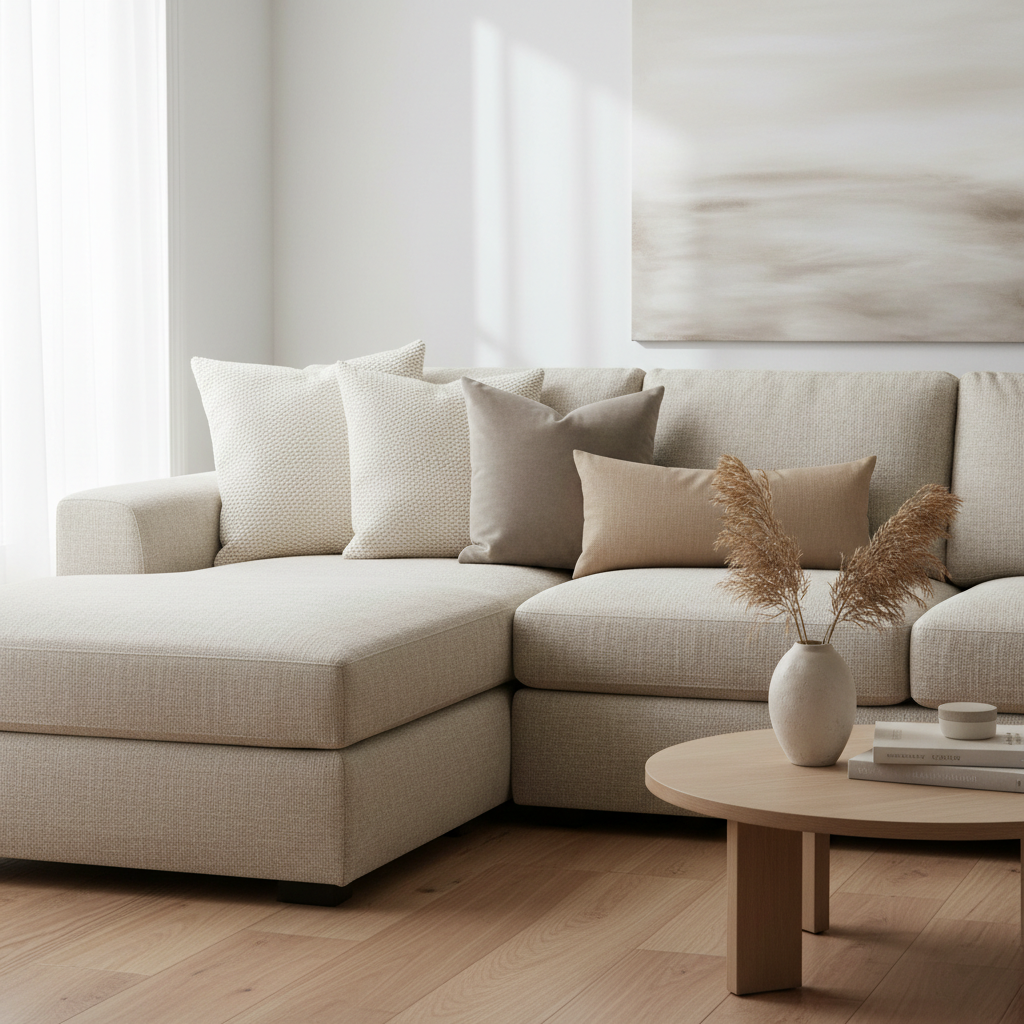
What makes a pillow set look “expensive” on a sofa (even if it isn’t)
Most sets fail for one reason: the pillows don’t create structure. A sofa needs a few firm “anchors,” then one or two softer pieces for depth. If everything is the same size and squish, it reads like a hotel bed from 2007.
- Varied sizes: one larger pair in back, smaller in front keeps it intentional.
- Real texture: woven fabric, embroidery, boucle, linen blends add depth without shouting.
- Full inserts: covers matter, but inserts decide whether corners stand up or collapse.
- A controlled palette: 2–3 core colors plus one accent usually looks more “styled” than 6 random prints.
According to The American Home Furnishings Alliance (AHFA), labeling and material disclosures help consumers compare home textiles more confidently, which matters when you’re choosing between “linen look” and actual linen blends.
Quick sizing rules: 18x18 vs 20x20 vs lumbar
If you only remember one thing, remember this: big sofas need bigger pillows. Small pillows on a deep couch look lost, and you end up buying more to compensate.
Simple size picks by sofa type
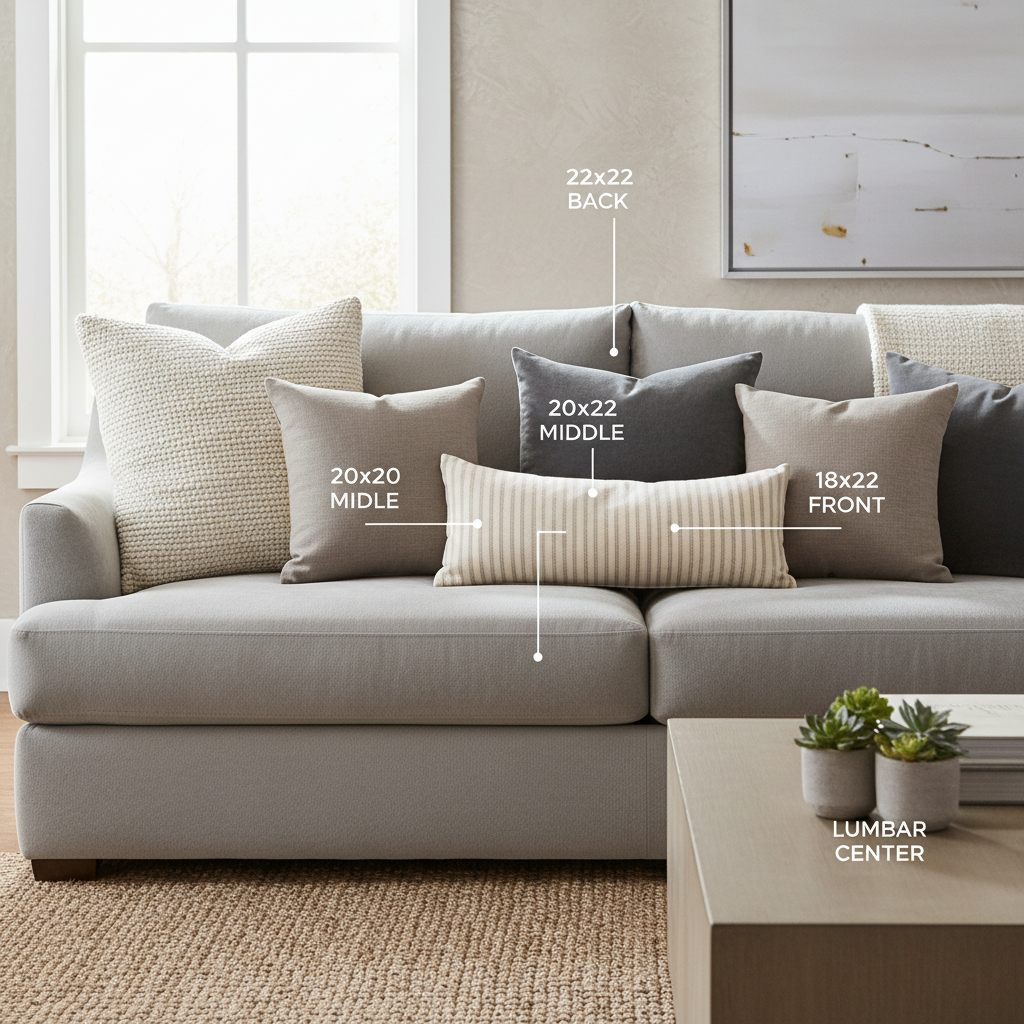
- Apartment sofa / loveseat: 18x18 with one lumbar (12x20 or 14x22)
- Standard 3-seat sofa: 20x20 in back, 18x18 or lumbar in front
- Deep sectional / modern low sofa: 22x22 (or 24x24 if your sofa is extra deep), plus a lumbar
Most people over-focus on cover dimensions and forget insert sizing. If the cover is 20x20, a 22x22 insert often gives a fuller, more tailored look, but check the brand’s guidance since some covers run tight.
Fabric and fill: choose for comfort, not just the photo
The best decorative throw pillows set for your sofa depends on how you use the space. A “pretty but delicate” fabric can be fine in a formal living room, then miserable in a family room where people nap on the couch.
Fabric choices that usually work in real homes
- Cotton canvas / twill: durable, easygoing, often the safest “everyday” pick.
- Linen or linen-blend: relaxed texture, hides minor wrinkles, feels higher-end.
- Velvet: rich color, good in fall/winter looks, but can show marks depending on pile.
- Boucle / chunky weaves: cozy texture, but can snag with pets or sharp jewelry.
- Outdoor performance fabric: not only for patios, it can be a smart choice with kids and pets.
Insert fill (what you actually feel)
- Down or down-blend: soft, “karate-chop” friendly, needs occasional fluffing.
- Poly fill: budget-friendly, lighter, can flatten sooner depending on quality.
- Foam: holds shape, less lounge-y, can feel firmer and more structured.
If allergies are a concern, some households prefer hypoallergenic fills. If you’re unsure, it’s reasonable to ask a clinician what’s appropriate for your situation.
A practical comparison table for picking a set
Use this as a fast filter. It’s not about “good vs bad,” it’s about matching the set to your room and habits.
| Priority | Look for | Why it helps | Potential downside |
|---|---|---|---|
| Everyday durability | Cotton, performance fabric, removable covers | Easier cleaning and longer life | May feel less “luxury” than velvet/linen |
| Designer look | Texture mix, embroidery, piping, quality zippers | More depth on a plain sofa | Texture can snag or shed |
| Comfort for lounging | Down-blend inserts, soft covers | Better nap and back support | Needs fluffing, higher cost |
| Low-maintenance styling | Solid colors + one pattern, medium tones | Looks tidy with less effort | Can feel plain if everything matches too closely |
Color and pattern: foolproof ways to match your sofa
Color matching is where people spiral, then either play it too safe or buy a loud set that fights the rug. A calmer approach works better: match your room’s “fixed” elements first.
- Pull from what won’t change soon: rug, wall color, curtains, large art.
- Use a 60/30/10 mindset: most pillows sit in your base and secondary colors, one is the accent.
- Mix scale: one larger pattern + one smaller pattern reads balanced, two medium patterns often feel busy.
- Warm vs cool: cream, tan, rust are warm; gray, navy, icy white are cool, mixing can work but needs a bridge color.
If your sofa is already a bold color, the best decorative throw pillows set is often more about texture and a restrained palette, otherwise the couch starts to look like a showroom vignette you can’t relax in.
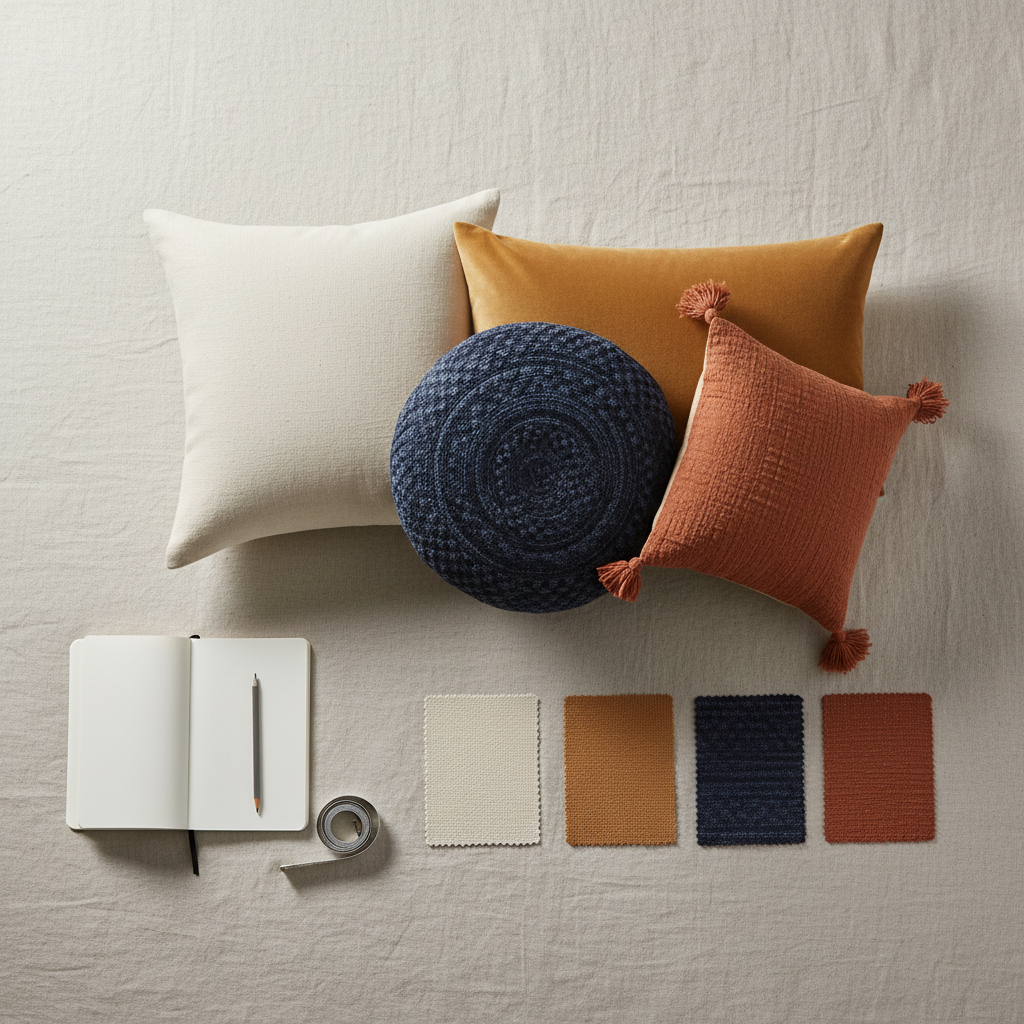
Self-check: what set should you buy for your space?
This is the fast way to stop guessing. Answer honestly, you’ll usually land on the right style in under two minutes.
- I want a clean, modern look → solids + one subtle geometric, tight weaves, 20x20 + lumbar.
- I want cozy and layered → boucle or chunky knit + linen blend, one warm accent color, add a lumbar.
- I have pets → tighter weaves, darker mid-tones, avoid loose loops and heavy fringe.
- I have kids / snack-on-sofa life → removable covers, washable fabrics, patterns that hide small stains.
- My room feels flat → add texture first, not more patterns; choose one pillow with a stronger contrast.
- My sofa feels cramped with pillows → fewer, larger pillows; consider a 3-piece set, not 5.
How to style a throw pillow set in 10 minutes (without overthinking)
Once the set arrives, most people make one mistake: they distribute pillows evenly. Symmetry can work, but “evenly spaced” often looks stiff.
Easy setups that look intentional
- 3-piece set: two larger in corners, lumbar in the middle, done.
- 4-piece set: two large in corners, two smaller slightly in front and inboard.
- 5-piece set: two large back corners, two medium in front, one lumbar centered or off-center.
Key point: let the back pillows be the “frame,” then use the front pillows to introduce texture or pattern. If you’re using inserts, give them a quick fluff before deciding the arrangement.
Common mistakes that make sets look cheaper than they are
- Buying all the same size: it reads like you clicked “add to cart” without a plan.
- Too many tiny patterns: busy up close, chaotic from across the room.
- Ignoring sheen: some polyester fabrics shine under lamps, which can cheapen the look.
- Skipping care reality: “spot clean only” sounds fine until life happens.
- Overstuffing the sofa: if you move pillows to sit down every time, you bought too many.
According to Federal Trade Commission (FTC) guidance on textile and wool labeling, fiber content claims should be accurate, so if you care about natural fibers, double-check labels rather than relying on marketing terms.
Conclusion: picking the right set is mostly about fit and lifestyle
The best decorative throw pillows set is the one that matches your sofa scale, holds its shape, and survives your normal week without turning into a fussy chore. If you’re torn between two options, choose the set with better inserts and easier care, you’ll notice that every day.
If you want a clean next step, measure your sofa depth, pick your “back pillow” size, then choose one accent element you actually like living with, texture often beats a trendy print.
Key takeaways
- Scale wins: deep sofas usually need 22x22 (or larger) to look proportional.
- Texture adds value: mix two textures before adding more patterns.
- Inserts matter: a great cover with a weak insert still looks flat.
- Care matters: removable, washable covers reduce regret.
FAQ
- What is the best decorative throw pillows set size for a standard couch?
For many 3-seat sofas, a pair of 20x20 in the back plus a lumbar or 18x18 in front looks balanced, without swallowing the seating area. - How many throw pillows should be on a sofa?
Most sofas look good with 3–5 pillows, but comfort matters. If you constantly move them off to sit, scale up the sizes and reduce the count. - Should throw pillow covers be bigger than inserts?
Usually the insert is slightly larger than the cover to create a fuller look. Many people size up by 1–2 inches, but check the cover’s cut and zipper strength. - How do I match pillows to a gray sofa without making it look cold?
Add warmth through camel, tan, rust, or warm ivory, then bring in texture like linen or boucle. A gray sofa often needs a warm “bridge” color. - Are velvet throw pillows practical for everyday use?
They can be, especially in low-traffic rooms. In busy households, velvet may show marks or attract lint, so a performance fabric or tight weave can be less annoying. - What’s a safe choice if I’m unsure about patterns?
Go mostly solid with one subtle pattern, like a small stripe or low-contrast geometric. It reads styled but stays flexible if you change decor later.
If you’re trying to find a best decorative throw pillows set that looks pulled-together but still feels livable, start with a simple 3- or 4-piece mix in two textures and one accent color, it’s the most “hard to mess up” path when you want results fast.