
Best stackable storage containers solve the same pantry problem most homes run into: you buy smart, you cook often, but your shelves still look chaotic and you can’t see what you have.
When containers stack well, seal reliably, and match your shelf height, pantry organization stops being a weekend project and becomes a “stays tidy” system. That means less food waste, fewer duplicate purchases, and faster meal prep on busy nights.
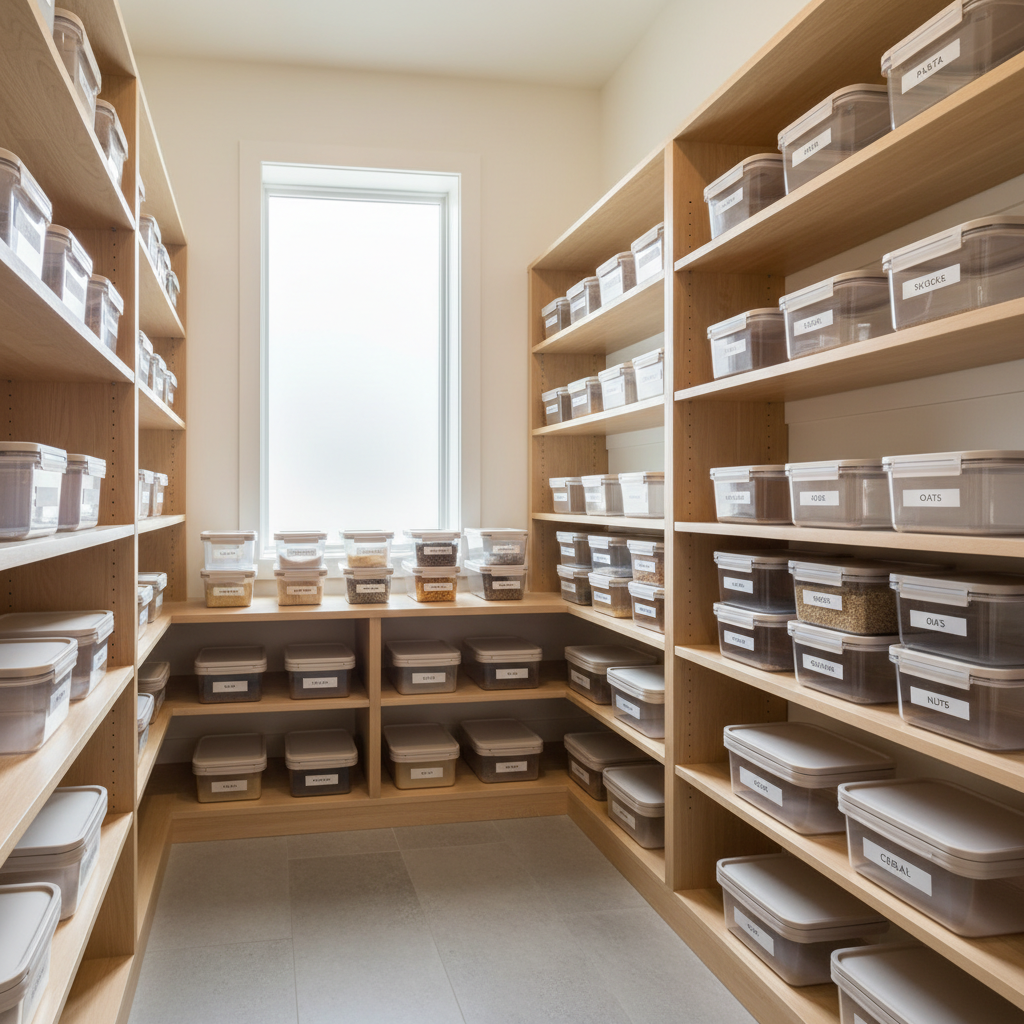
I’ll walk you through what actually matters when buying stackable containers, how to pick sizes that fit your pantry (not just your Pinterest board), and a practical setup plan you can finish in one afternoon.
What makes a container truly “stackable” in a real pantry
Stackable doesn’t just mean “you can put one on top of another.” In most pantries, the real test is whether stacks stay stable when someone grabs the bottom container and whether lids align without wobble.
- Flat, rigid lids that don’t flex under weight, so stacks don’t tilt.
- Consistent footprint across sizes, so small and large units nest into a single grid.
- Vertical sides (or close to it) so you don’t lose shelf volume to tapered walls.
- Grippy base or rim that reduces sliding on wire shelves.
- Lid availability: you can buy replacements or add-on sets, which matters more than people expect.
Also, stackability in a pantry is different from stackability in a fridge. Pantry stacks get moved less often, but they get loaded heavier: flour, sugar, rice, beans. That weight exposes weak lids fast.
Material choices: plastic, glass, and stainless (and how to decide)
Most shoppers get stuck on “plastic vs glass,” but your decision usually comes down to two things: how you store bulk dry goods, and how rough your household tends to be on containers.
Plastic (Tritan or similar)
Plastic is common for a reason: it’s lightweight, less breakable, and often comes in modular sets that stack cleanly. Many households like clear plastic because you can see inventory at a glance.
- Best for: everyday pantry staples, kids’ snacks, frequent handling.
- Watch for: scratches over time, lid warping if exposed to high heat, and stained plastic with spices.
Glass
Glass feels “clean” and doesn’t hold odors. It’s heavier, which can improve stack stability on sturdy shelves, but it’s not always ideal for high stacks on wire shelving.
- Best for: households avoiding plastic contact, strong-smelling ingredients, long-term storage.
- Watch for: weight, break risk, and shelf strength, especially in older cabinetry.
Stainless steel (less common for see-through pantry setups)
Stainless containers can be durable and great for light protection, but you lose visibility. Many people end up labeling more aggressively to compensate.
- Best for: light-sensitive items, minimalist pantries, coffee/tea storage.
- Watch for: not seeing levels, mixing mismatched shapes that don’t stack neatly.
According to USDA Food Safety and Inspection Service (USDA FSIS)... food storage works best when containers stay clean, dry, and sealed, which is a good reminder that material matters less than fit, seal, and maintenance in most dry-pantries.
Quick comparison table: choosing the right container type
If you want a fast decision, this table covers the tradeoffs that show up in day-to-day pantry use, not just on a product page.
| Type | Visibility | Stack stability | Weight | Best use |
|---|---|---|---|---|
| Clear plastic modular sets | High | High (if rigid lids) | Low | Everyday staples, snacks, baking |
| Glass with locking lids | High | Medium (depends on lid shape) | High | Odor control, long-term storage |
| Stainless canisters | Low | Medium | Medium | Coffee, tea, specialty ingredients |
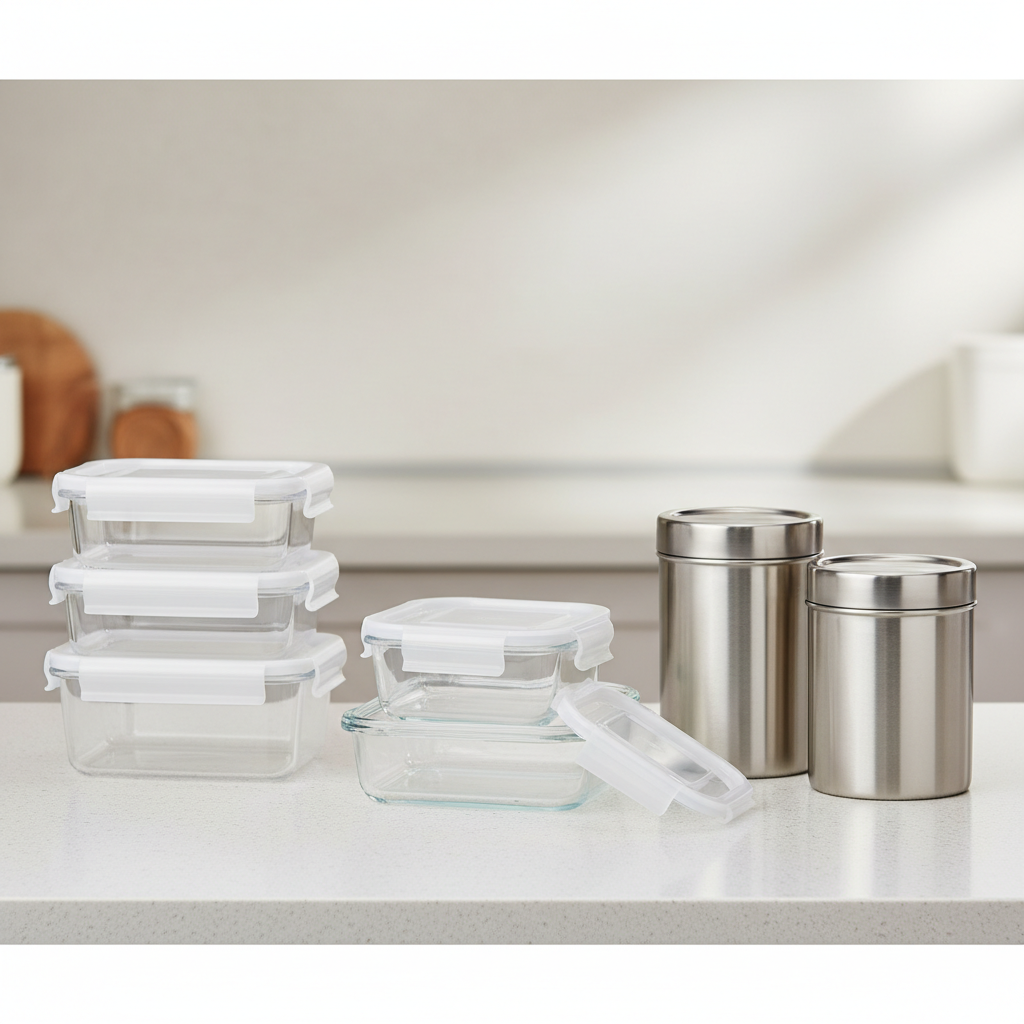
If you’re building a single unified system, most people choose one primary “grid” set (usually clear plastic) for staples, then add a few specialty containers for items with unique needs.
Why pantries get messy (even with containers)
Containers don’t fix a pantry if the underlying setup stays mismatched. The usual culprits look boring, but they’re exactly why many “organized” pantries fall apart within a month.
- Too many shapes: round here, square there, tall canisters blocking sight lines.
- Wrong sizes: huge bins for small items, tiny containers that force constant refills.
- No buffer zone: shelves packed edge-to-edge, so nothing returns easily.
- Labeling that’s optional: in a busy home, “optional” turns into “never.”
- Mixing ‘daily’ and ‘backup’: duplicates get hidden, then rebought.
Say it plainly: the best stackable storage containers only work when you commit to fewer container formats and give each category a consistent home.
A simple self-check: what you should buy for your pantry
Before you add another set to your cart, take two minutes and answer these. Your picks will be much clearer afterward.
- Shelf depth: is it a standard cabinet depth, or a deep walk-in shelf where things disappear in back?
- Shelf height: can you fit two medium stacks, or only one tall row?
- Top 10 items: what do you refill most often, and in what quantities?
- Wire vs solid shelves: wire shelves may need non-slip bases or shelf liners.
- Household habits: do people actually close flip-top lids, or do you need a more obvious locking mechanism?
If you have deep shelves and a lot of backup inventory, pair stackable containers with pull-out bins or turntables for the back row. Containers alone won’t solve reach issues.
Practical setup: a weekend plan that keeps working
Here’s a straightforward method that tends to stick, even in busy kitchens. It’s less about “decant everything” and more about deciding what deserves a container.
1) Start with staples and high-churn categories
Target flour, sugar, rice, pasta, cereal, oats, snacks, and baking basics. These items benefit most from visibility and tight seals.
- Buy 2–3 “base” footprints, then multiple heights in that footprint.
- Keep one spare container empty at first, it becomes your overflow buffer.
2) Match container sizes to how you shop
If you buy large bags at warehouse clubs, small canisters will annoy you fast. If you shop weekly and keep minimal inventory, oversized containers waste shelf space.
- Warehouse bulk: prioritize large rectangular containers with wide openings.
- Smaller households: medium sizes reduce stale leftovers and constant top-offs.
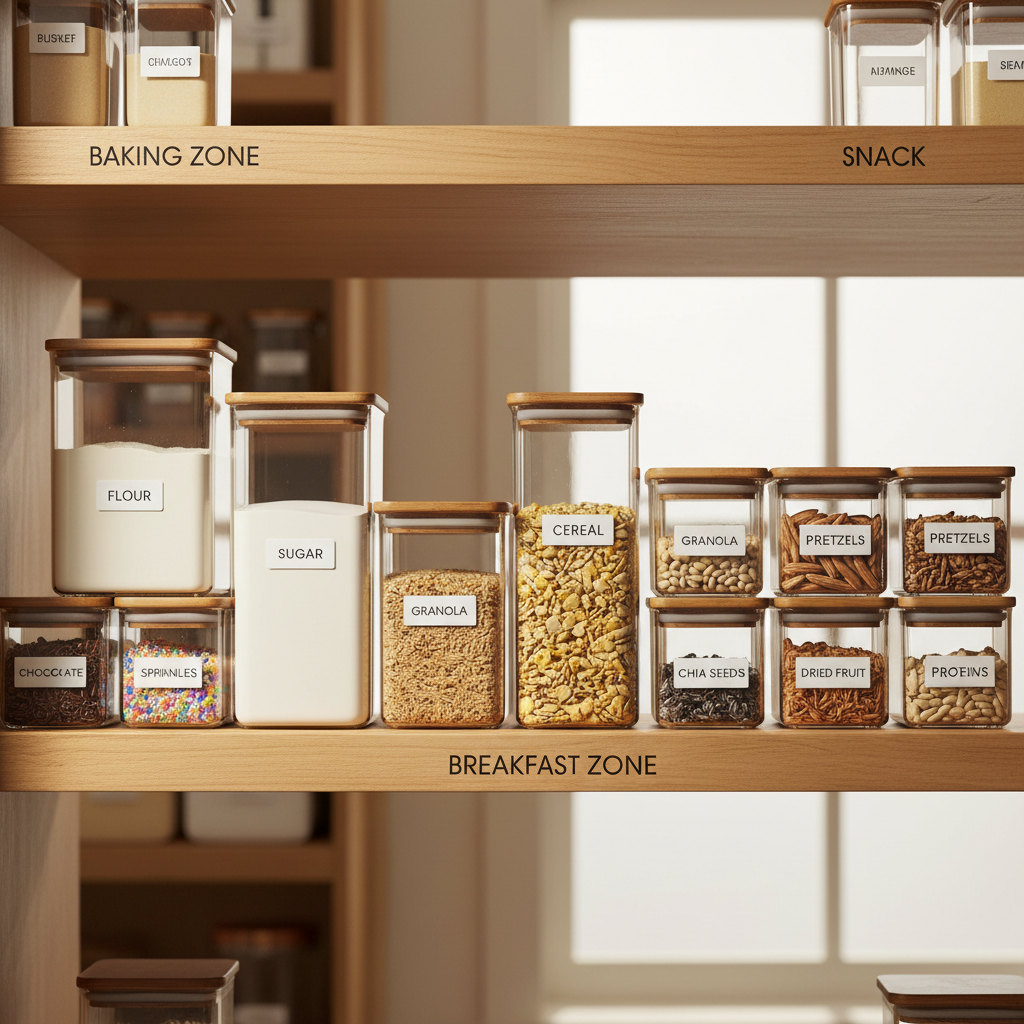
3) Label like you mean it
Labels prevent the “mystery flour” problem and make it easier for everyone else to put things back. Include the item name, and optionally a quick note like “gluten-free” or “quick oats.”
4) Use zones, not shelves
Instead of “this shelf is baking,” try “baking + breakfast share a zone,” then set containers in a grid and keep a small open area for half-used bags that need a decision.
If you’re worried about food safety, avoid storing items in containers that can’t be cleaned fully or that hold odors. If you have allergy concerns at home, it may be worth asking a healthcare professional about cross-contact risk and what labeling practices make sense for your household.
Common mistakes (and what to do instead)
- Mistake: Buying a giant set first. Do this instead: buy a small starter set, confirm lid durability and sizing, then expand with the same line.
- Mistake: Choosing style over lid performance. Do this instead: prioritize a seal you can close consistently, especially for flour and brown sugar.
- Mistake: Over-decanting. Do this instead: containerize what you use weekly, keep low-use items in original packaging inside a bin.
- Mistake: Stacking too high. Do this instead: aim for grab-and-go stacks that don’t require two hands or awkward lifting.
- Mistake: Ignoring pantry pests. Do this instead: use truly airtight containers for grains and baking goods, clean shelves periodically, and rotate stock.
According to U.S. Food & Drug Administration (FDA)... safe food storage depends on clean containers and preventing contamination, which is another reason to keep your container system simple enough to maintain.
Conclusion: how to pick the best stackable storage containers for your pantry
The “best” choice is the set you can expand consistently, stack without frustration, and keep clean without it becoming a project. For most pantries, a clear, modular, rectangular system with sturdy lids is a safe starting point, then you add a few specialty pieces for specific ingredients.
If you want a clean next step, measure one shelf, pick one container line with compatible sizes, and start with your top 10 staples. You’ll notice the difference the next time you make a grocery list, you’ll finally know what you already have.