
Living room storage hidden ideas work best when they solve two problems at once: where the stuff goes, and why your room still looks calm after it’s put away. If your living room keeps drifting into “drop zone” mode (mail, toys, throws, chargers, remotes), the fix usually isn’t one giant cabinet, it’s a few smart hiding spots placed exactly where clutter lands.
The good news is 2026-style storage isn’t about making your room look like a showroom. It’s about building “invisible” systems into furniture you already use, and using overlooked zones like the space behind a sofa, the air above doorways, and the dead corners that never get decorated.
Below you’ll find practical options (some renter-friendly), a quick self-check so you don’t overbuy, and a simple plan to set your living room up so cleanup takes minutes instead of an hour.
Why clutter shows up in living rooms (and where it really comes from)
Most living rooms don’t get messy because you have “too much,” they get messy because the room lacks a few targeted landing spots. These are the repeat offenders I see in real homes:
- Micro-items with no home: remotes, batteries, lip balm, pens, game controllers, candles, lighters.
- Soft clutter: throws and pillows look cozy until they stack up on every chair.
- Kid/pet gear: toys, treats, leashes, grooming tools, activity books.
- Tech drift: chargers and cords multiply and migrate toward the nearest outlet.
- Paper creep: mail and school papers land on the same surface every day.
If you’re browsing living room storage hidden ideas and nothing seems to “stick,” it’s often because the storage is too far from the clutter source. Hidden storage only helps when it’s convenient enough to use on a tired weeknight.
Quick self-check: which hidden storage strategy fits your room?
Before you shop, match the solution to your actual constraints. This takes two minutes and saves you from buying “cute storage” that becomes clutter itself.
- You rent or can’t drill much: prioritize lift-top furniture, baskets with lids, behind-sofa consoles, over-the-door systems.
- You own and can remodel: built-ins, toe-kick drawers, fireplace surround cabinets, window-seat benches.
- Small space, no floor area: go vertical with high shelves, picture ledges, wall cabinets that read like decor.
- Kids live here: closed storage wins, open bins look “organized” for about a day.
- You hate visual noise: choose fewer, larger hidden zones (storage sofa, credenza) instead of many little baskets.
Key takeaway: don’t aim for “more storage,” aim for storage within one step of the mess (sofa zone, media zone, entry path, reading chair).
Hidden furniture upgrades that look like regular decor
Furniture is the easiest place to hide storage because it doesn’t require construction, and guests rarely notice it. A few options tend to deliver the most day-to-day payoff:
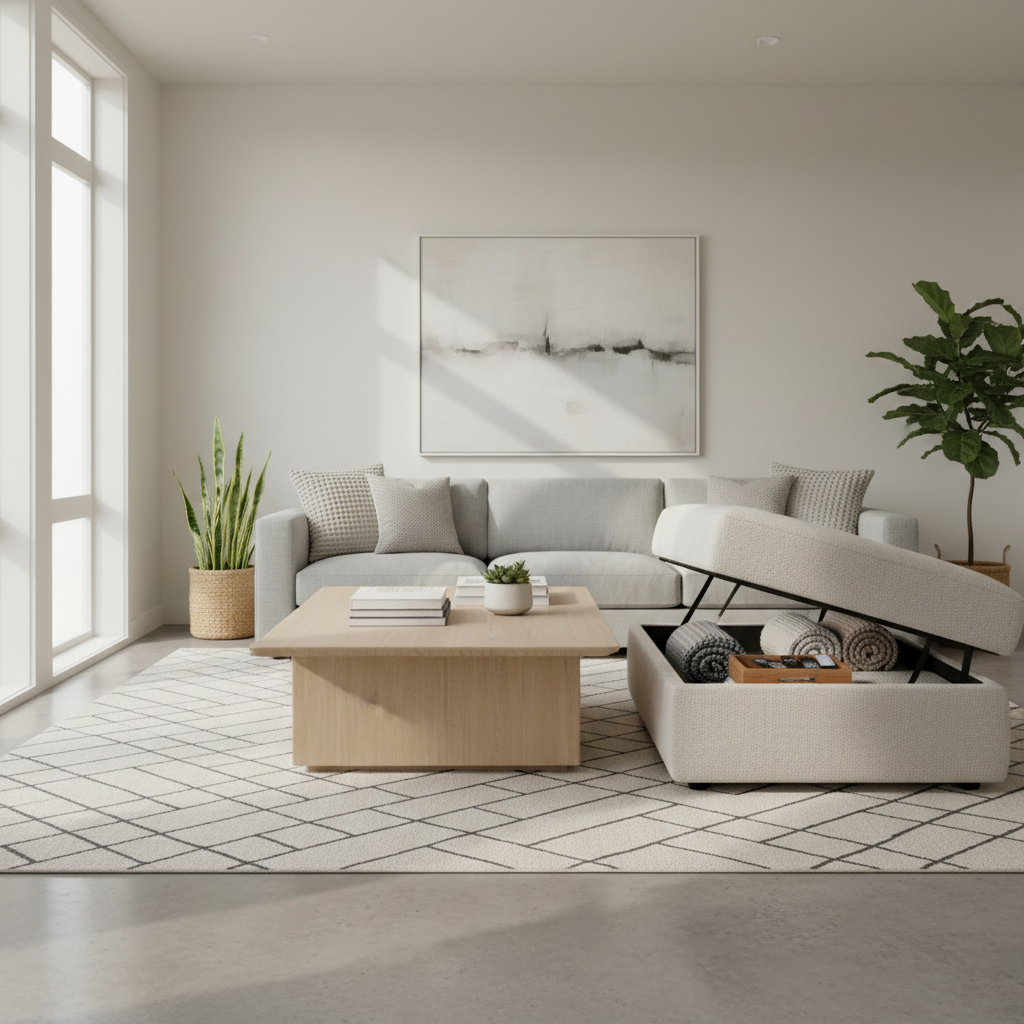
1) Lift-top coffee table (but set it up right)
A lift-top table can hold chargers, coasters, remotes, and even board games. The trick is avoiding a black-hole effect.
- Use 2–4 small containers inside, each with one job (tech, games, candles, misc).
- Keep one small “reset bin” for weeknight speed-cleaning.
- Leave 15–20% empty space so you can actually close it without rearranging.
2) Storage ottoman as the living room “buffer”
An ottoman with a lid is a classic for a reason: it hides soft clutter fast. If your room is open-plan, this can be your visual reset button.
- Store throws and pillow covers, not heavy books.
- If kids use it, choose a soft-close hinge for safer use (if you’re unsure, ask the retailer or a professional).
3) Sofa with hidden compartment or under-seat storage
Not every model is built well, but a good storage sofa is a high-capacity solution that doesn’t add another piece to the room. It’s especially helpful for small apartments.
According to Consumer Product Safety Commission (CPSC), furniture tip-over and pinch hazards are real considerations in homes with children, so it’s smart to look for stable designs and safe hinges when adding storage furniture.
Use “invisible zones”: the spaces you walk past every day
Some of the best living room storage hidden ideas are less about buying more, more about claiming forgotten space.
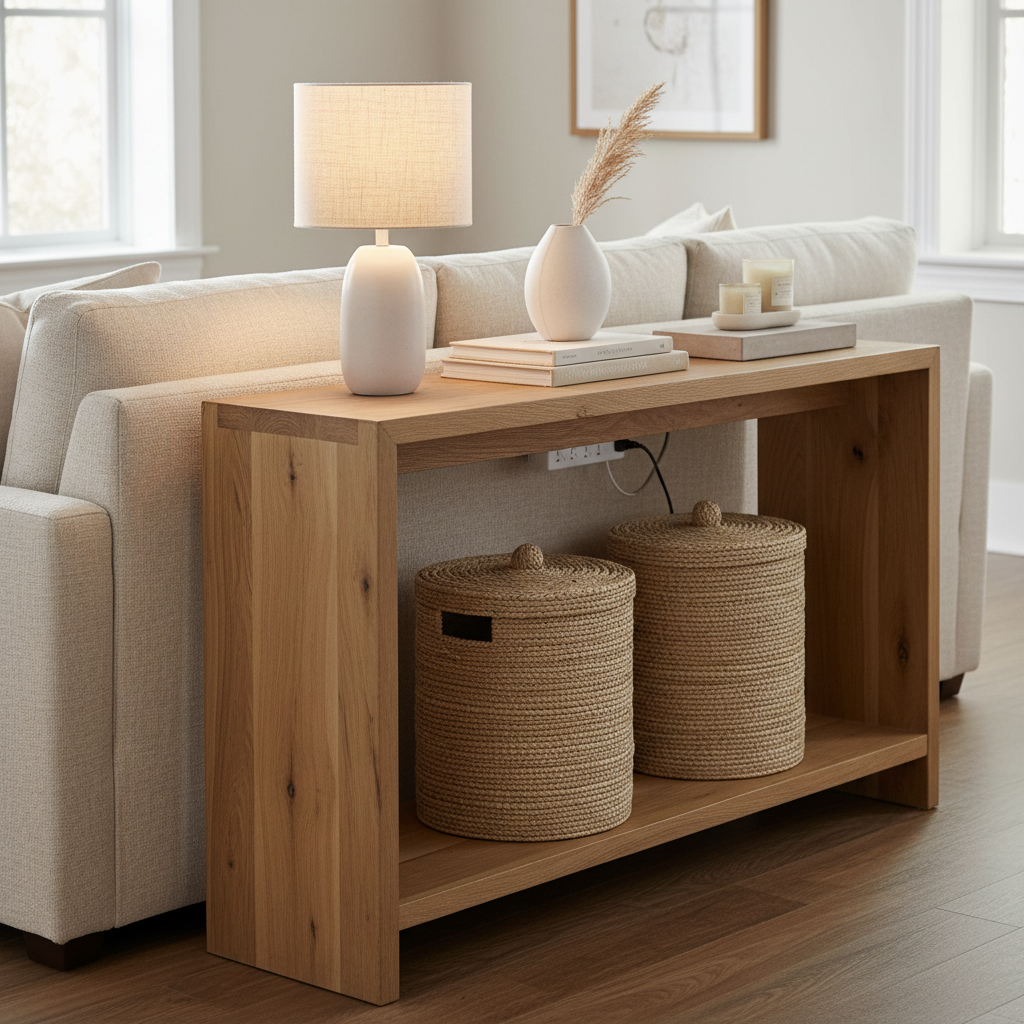
Behind the sofa: slim console + closed baskets
If your sofa floats away from the wall, that gap is valuable. A narrow console can hide power strips, spare throws, or kids’ items inside lidded baskets. It also gives you a “landing strip” for a lamp without adding a side table.
Under the sofa: low-profile bins (only if your sofa allows it)
Measure clearance first. Under-sofa bins work best for seasonal items (extra pillow inserts, holiday decor, backup cords). Avoid anything you need daily or you’ll resent it.
Above doorways: high shelf for low-frequency items
A single shelf above a doorway can store baskets for photo albums, party supplies, or extra candles. In a small space, this keeps floor area open.
Corner dead zones: tall cabinet that reads like a built-in
A tall, shallow cabinet with doors can disappear visually if it matches wall color and trim. It’s a great place for board games, router gear, or craft supplies.
Built-ins (or built-in “look”) that feel current in 2026
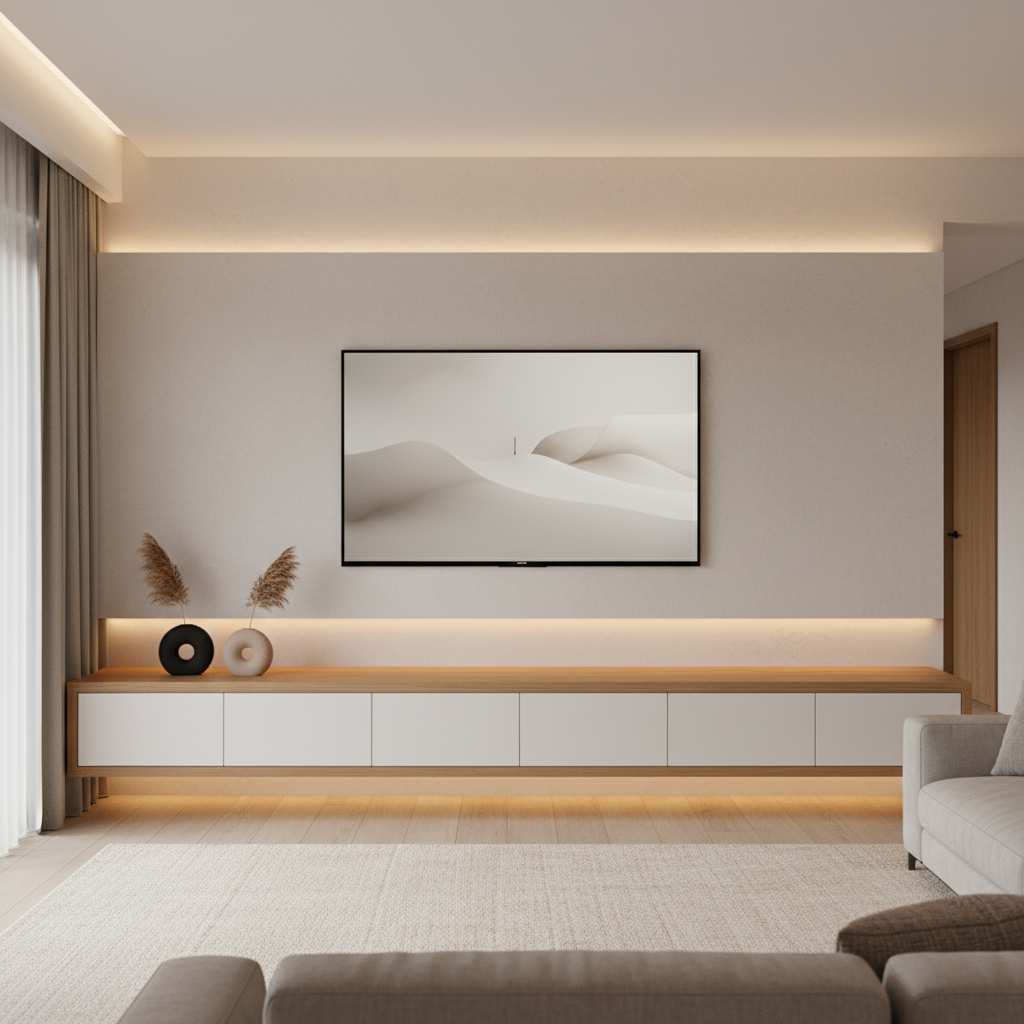
Built-ins can be a bigger commitment, but they’re hard to beat for calm, especially around the TV wall. If a full remodel isn’t happening, you can still fake the effect with modular pieces and careful styling.
| Option | Best for | What to hide | Watch-outs |
|---|---|---|---|
| Media wall with closed base cabinets | Most living rooms | Consoles, cables, games, manuals | Ventilation for electronics, cable routing |
| Fireplace surround cabinets | Rooms with a focal fireplace | Extra throws, decor overflow | Heat clearance, materials choice |
| Window seat with drawers | Bay windows, reading corners | Kids books, puzzles, seasonal textiles | Comfortable cushion height, safe drawer pulls |
| “Built-in look” with bookcases + filler panels | Budget upgrades | Mixed storage with doors and baskets | Secure tall pieces to studs if needed |
According to National Fire Protection Association (NFPA), keeping combustibles away from heat sources matters for home safety, so any storage near fireplaces should follow manufacturer guidance and local code where applicable.
Room-by-room micro systems: make hidden storage actually usable
Hidden storage works when it’s assigned. If everything can go anywhere, nothing goes away. Try these small “systems” that match how people use a living room.
Movie/TV zone
- One lidded box for remotes, controller, spare batteries.
- One cable pouch for chargers and adapters.
- One shelf rule: if it doesn’t fit on the shelf, something exits.
Reading corner
- Magazine file or slim cabinet for current reads.
- Small drawer for bookmarks, glasses cloth, sticky notes.
Kids/pets corner (even if it’s tiny)
- Two-bin method: “today” toys in one bin, overflow in a higher or harder-to-reach bin.
- Treats and leashes in a closed container near the exit path, not on the counter.
Key point: your living room doesn’t need perfect organization, it needs fast resets. Hidden storage should reduce decision-making, not add steps.
Common mistakes (and how to avoid wasting money)
These come up a lot when people hunt for living room storage hidden ideas and end up with more visual clutter than before.
- Buying open bins for messy categories: cords, toys, and paper look worse in open storage. Use lids or doors.
- Over-indexing on tiny organizers: too many small containers create friction, especially for partners or kids.
- Ignoring measurements: depth matters. A “slim” cabinet that sticks out into the walkway becomes annoying fast.
- Hiding what you need daily: if you use it every night, don’t store it under the sofa.
- Skipping anchoring and safety: tall furniture may need to be secured, particularly in homes with children. If you’re unsure, consult the manufacturer instructions or a qualified installer.
A simple 60-minute action plan (you can do this this weekend)
If you want results without a full redesign, this sequence is realistic and tends to stick.
- 10 minutes: Walk the room and note where clutter lands (three hotspots max).
- 15 minutes: Pick one hidden storage piece per hotspot (example: lidded box by sofa, closed bin near entry path, drawer unit by media console).
- 20 minutes: Assign categories and label discreetly on the inside or underside.
- 15 minutes: Do a “one-surface reset” rule: clear the coffee table or media console completely, then add back only what supports how you live.
If you do only one thing, make it this: add a single hidden container where the mess appears most, and keep it big enough to be easy, not so big it becomes a junk drawer.
Conclusion: calm living rooms are designed, not maintained
Most people don’t need a bigger living room, they need smarter hiding spots and fewer decisions. Pick two upgrades that match your real habits, set simple category rules, and you’ll feel the difference within a week.
If you want a clean starting point, choose one closed-storage hero piece (ottoman, lift-top table, or credenza), then add one “invisible zone” like behind-the-sofa storage, that combo usually carries most households.
FAQ
What are the most practical living room storage hidden ideas for small apartments?
Lift-top coffee tables, storage ottomans, and behind-the-sofa consoles usually give the most capacity without eating walkway space. Add one vertical shelf for low-frequency items if you’re truly tight on square footage.
How do I hide cords and chargers in the living room without making it unsafe?
Use cable sleeves or raceways, and keep power strips accessible rather than buried under piles. If you need to route cables through furniture, follow manufacturer guidance and consider asking an electrician when outlets or load questions come up.
Are built-ins worth it, or can I fake the look?
Built-ins can be worth it when you need a long-term solution for media and mixed storage, but a “built-in look” with modular cabinets, filler panels, and matching paint often gets you most of the visual calm for less commitment.
How do I keep hidden storage from becoming a junk drawer?
Limit each hidden space to 2–4 categories, and leave some empty room so items don’t get jammed. A quick monthly reset helps, but the real fix is not overloading one container with unrelated stuff.
What storage works best for a family living room with kids?
Closed storage wins because it forgives real life. Use a two-bin toy approach and keep a visible “return spot” near the play area so cleanup has a clear finish line.
How many storage pieces should I add before it looks bulky?
In many living rooms, one anchor piece plus one supporting zone is enough. If you’re adding a third, make it vertical or shallow so the room doesn’t feel crowded.
What should I store near a fireplace, and what should I avoid?
Keep only items that tolerate heat nearby, and maintain clearance recommended by the fireplace manufacturer. If you’re planning cabinetry around a fireplace, it’s wise to consult a qualified pro to avoid heat and code issues.
If you’re trying to make your space feel calmer without turning it into a wall of cabinets, start with one hidden-storage upgrade and one invisible-zone fix, then live with it for a week and adjust, that small feedback loop is usually what makes the system feel effortless.