
Best solar powered outdoor lights can genuinely improve a patio or garden, but only if you buy the right type for your space, your sunlight, and the mood you want. If you have ever installed “bright” solar lights that turned out dim, died after a season, or stopped charging after a few cloudy days, you already know the gap between marketing and real use.
What makes this worth getting right is simple: outdoor lighting affects safety, curb appeal, and how often you actually use the space at night. A few well-chosen fixtures can make a walkway feel welcoming, highlight landscaping, and reduce trip hazards without running new wiring.
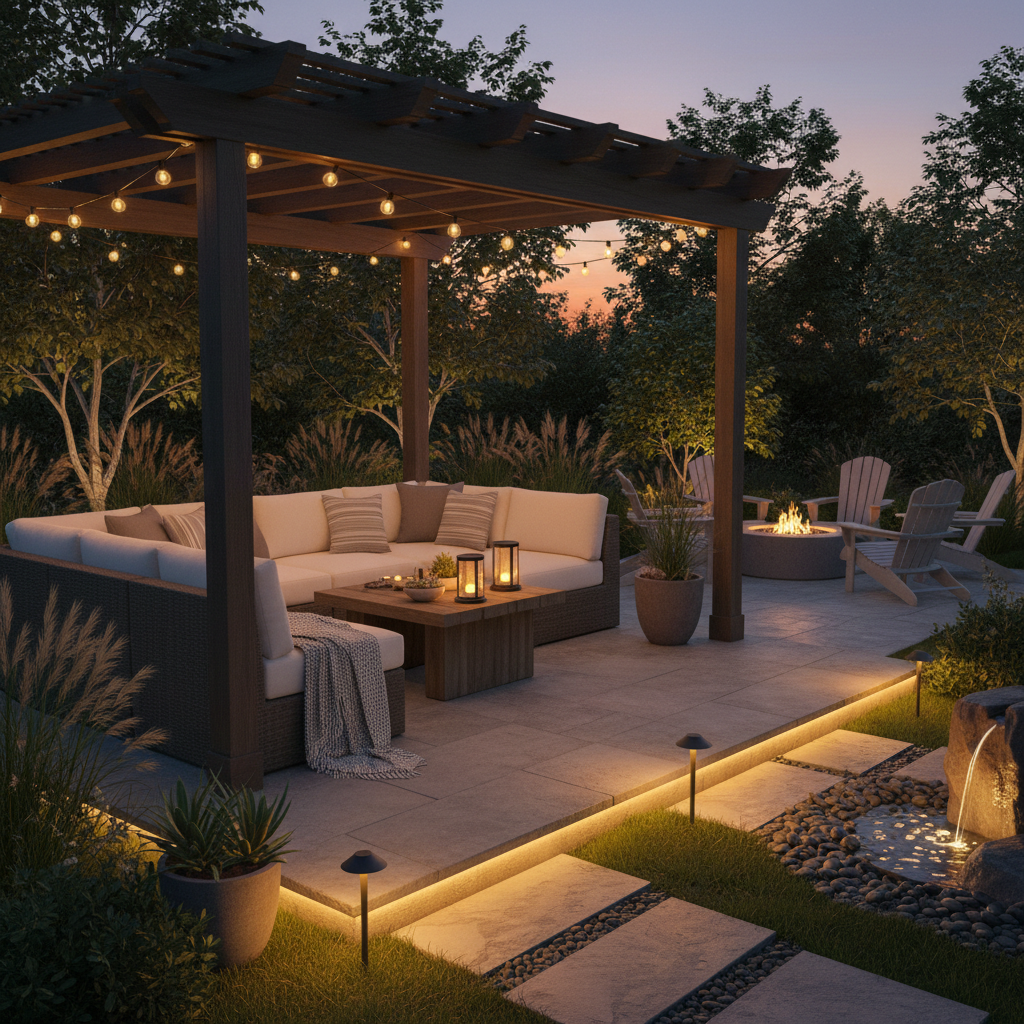
Below is a practical way to shop: what to prioritize, how to match light styles to tasks, what specs matter in real backyards, and a quick checklist to avoid the most common “why are these so dim?” mistakes.
What usually makes solar outdoor lights disappointing
Most “bad solar light” stories come from a mismatch between the light and the conditions, not always because the product is defective. These issues show up a lot in the U.S., where seasons, shade, and weather vary wildly.
- Not enough direct sun: Panels need decent exposure. Under trees, deep eaves, north-facing sides, or winter sun angles, runtime can drop fast.
- Wrong beam pattern for the job: Path lights often create small circles, while spotlights throw farther. Using a path light to “light a patio” leads to frustration.
- Overpromised brightness: Many listings push “super bright” without clarifying whether it is a focused spotlight or a wide-area glow.
- Battery limitations: Smaller lights tend to use smaller batteries, which means shorter runtime after cloudy days.
- Placement mistakes: Even good units underperform if the panel is aimed poorly or regularly covered in pollen and dust.
According to the U.S. Department of Energy, LED lighting is highly energy efficient compared with older technologies, which is why solar products typically rely on LEDs for acceptable brightness and runtime. The catch is that solar still depends on charging conditions, not just LED efficiency.
Types of solar lights for patios and gardens (and what they’re good at)
Before comparing specs, decide what you need the light to do. Most patio and garden setups mix 2–3 types, because no single fixture handles every job well.
Pathway and border lights
Best for guiding steps along walkways, edging garden beds, and adding a soft “presence” light. They look great in multiples, but they rarely flood an area.
Spotlights and uplights
Best for highlighting trees, architectural details, signs, and focal plants. If you want noticeable brightness, this category tends to deliver more punch than tiny stake lights.
String lights
Best for patios and pergolas when you want atmosphere more than task lighting. Good string sets can feel “finished” in a way that path lights alone do not.
Wall lights and step lights
Best for doors, fences, stairs, and transitions where people change elevation. These are the lights that can prevent a misstep, which matters more than vibe.
Motion-activated security lights
Best for driveways, side yards, garbage can areas, and gates. They can be bright, but the experience depends heavily on sensor quality and placement.
Quick comparison table: choose the right style fast
If you are trying to narrow down the best solar powered outdoor lights for your space, this table helps you match “task” to “type” without overthinking it.
| Goal | Best light type | What to prioritize | Common mistake |
|---|---|---|---|
| Safer walkway | Path lights, step lights | Even spacing, consistent runtime | Buying too few lights |
| Highlight landscaping | Spotlights/uplights | Aimability, beam focus, weather sealing | Mounting in shade |
| Patio ambience | String lights | Warm color, steady mode, durability | Expecting “area lighting” |
| Entryway visibility | Wall lights | Panel placement, dusk-to-dawn reliability | Installing under deep overhangs |
| Security & alerts | Motion security lights | Sensor range, brightness, adjustable angle | Pointing at traffic or swaying branches |
What specs matter when shopping (without getting lost)
Product pages can feel like a spec soup. Here is what tends to matter most in real patio and garden use, especially when you want best solar powered outdoor lights that still perform after the honeymoon week.
- Brightness (lumens): Higher isn’t always better. For paths, too bright can glare. For security, brightness matters more.
- Color temperature: Warm white typically feels more inviting on patios, cool white can feel harsher but sometimes reads “brighter.”
- Battery type and replaceability: If the battery can be replaced, the light often lasts longer overall.
- Runtime claims: Treat “8–12 hours” as “best-case summer sun.” In winter or shade, many lights run shorter.
- Solar panel placement: Integrated panels look clean, but separate panels can help if you want the light in shade and the panel in sun.
- Ingress protection/weather resistance: You want solid sealing for rain, sprinklers, and freeze-thaw cycles.
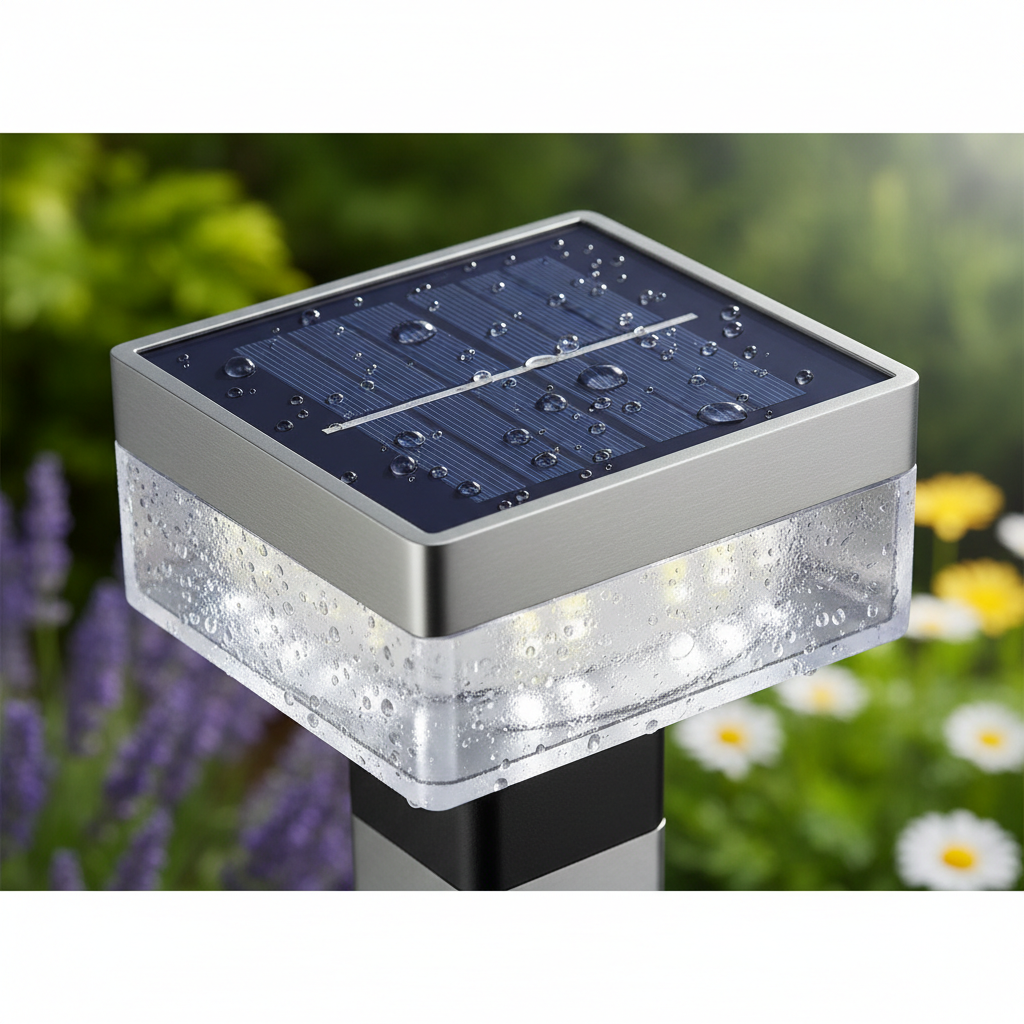
Key point: If your yard gets partial sun, prioritize panel size, battery capacity, and efficient LEDs over “decorative” design. Pretty lights that cannot charge well become expensive yard clutter.
Self-check: what kind of solar lighting setup do you actually need?
This quick checklist helps you avoid buying a style that cannot meet your expectations. Be honest about your site conditions; solar rewards realism.
- Sun exposure: Do your intended panel locations get several hours of direct sun, especially in winter?
- Main goal: Is the goal ambiance, navigation, highlighting plants, or security?
- Spacing: Are you willing to install more units for a smooth, even look, or do you want fewer, brighter fixtures?
- Maintenance tolerance: Are you okay wiping panels and occasionally adjusting angles?
- Local weather: Do you deal with snow, salty coastal air, monsoon rains, or intense summer heat?
If you checked “shade” plus “I want it bright,” focus on spotlights with larger panels, or consider hybrid options where the panel can be placed in a sunnier spot.
Practical setup steps for patios and gardens (what works most often)
Even the best solar powered outdoor lights can look uneven if placement is random. This is the simple approach that tends to work across most U.S. backyards.
1) Map your “dark spots” first
Walk outside at dusk with house lights set the way you normally use them. Note where you hesitate: steps, gate latches, the grill, corners of the patio, and the path from the door to the yard.
2) Layer light instead of chasing one super bright fixture
- Use path/step lights for feet and edges.
- Add string lights for a ceiling of warm ambience.
- Use 1–2 spotlights to “paint” a tree or feature plant.
3) Place panels like you mean it
Angle panels toward the clearest sky exposure you have, keep them away from sprinkler spray when possible, and avoid spots where leaves and pollen build up weekly. This small habit often matters more than minor spec differences.
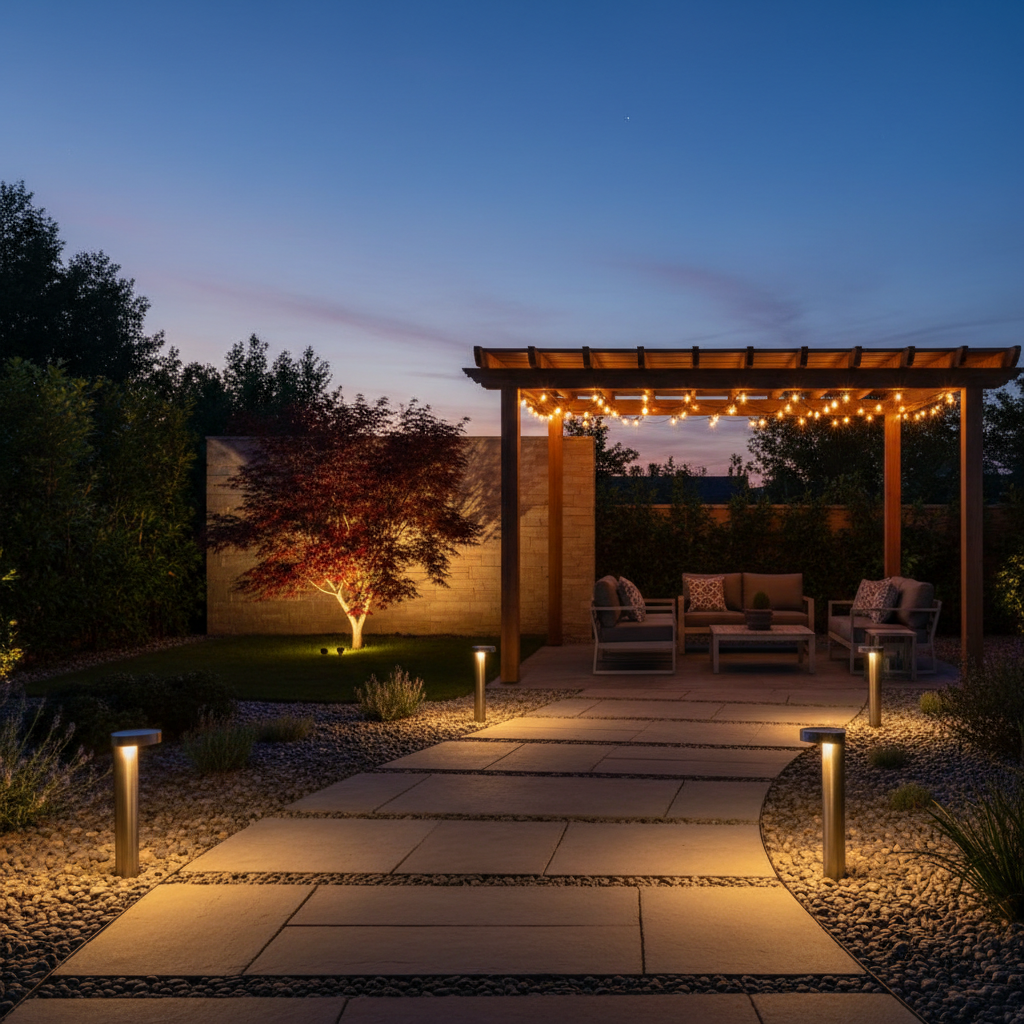
4) Test for 3 nights before committing
Do a loose install, then watch performance across a few evenings. If a light fades too early, move the panel to better sun or swap that location to a different light type.
Common mistakes to avoid (these waste the most money)
- Buying “a set” before checking sun: If the patio area is shaded, split-panel or brighter spotlight styles usually work better than decorative stakes.
- Expecting solar to match wired floodlights: Many products can be very usable, but performance varies by season and placement.
- Mounting motion sensors too low: You can get false triggers from pets or passing cars, then the battery drains faster.
- Ignoring color consistency: Mixing very cool and very warm whites can look accidental, especially on a small patio.
- Skipping maintenance: A dusty panel can reduce charging. Quick wipe-downs help more than people expect.
If safety is a concern, especially on stairs, consider adding dedicated step lighting and keep the walking surface evenly lit. If you have unique electrical or structural constraints, it may be worth asking a licensed electrician or landscape lighting pro for guidance, particularly when mixing solar with wired fixtures.
Conclusion: how to pick confidently
The “best” choice usually comes down to matching the light type to the job, then being realistic about sun exposure and seasonal changes. If your patio is for relaxing, build around warm ambience and fill in walking paths. If your priority is security, focus on motion lighting with adjustable aim and reliable sensors.
Two actions that pay off quickly: do a 3-night test install before you stake everything permanently, and prioritize sun placement even if it means shifting lights a few feet. That is where most solar setups either succeed or quietly disappoint.
FAQ
What are the best solar powered outdoor lights for a shaded patio?
In many cases, you will get better results with solar string lights that have a larger panel, or solar spotlights designed for higher output. If shade is constant, look for models with remote panels so the panel can sit in the sun while the light stays where you need it.
How many solar path lights do I need for a walkway?
It depends on spacing and brightness, but people often underbuy. A practical rule is to aim for even pools of light without big dark gaps, then adjust spacing after a couple nights of testing.
Do solar outdoor lights work in winter?
They can, but runtime often drops because days are shorter and sun angles change. If winter performance matters, prioritize larger panels and batteries, and place panels where they get the clearest midday sun.
Are motion-activated solar lights good for security?
They can be helpful as a deterrent and for visibility, but results vary with sensor range, placement, and nearby movement like traffic or branches. If you need a complete security solution, you may want to combine lighting with cameras or consult a security professional.
What color temperature looks best in a garden?
Warm white typically feels more natural on plants and creates a relaxed mood. Cool white can make details pop but sometimes looks stark, especially in small yards.
Why do my solar lights turn off early?
The most common reasons are insufficient charging time, shaded panels, dirty panels, or battery aging. Try cleaning panels and relocating them to stronger sun before replacing the whole set.
Can I leave solar lights out in heavy rain or snow?
Many are designed for outdoor exposure, but “weather resistant” can mean different things by product. Check the rating and construction quality, and if you see water inside the lens, stop using that unit and contact the seller.
If you are trying to light a patio and garden without running wires, and you want a more “set it up once and forget it” result, it often helps to plan a small mix of light types and test placement for a few nights before you commit to a full purchase.