
Outdoor patio lighting ideas budget searches usually come from the same place: you want your patio to feel warmer and more usable at night, but you don’t want to sink a weekend and a paycheck into it.
The good news is most “expensive-looking” patios rely on a few repeatable tricks, layering light, hiding the source, and using warmer color temperatures, not luxury fixtures. If you plan a little before buying, even a small spend can look intentional instead of random.
This guide focuses on realistic, US-friendly options: plug-in solutions for renters, low-voltage kits for homeowners, and a few DIY ideas that won’t backfire on safety or durability.
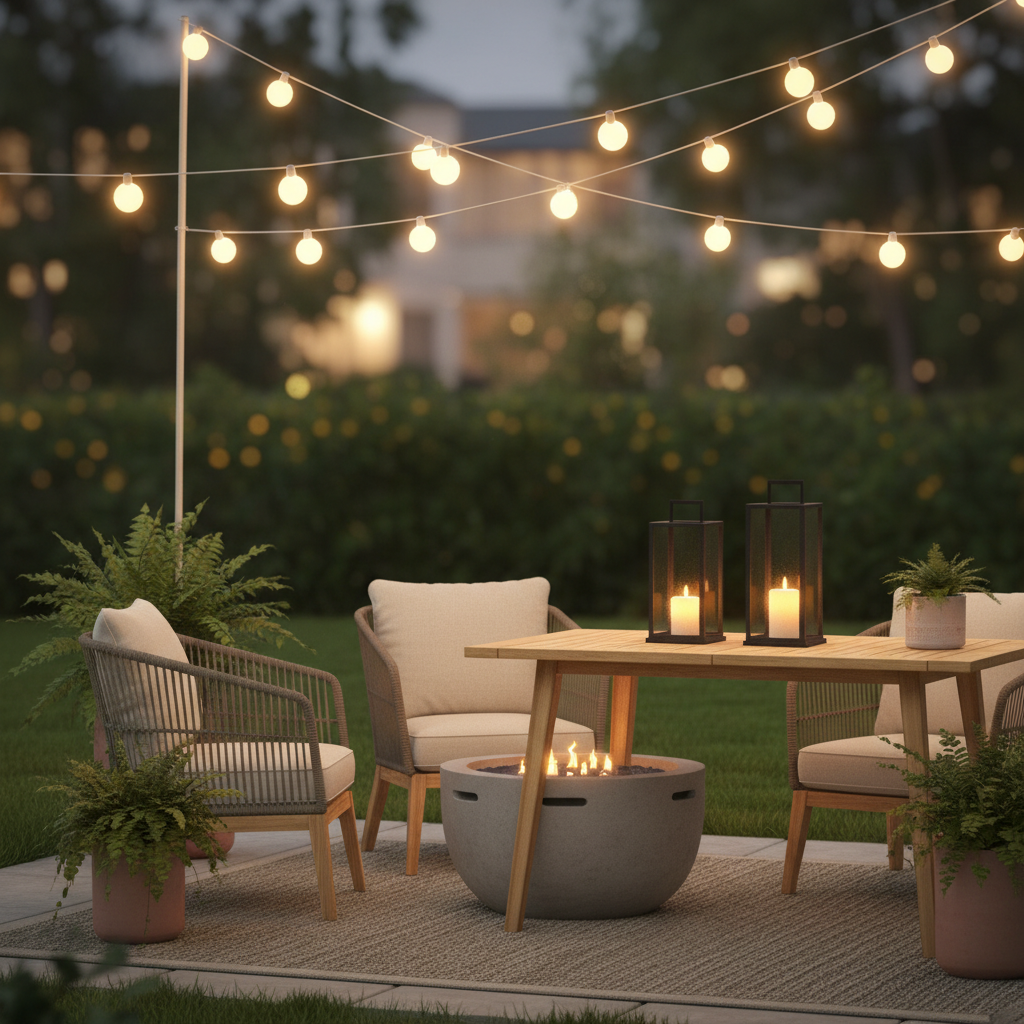
Start with a simple lighting plan (so you don’t waste money)
Before you buy anything, decide what you want the light to do. Most patios need three types, even on a tight budget: ambient for overall glow, task for grilling or dining, and accent to make the space feel designed.
- Ambient: string lights, wall lights, overhead bulbs.
- Task: brighter light near the grill, food prep, dining table.
- Accent: uplighting a plant, lighting a path edge, highlighting texture.
A quick rule that saves cash: spend first on the one light that makes the patio usable (usually task lighting), then use cheaper pieces to build the mood.
Budget-friendly patio lighting options (what to buy, what to skip)
If you’re comparing options in a cart at midnight, here’s the practical breakdown. These are the most common categories behind outdoor patio lighting ideas budget shoppers actually end up happy with.
String lights (best “instant vibe” per dollar)
Look for outdoor-rated (wet location), shatter-resistant bulbs, and a warm color (around 2700K). Plug-in sets are easiest, but if the outlet location forces ugly extension cords, factor in cord covers or routing.
- Works well for: dining, lounging, pergolas, fences.
- Common regret: sagging lines and harsh cool-white bulbs.
Solar path and stake lights (cheap accents, inconsistent output)
Solar can be great for “soft guidance” along edges, but brightness varies a lot by panel size, battery quality, and sun exposure. In shaded yards, solar often looks dim by late evening.
- Works well for: small accents, quick installs, renters.
- Skip if: your patio gets little direct sun.
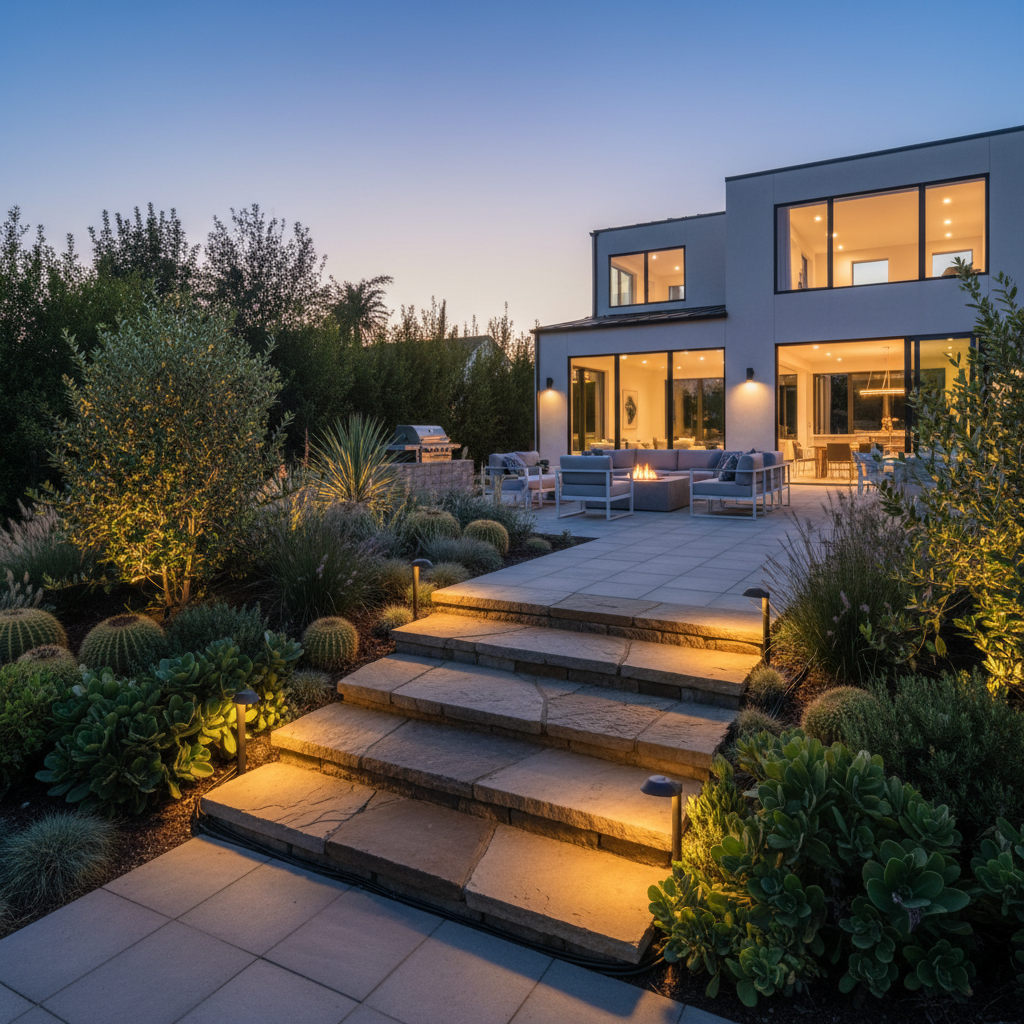
Low-voltage LED kits (most polished look for homeowners)
Low-voltage landscape lighting usually looks more “built-in” than solar and can still be budget-friendly if you keep the layout small. Many kits are expandable later, which helps spread cost over time.
- Works well for: steps, planters, perimeter beds.
- Watch for: transformer capacity and cable length.
Battery lanterns and portable lamps (renters’ secret weapon)
Rechargeable lanterns create a high-end feel because you can place them exactly where the darkness feels awkward. They also double as emergency lighting, which is a nice bonus.
Quick cost-and-effort comparison table
Prices vary by brand and season, but this table helps you choose based on tradeoffs, not vibes alone.
| Option | Typical install effort | Look/impact | Ongoing hassle | Best use |
|---|---|---|---|---|
| Outdoor string lights (plug-in) | Low to medium | High mood, cozy | Bulb replacement, cord routing | Overhead ambient |
| Solar stake lights | Low | Low to medium | Battery fade, inconsistent brightness | Edges and paths |
| Low-voltage LED kit | Medium | Medium to high, “built-in” | Wiring checks, occasional fixture swap | Steps, beds, accents |
| Rechargeable lanterns | Low | Medium to high (placed well) | Charging routine | Tabletop + corners |
| Motion-sensor flood or wall light | Medium | Functional | Sensitivity tweaks | Safety + task zones |
A simple self-check: which setup fits your patio?
If you’re stuck between a few options, use this quick checklist. It’s not fancy, but it prevents buying the wrong “budget” product and replacing it two months later.
- You rent or can’t drill: plug-in string lights, clamp lights, rechargeable lanterns, solar stakes.
- You own and want a cleaner look: low-voltage kit for accents + one overhead ambient source.
- You cook outside often: prioritize task lighting near grill, ideally motion-sensor or a focused fixture.
- Your patio is windy: avoid ultra-light lanterns and cheap hooks, use heavier bases and proper anchors.
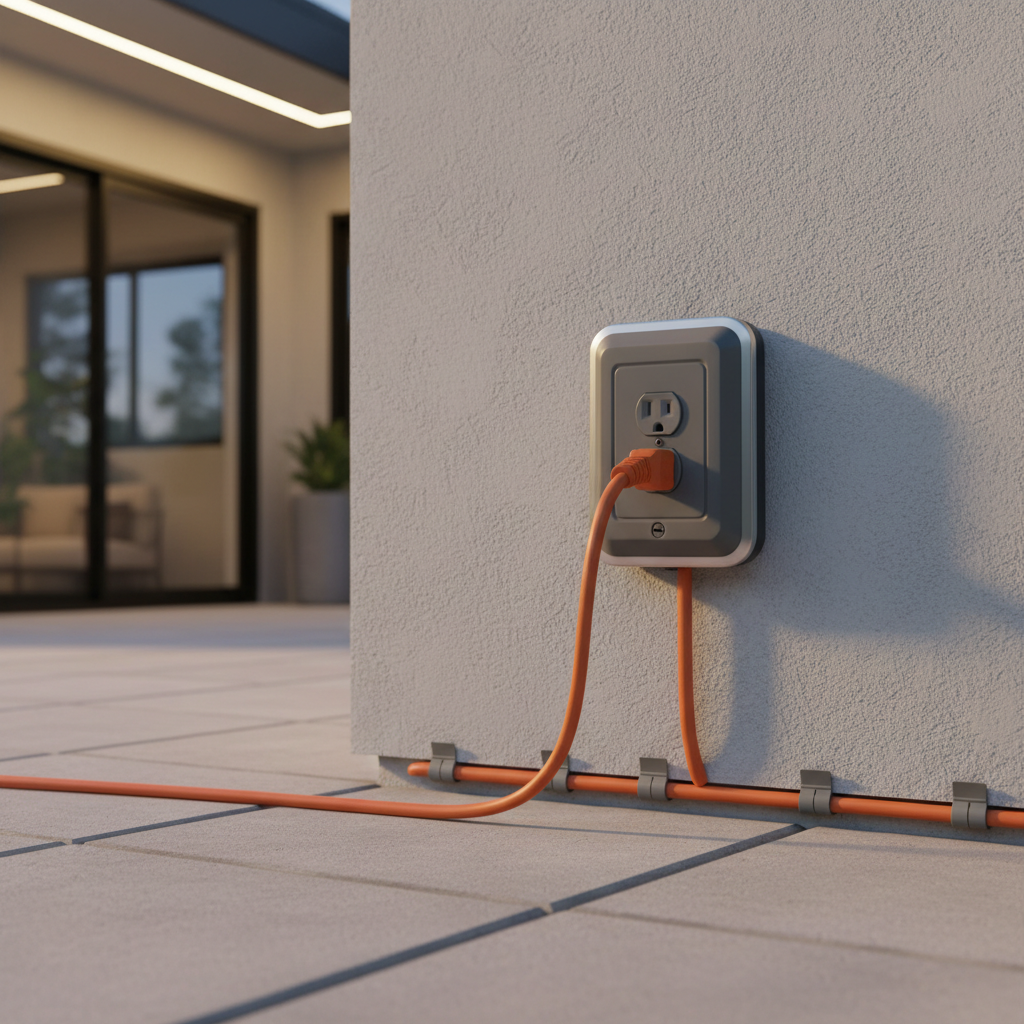
- You have one outlet: plan cord routing and consider a weatherproof outdoor extension + cover.
Also check your light color. Mixing cool white and warm white is one of the fastest ways to make a patio feel cobbled together.
DIY and “cheap-but-not-cheesy” upgrades that actually work
Some budget patio lighting wins come from placement and small accessories, not new fixtures. A few ideas that tend to look intentional:
1) Create a “ceiling” with string lights
People hang string lights around the perimeter and stop. If you can, run them across the space (in parallel lines or a gentle zig-zag) so the seating area sits under light, not beside it.
2) Use lantern clusters instead of one center light
Three small light sources at different heights usually feels more inviting than one bright point. Mix a tabletop lantern, a floor lantern, and a small stake or spotlight on a plant.
3) Add cheap reflectors
Light looks richer when it bounces. A light-colored fence panel, pale planter, or even a simple outdoor-safe shade can act like a reflector and reduce the need for brighter bulbs.
4) Swap bulbs before you swap fixtures
When fixtures feel “off,” it’s often the bulb. Warm, consistent color temperature and decent color rendering make basic fixtures look better. Many outdoor patio lighting ideas budget guides skip this because it’s not photogenic, but it matters.
Practical install steps (without turning it into a project)
Here’s a straightforward way to install lighting without redoing it three times.
Plan and mark
- Sketch your patio and mark seating, dining, grill, steps.
- Decide where shadows feel unsafe or annoying.
- Pick 1–2 “feature” spots: a tree, a tall plant, a textured wall.
Start with safe power and weather rating
For anything plugged in outdoors, use outdoor-rated cords and covers, and keep connections off the ground when possible. According to the National Electrical Code (NFPA 70), outdoor electrical installations have specific requirements that vary by location and application, so if you’re unsure about wiring, it’s smart to consult a licensed electrician.
Install in this order
- Task light: grill or dining first, so the patio becomes usable.
- Ambient: string lights or wall lights to soften the overall scene.
- Accent: add two or three small points, then stop and evaluate.
Give it one night before buying more. A lot of “budget” blowups happen when you keep adding lights to fix a layout problem.
Common mistakes that make “budget lighting” look cheap
- Too bright overhead: one glaring source flattens everything, and people stop using the space because it feels like a parking lot.
- Random placement: lights spaced unevenly or aimed at nothing create visual noise.
- Mixing color temperatures: pick warm across the patio when possible, then stick to it.
- Ignoring glare: avoid aiming spotlights at eye level where guests sit.
- Underestimating wind and rain: indoor lanterns, bargain hooks, and non-rated cords fail fast outdoors.
One more: buying solar for a shaded patio and assuming it will perform like wired lighting. Many yards just don’t give solar enough charge time, especially in winter.
Key takeaways (so you can decide fast)
- Layering beats spending: one usable task light plus soft ambient usually wins.
- Warm light reads “cozy”: look for warm white rather than bright cool tones.
- Buy for your constraints: renters should lean plug-in and portable, owners can add low-voltage accents.
- Fix layout before adding more fixtures: most patios get overlit, not underlit.
When it’s worth calling a pro
If you’re planning new hardwired fixtures, adding outlets, or you’ve got older exterior wiring you don’t trust, professional help is often the safer, cheaper-in-the-long-run move. The same goes if you notice tripping breakers, warm outlets, or water intrusion around exterior boxes, those are signs to pause and get an electrician’s opinion.
Conclusion: make it feel intentional, not expensive
Outdoor patio lighting ideas budget planning works when you stop chasing “more lights” and start building a simple mix: usable light where you need it, warm glow where you relax, and a couple accents that make the patio feel finished.
If you want an easy next step, pick one zone tonight, dining or seating, and upgrade that with a warm ambient source plus a portable lantern. Then live with it for a night and adjust before you buy anything else.
FAQ
- What are the cheapest outdoor patio lighting ideas budget shoppers should try first?
Plug-in outdoor string lights and a couple rechargeable lanterns usually deliver the biggest visual change for the least effort, especially if you place lanterns in dark corners instead of centering everything. - Are solar patio lights worth it?
They can be, but performance depends heavily on sun exposure and product quality. For shaded patios, solar often works better as a small accent than as your main light source. - How do I make cheap string lights look expensive?
Keep lines tight, use a consistent warm bulb color, and create a “ceiling” over the seating area rather than outlining the fence. Clean cord routing makes a bigger difference than people expect. - What color temperature is best for a cozy patio?
Many patios feel most inviting with warm white light around 2700K. If you already own mixed bulbs, swapping to one consistent temperature can unify the look quickly. - How bright should patio lighting be?
Bright enough to see food, steps, and faces, but not so bright it causes glare. In practice, multiple smaller sources at lower brightness often feels better than a single high-lumen fixture. - Can I leave outdoor string lights up year-round?
If they’re rated for outdoor use, many people do, but wind, sun, and moisture still shorten lifespan. Checking connections and replacing cracked bulbs seasonally helps reduce issues. - Do I need an electrician for low-voltage landscape lights?
Many kits are designed for DIY, but if you’re unsure about outdoor power, transformer sizing, or you need new outlets, it’s reasonable to consult a licensed electrician for safety.
If you’re trying to upgrade a patio without turning it into a renovation, it often helps to choose a small “lighting kit” approach, one ambient source, one task fix, and a couple accents, so you can buy once and stop scrolling. If you want, tell me your patio size, whether you rent, and where your outlet sits, and I can suggest a simple shopping list that matches your budget range.