
Best wooden kitchen utensils natural choices come down to two things most people overlook: what the utensil is made from, and what (if anything) has been put on it.
Wood can be a smart, practical option for everyday cooking, it feels good in the hand, it is quiet on cookware, and it is less likely to scratch nonstick surfaces compared with metal tools. But “wooden” does not automatically mean “natural,” and “natural” does not automatically mean “safe” for your situation.
This guide breaks down the wood types, finishes, red flags, and care routines that actually matter, plus a quick checklist and a comparison table so you can pick confidently without overthinking it.
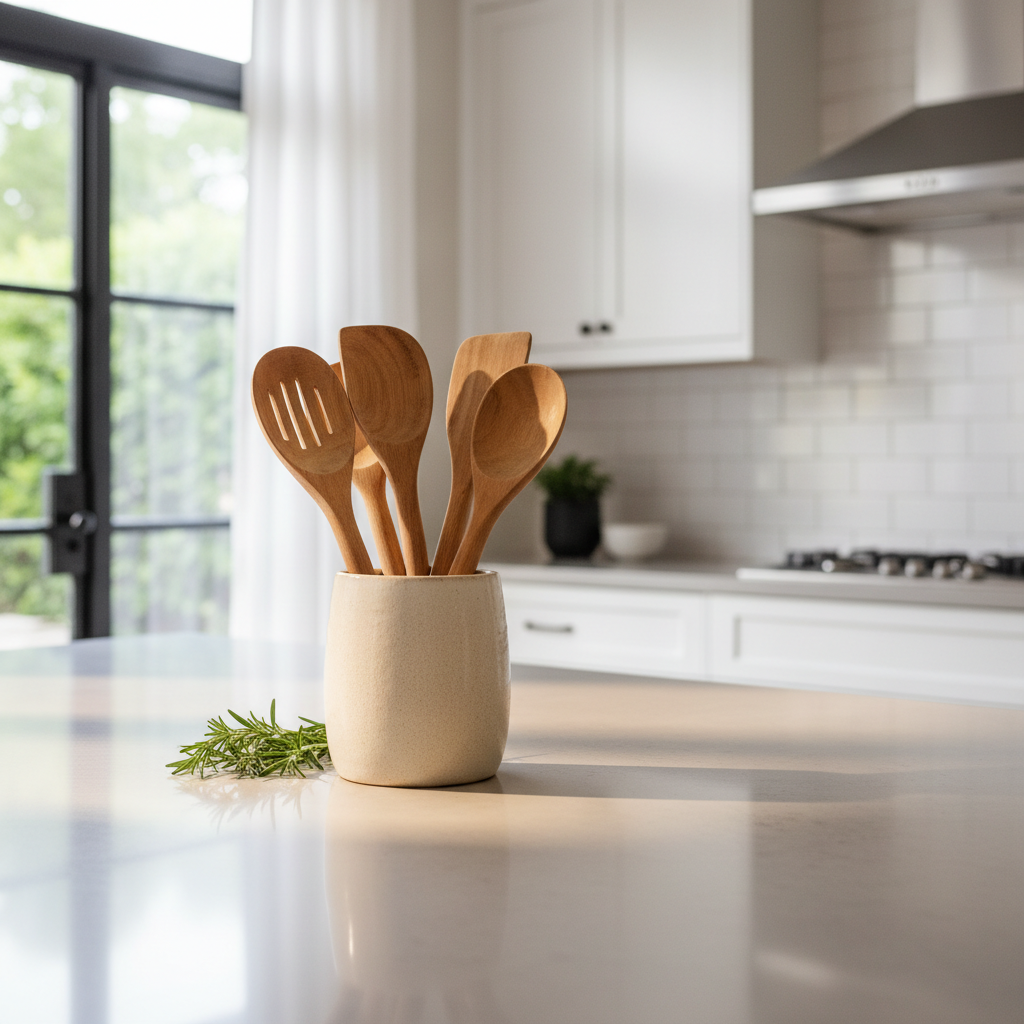
What “natural & safe” really means for wooden utensils
In product listings, “natural” often means “made from a natural material,” not “free from coatings.” For utensils, the practical definition most shoppers want is simpler: a solid, food-safe wood tool with a finish you understand, and without mystery dyes, heavy sealants, or strong chemical odors.
“Safe” also depends on context. If you have allergies, cook for small kids, or you are sensitive to odors and finishes, your bar may be higher than a typical home cook.
According to the U.S. Food & Drug Administration (FDA), food-contact materials should be suitable for their intended use, and safety depends on how a material is manufactured and used, not just what it is called. That is why labeling and transparency matter.
Wood types that tend to work best (and why)
If you are hunting for the best wooden kitchen utensils natural, start with the wood species. Different woods handle water, heat, and repeated washing very differently.
Hardwoods most people trust for daily cooking
- Maple: Dense, smooth grain, usually easy to maintain, a common “safe bet” for spoons and spatulas.
- Beech: Similar feel to maple, often used in European-style utensils, generally tough and stable.
- Olive wood: Beautiful grain, naturally oily, can resist drying but may be pricier and varies a lot by maker.
- Walnut: Strong and attractive, usually comfortable in hand, but darker color may mask stains (good or bad, depending on your preference).
What about bamboo?
Bamboo is technically a grass, and many bamboo utensils are made from laminated pieces. That does not make them “unsafe,” but it does mean adhesives and construction quality matter more. If a bamboo utensil feels overly light, has visible glue lines, or starts splintering early, skip it.
Softwoods to be cautious with
Pine and other softwoods tend to dent, absorb moisture, and pick up odors faster. For stirring a sauce once in a while, maybe fine, but for daily use they often age poorly.
Finishes, coatings, and the real safety questions
This is where “natural” can get fuzzy. Many utensils are sold as unfinished, but a lot arrive pre-oiled or sealed. Neither approach is automatically wrong, you just want clarity.
- Unfinished: Feels dry and matte, you oil it yourself. Great if you want control, but it needs maintenance.
- Pre-oiled: Often treated with mineral oil, walnut oil, or a blend. Convenient, ask the brand what oil they use.
- Wax blends: Common for a smoother feel, typically beeswax mixed with oil. Usually fine for utensils, but it can wear unevenly.
- Varnish/lacquer-like seal: Very glossy, sometimes “slick.” This can chip over time, which is not ideal for tools that contact heat and abrasion.
According to the USDA Food Safety and Inspection Service (FSIS), you should keep food-contact surfaces clean and in good condition, and replace items that are cracked or hard to clean. With wood, cracks and rough splinters are the point where “safe” becomes questionable.
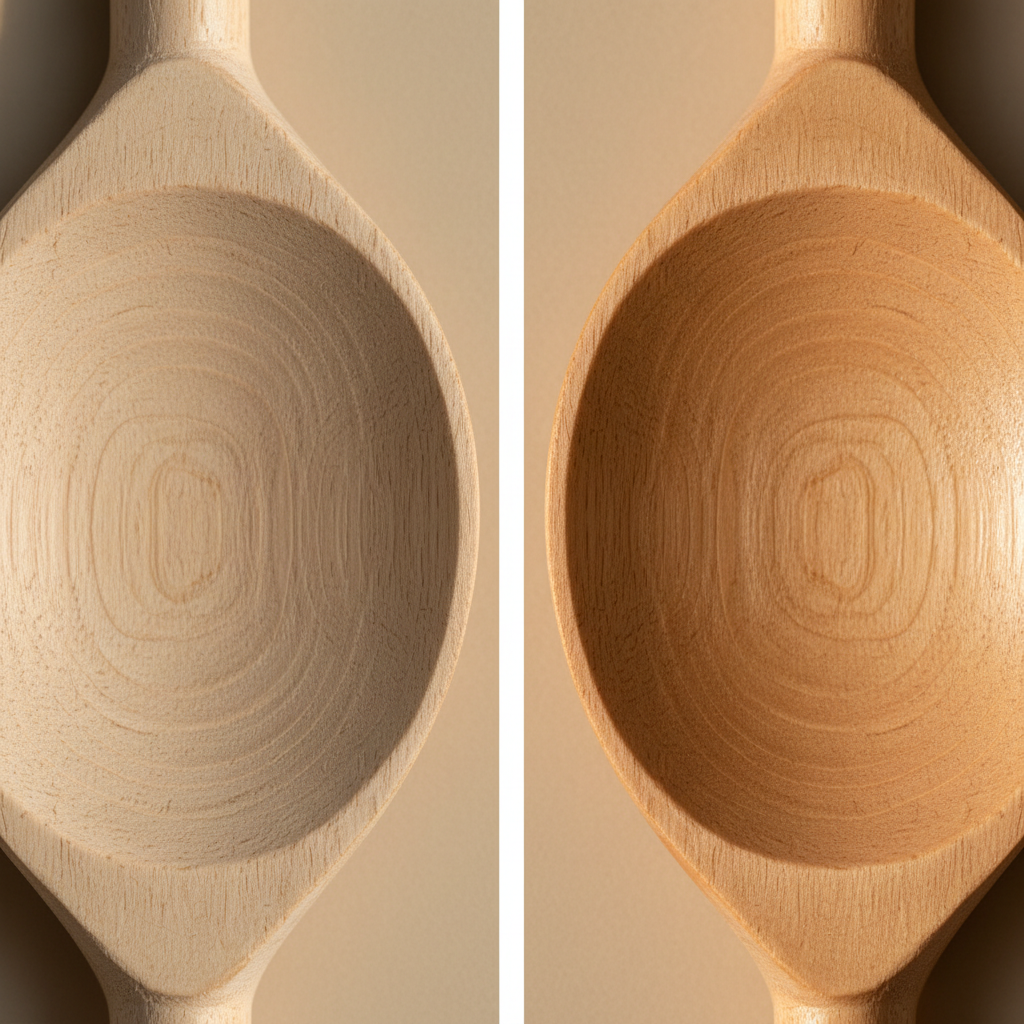
Quick comparison table: picking the right utensil set for your kitchen
Here is a practical way to choose without getting lost in marketing terms.
| What you care about | Look for | Avoid |
|---|---|---|
| Most “natural” feel | Solid maple/beech, unfinished or clearly stated oil | Heavy gloss coatings, strong smell out of the box |
| Low maintenance | Olive wood or well-oiled hardwood, smooth sanding | Rough edges, open joints, splinter-prone pieces |
| Nonstick cookware protection | Rounded corners, thinner edges, flexible-ish profile | Sharp squared edges that can scrape coatings |
| Budget-friendly set | Simple hardwood tools, basic oil finish, fewer pieces | Huge sets with “filler” tools you will not use |
| Better for high heat stirring | One-piece construction, thicker handles, dense wood | Glued laminations near the head of the tool |
Self-check: are your current wooden utensils still OK to use?
People often keep wooden tools far past their “good years” because they still look charming. Here is the quick reality check.
- Smell test: If it holds on to onion or fish odors after washing and drying, it may be too porous or worn.
- Texture test: Run your fingers along the working edge. If it feels fuzzy, rough, or splintery, it is time to sand and re-oil or replace.
- Crack check: Hairline cracks near the bowl of a spoon can trap residue. Deep cracks usually mean retirement.
- Stain reality: Dark stains are not always dangerous, but if stains come with odor or tacky feel, assume residue is trapped.
- Finish flaking: Any chipping sealant is a no.
If you cook for someone immunocompromised or you are unsure about a utensil’s condition, it may be worth replacing sooner and keeping the old one for non-food tasks.
How to choose the best wooden kitchen utensils natural (by cooking style)
Different kitchens punish utensils in different ways, so the “best” pick changes with your habits.
If you cook daily and wash a lot
- Pick dense hardwood with a simple oil finish you can refresh.
- Favor fewer tools: a spoon, a flat spatula, a turner, a scraper-style spoon.
- Skip fancy shapes that are hard to clean around tight corners.
If you use nonstick cookware most of the time
- Choose smoothly sanded edges and slightly thinner leading edges.
- Avoid utensils with sharp corners, even if they look “premium.”
If you cook high-heat dishes (stir-fry, searing, cast iron)
- Look for one-piece construction and thicker handles that stay cooler.
- Keep one dedicated “beater” tool for heavy scraping, wood wears over time.

Care steps that keep wooden utensils clean, smooth, and long-lasting
Wood care is not complicated, but inconsistency is what ruins tools. A simple routine usually wins.
Day-to-day washing
- Hand-wash with mild soap, rinse, and dry right away.
- Do not soak in a sink or leave it sitting in water.
- Dishwasher use often shortens lifespan because heat and prolonged moisture can warp wood, many brands advise against it.
Monthly (or as-needed) refresh
- Lightly sand rough spots with fine-grit sandpaper.
- Apply a thin coat of food-grade mineral oil or a clearly labeled utensil-safe oil, wipe off excess.
- Let it rest overnight so the surface feels dry, not greasy.
Deodorizing when a utensil absorbs smells
Many people reach for harsh cleaners, but you often do not need them. A baking soda paste and a thorough dry can help, but if odor keeps coming back, the wood may be too porous at this point.
Common mistakes that make “natural” utensils less safe
- Buying huge sets and leaving half the tools unused, unused wood can dry out and crack in storage.
- Assuming “eco” equals “no finish”, many products still have coatings, ask or check the listing details.
- Oiling too heavily, excess oil can feel sticky and attract residue, thin coats work better.
- Keeping cracked tools because they are sentimental, cracks become cleaning problems.
- Using wood for everything, for example, very sticky candy stages can be rough on wood, silicone may be easier to clean.
When it makes sense to ask a professional (or switch materials)
If you are dealing with allergies, chemical sensitivities, or you are cooking in a regulated setting, it can be smart to get specific guidance rather than rely on generic “food-safe” labels. A healthcare professional can advise on allergy risks, and local health departments or food-safety consultants can clarify what is appropriate for commercial kitchens.
And sometimes the right answer is mixing materials: wood for stirring and gentle scraping, silicone for sticky sauces, stainless steel for tasks where you need thin precision.
Key takeaways before you buy
- Wood species and construction matter more than fancy claims, dense one-piece hardwood is usually a safer bet.
- Know the finish, choose utensils with transparent labeling about oils or waxes.
- Condition is safety, cracked or splintery tools should be repaired or replaced.
- Care is simple, wash, dry, and re-oil lightly when the surface looks thirsty.
If you want a calm, reliable purchase, start with 2–4 core tools in maple or beech, use them for a month, then expand only if you truly miss a specific shape.
FAQ
What are the best wooden kitchen utensils natural for nonstick pans?
Look for smooth sanding and rounded edges in a dense hardwood like maple or beech. The edge shape matters as much as the material, sharp corners can still scratch over time.
Is bamboo “safer” than hardwood utensils?
Not automatically. Bamboo can be durable, but many bamboo tools use laminated sections, so the quality of construction and adhesives becomes part of the equation. If the brand is vague, a one-piece hardwood tool is often simpler to evaluate.
What finish should I look for if I want minimal chemicals?
Unfinished or clearly stated food-grade mineral oil is the easiest to understand and maintain. If you see a glossy, sealed surface and the listing does not explain it, that is a reasonable reason to pass.
Can wooden utensils harbor bacteria?
They can if they are cracked, heavily worn, or not dried properly. Cleanability matters more than the material label, if a tool smells “stuck” or stays rough, it is telling you something.
How often should I oil wooden utensils?
It varies by how often you cook and how dry your climate is. Many home kitchens do fine with monthly or seasonal oiling, but if the wood looks dull, feels fuzzy, or absorbs water quickly, it is time.
Why does my wooden spoon taste like soap?
This happens when wood absorbs detergent or sits in sudsy water too long. Try switching to a milder soap, rinse more thoroughly, and dry immediately. If the taste persists, the utensil may be too porous from age.
Should I throw away a utensil with a small crack?
A tiny surface line might be sandable, but cracks around the working head that catch residue are a bigger concern. If you cannot clean and dry it confidently, replacing is the safer call.
If you are trying to narrow down the best wooden kitchen utensils natural for your exact cooking habits, it often helps to start with one spoon and one spatula from a transparent brand, then build your set based on what you actually reach for, not what looks good in a bundle.